哔哩哔哩视频加载中...
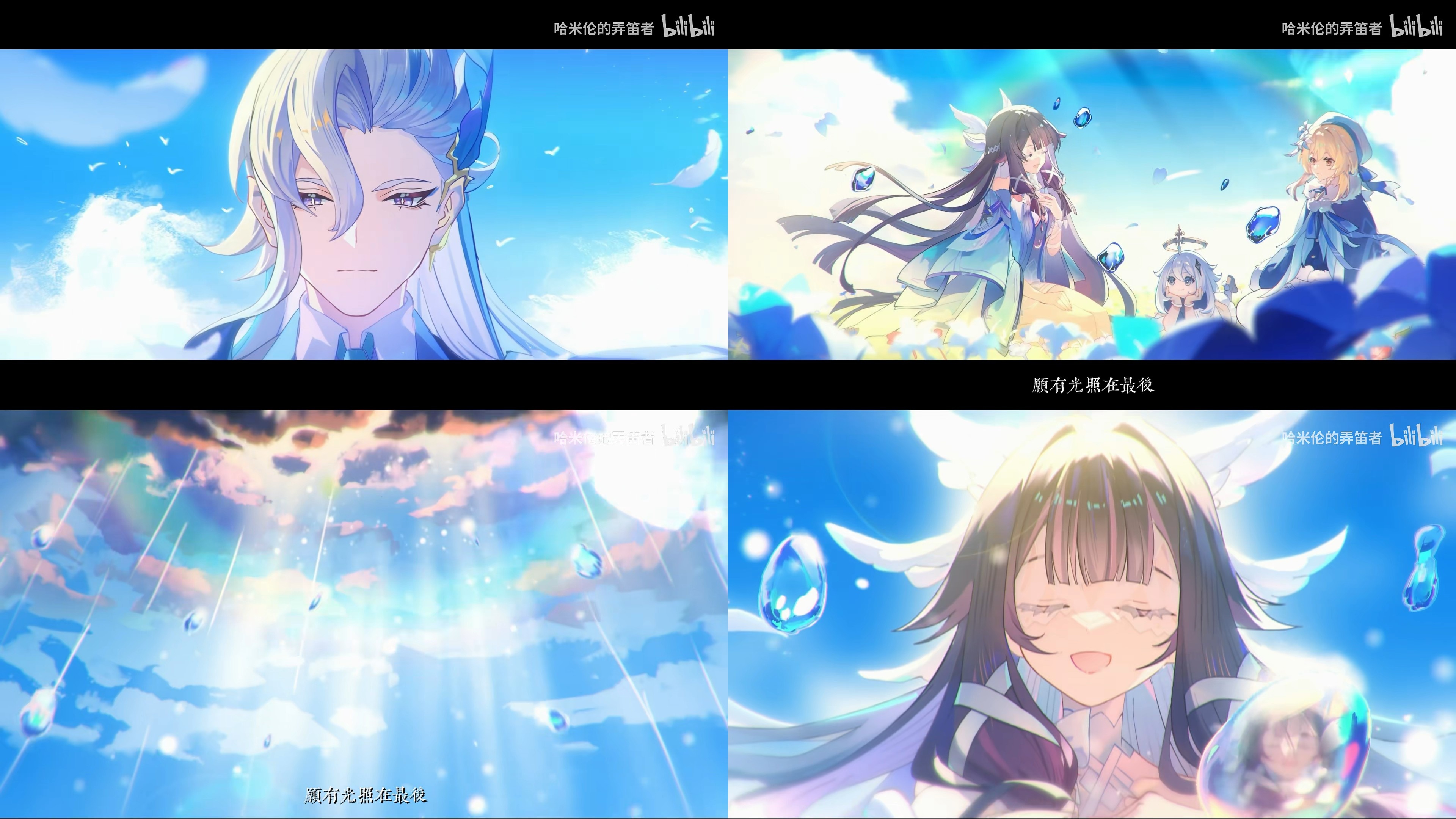
"All the World's a Stage" is truly a divine fan creation. The chosen movies fit the characters perfectly, and the art and music are impeccable. However, I couldn't find any related analysis, so I had to write one myself during the holidays. (This really is a ten-thousand-word analysis.)
But my personal abilities are limited; some scenes I genuinely couldn't find the corresponding source, and there may even be some errors. Feel free to supplement and correct in the comments. The lyrics also have many points worth delving into, and I look forward to others analyzing them.
The research and compilation took me quite some time. If you can read through it all, I'll be very happy ( •̀ ω •́ )✧. Some content references the original video's comment section, bullet comments, etc., and I couldn't request permission for each one, but I've credited the authors as much as possible.
Additionally, presenting the analysis in text and image form may lack some readability; you might need to play the original video alongside. If anyone wants to turn this into a video, please feel free to use it, but be sure to credit the source, and you're welcome to leave a link to the finished work in the comments.
Opening Ensemble
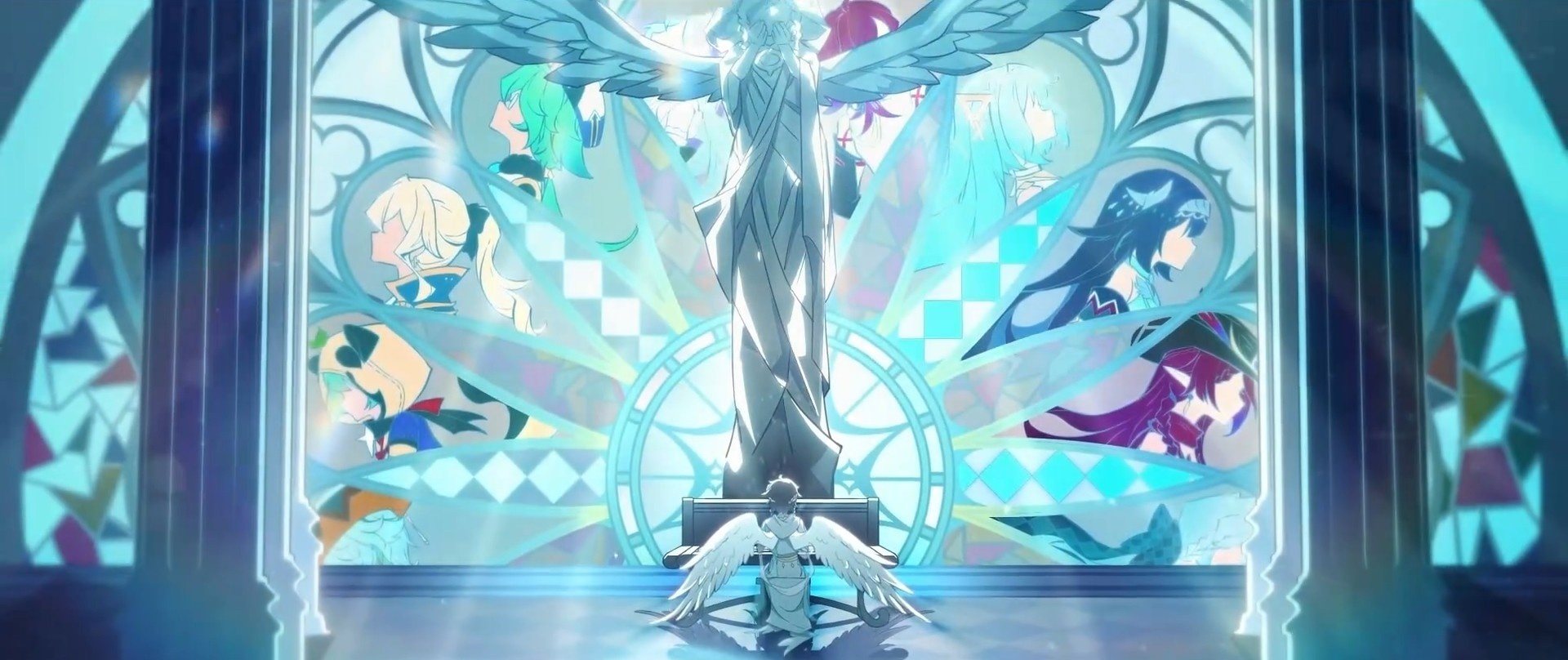
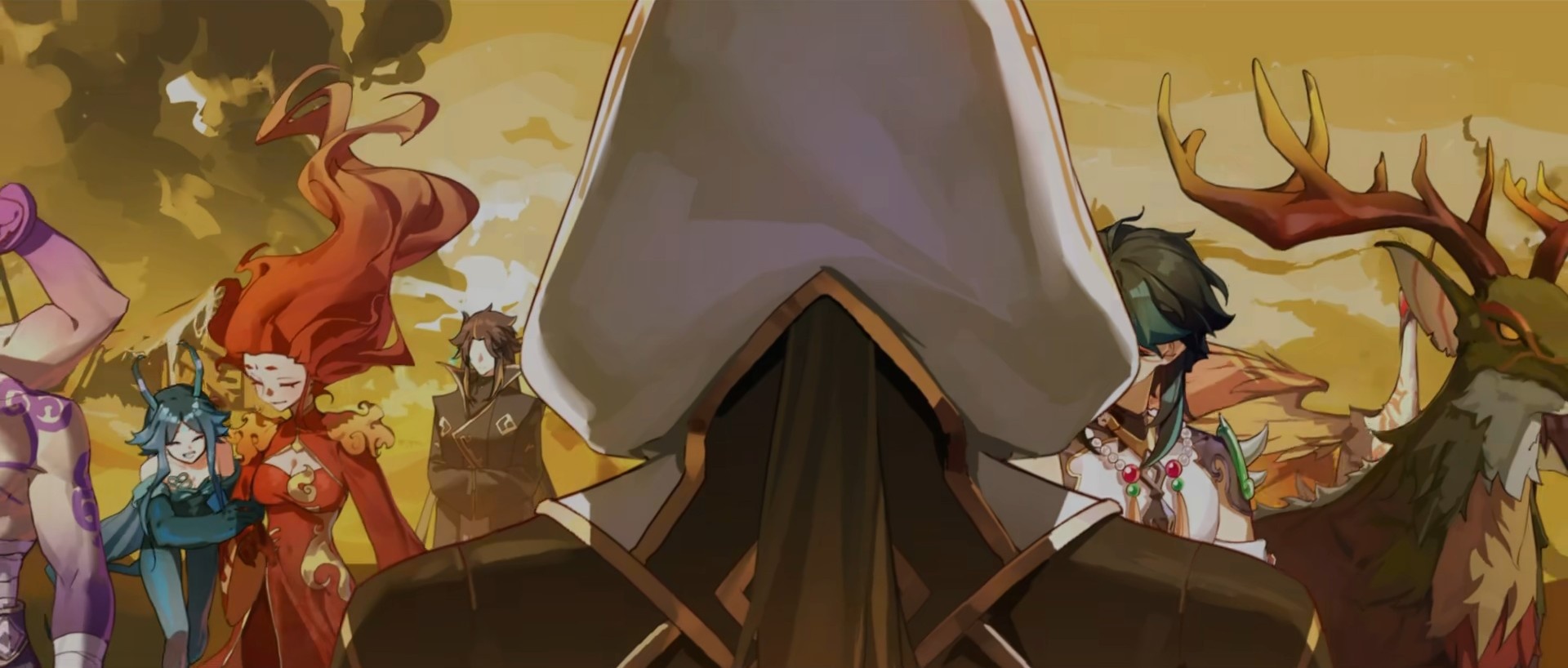
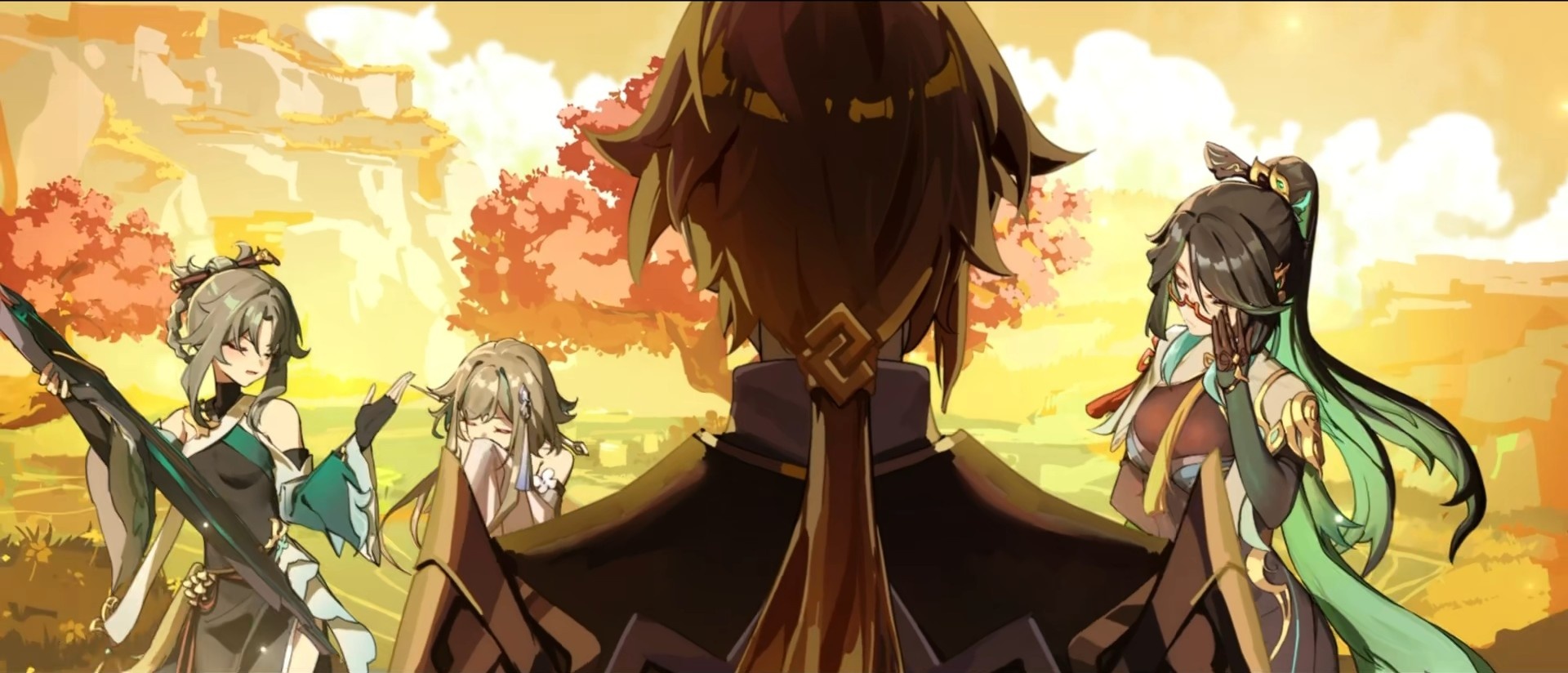
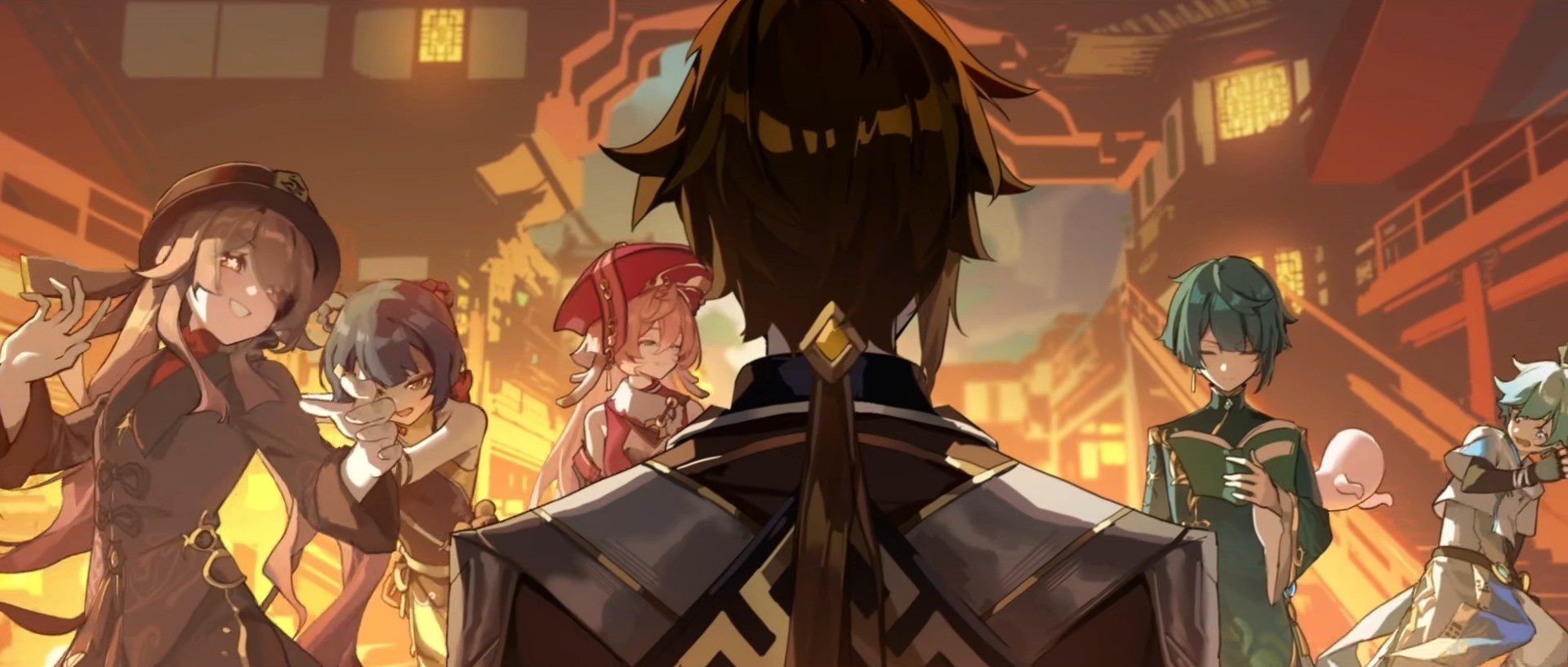
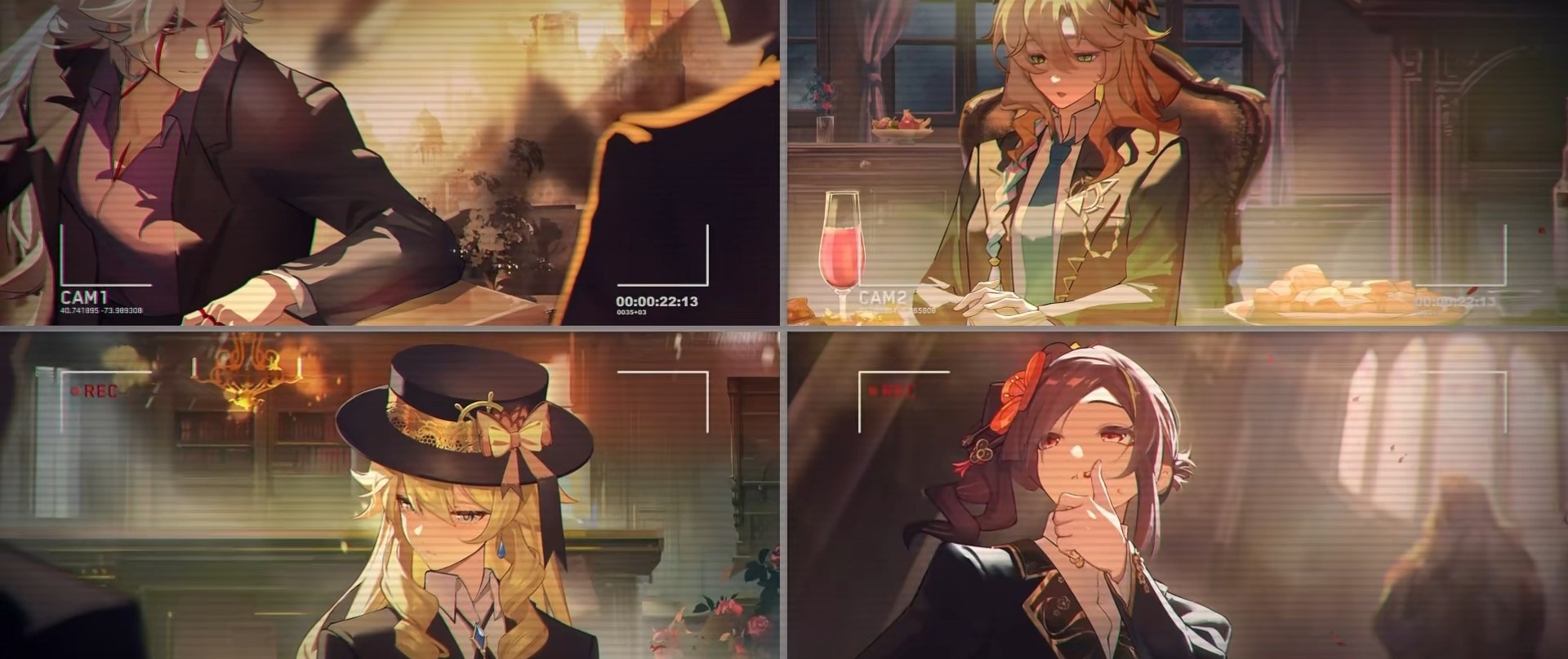
Frame-by-frame, it roughly showcases the character outfits from Mondstadt to Snezhnaya, beautiful. Some of these outfits will appear again later.
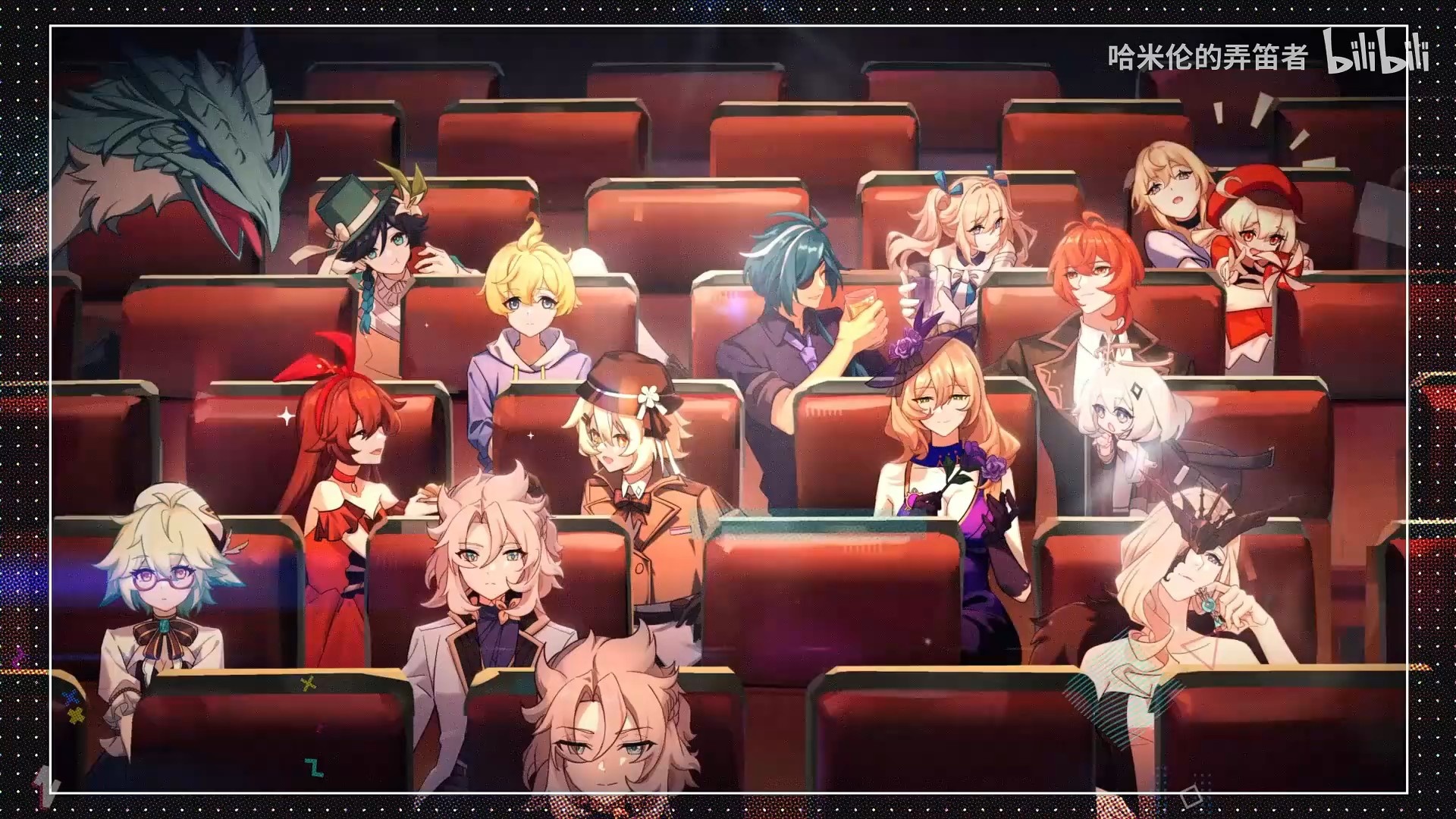
Mondstadt
In the bottom right corner, La Signora is holding Venti's Gnosis. In the front row, there's also "Albedo Junior," who wanted to replace Albedo in the event quest.
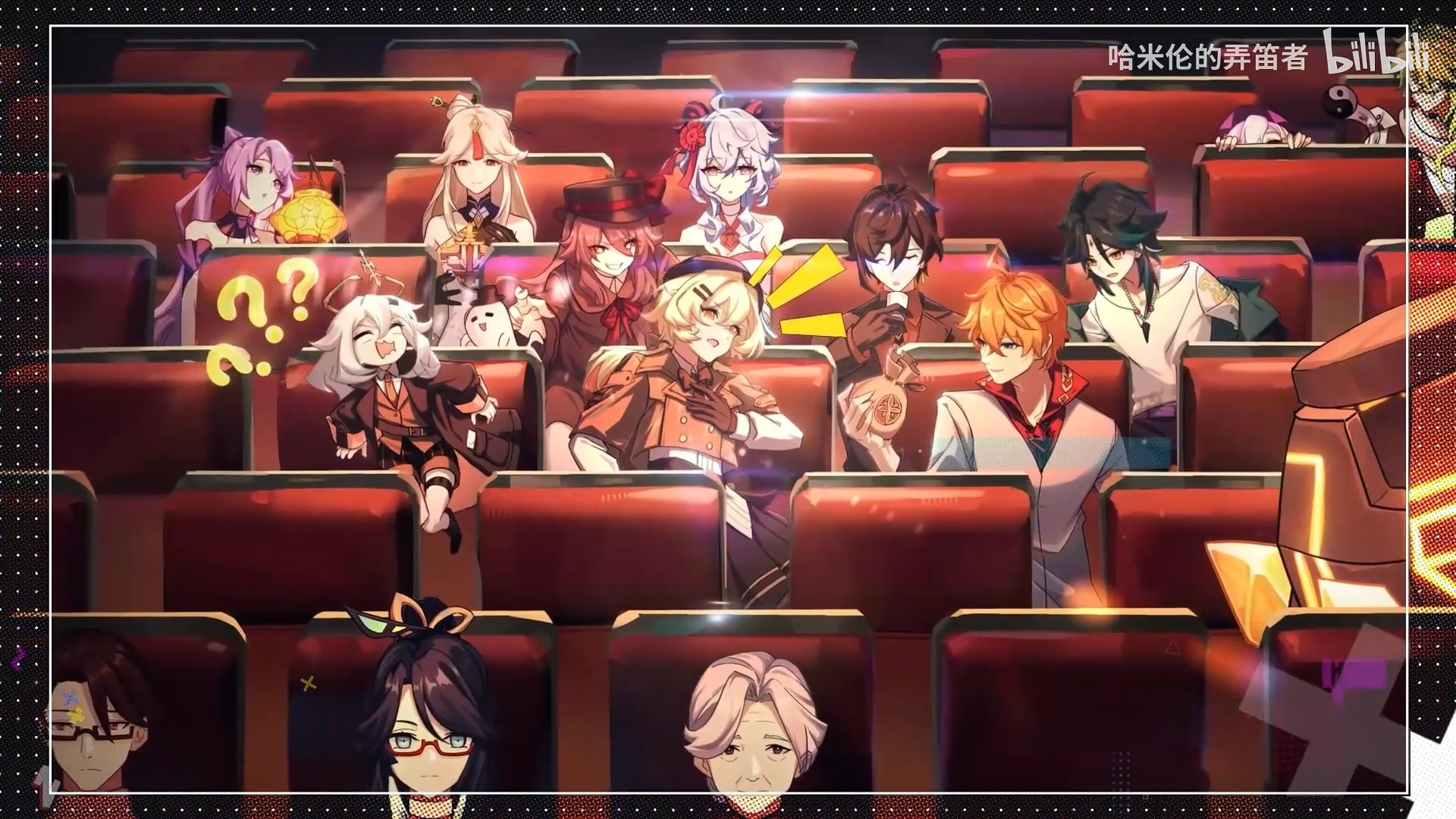
Liyue
Why is there a Starfell Sword in the cinema? Haha. From left to right in the front row: Mountain Shaper, Cloud Retainer, and Madame Ping.
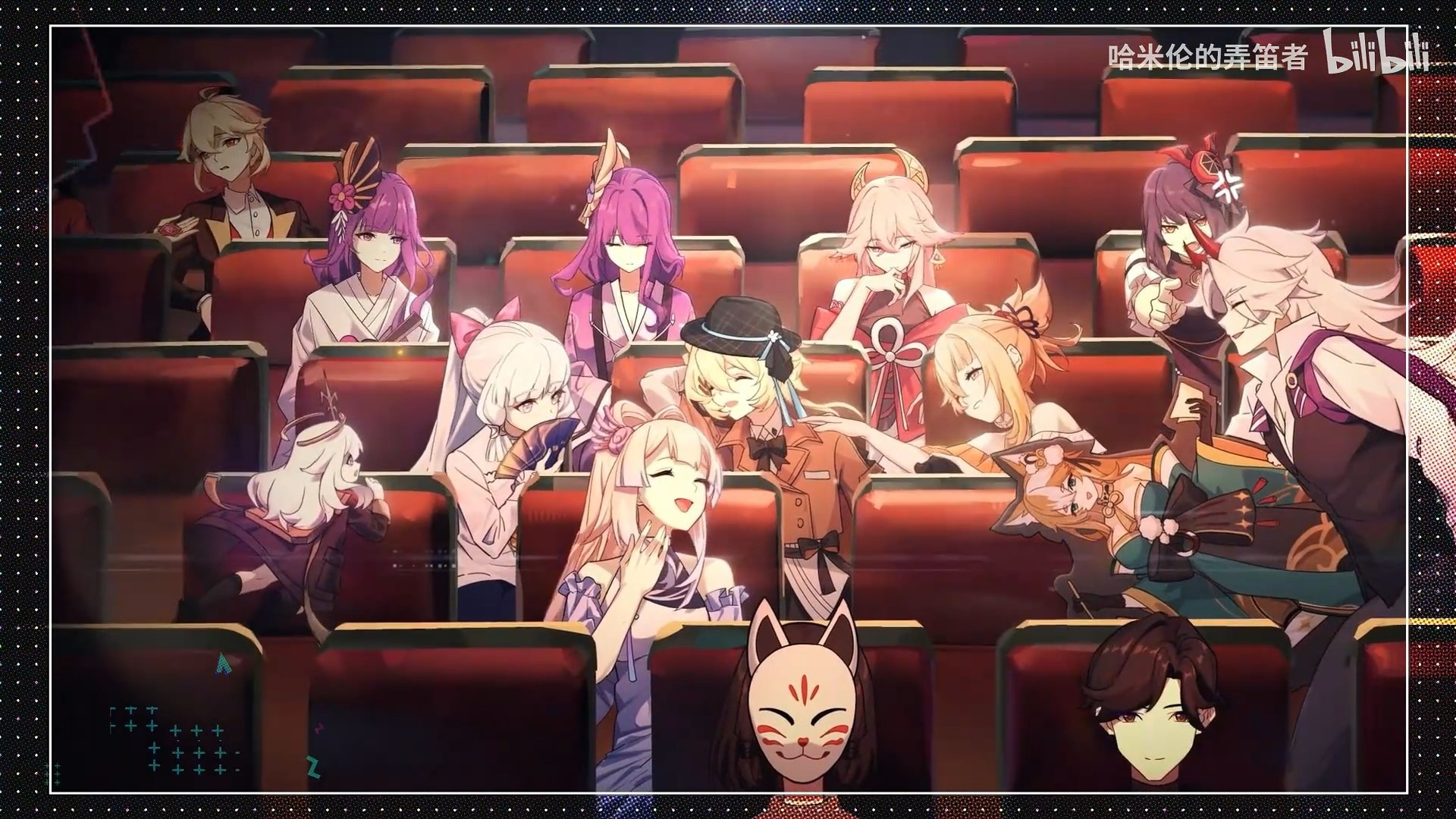
Inazuma
Itto, why are you holding a standee of Gorou Miss Hina?
In the back row, the hand sticking out probably belongs to Kazuha's friend, and what's being handed to Kazuha might be a Vision?
In the very front row are Hanachirusato and Teppei[4].
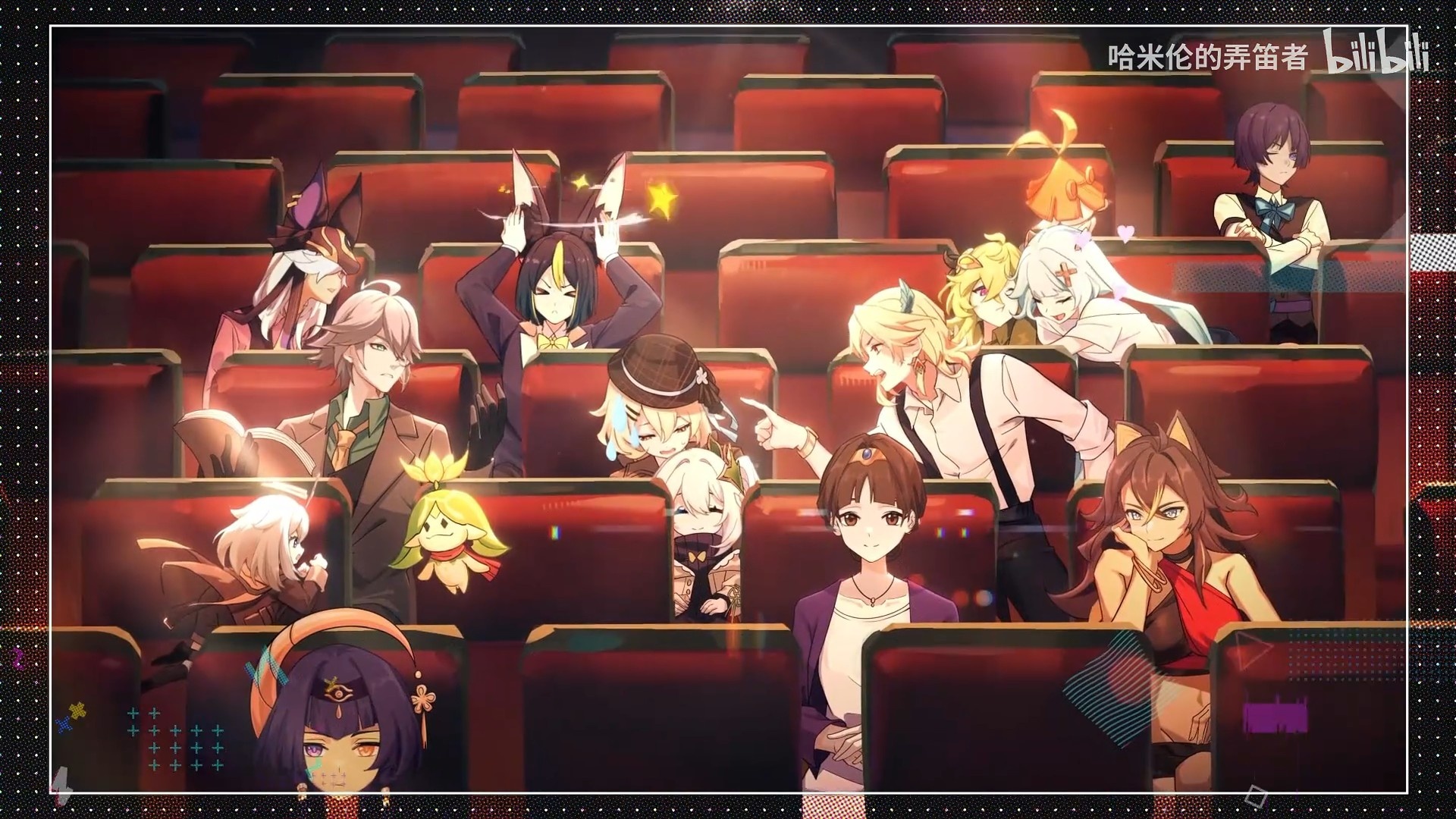
Sumeru
Lumine holding tiny Nahida, so cute. Cyno is still telling bad jokes, while Tighnari tries to cover his ears to avoid hearing.
Fontaine
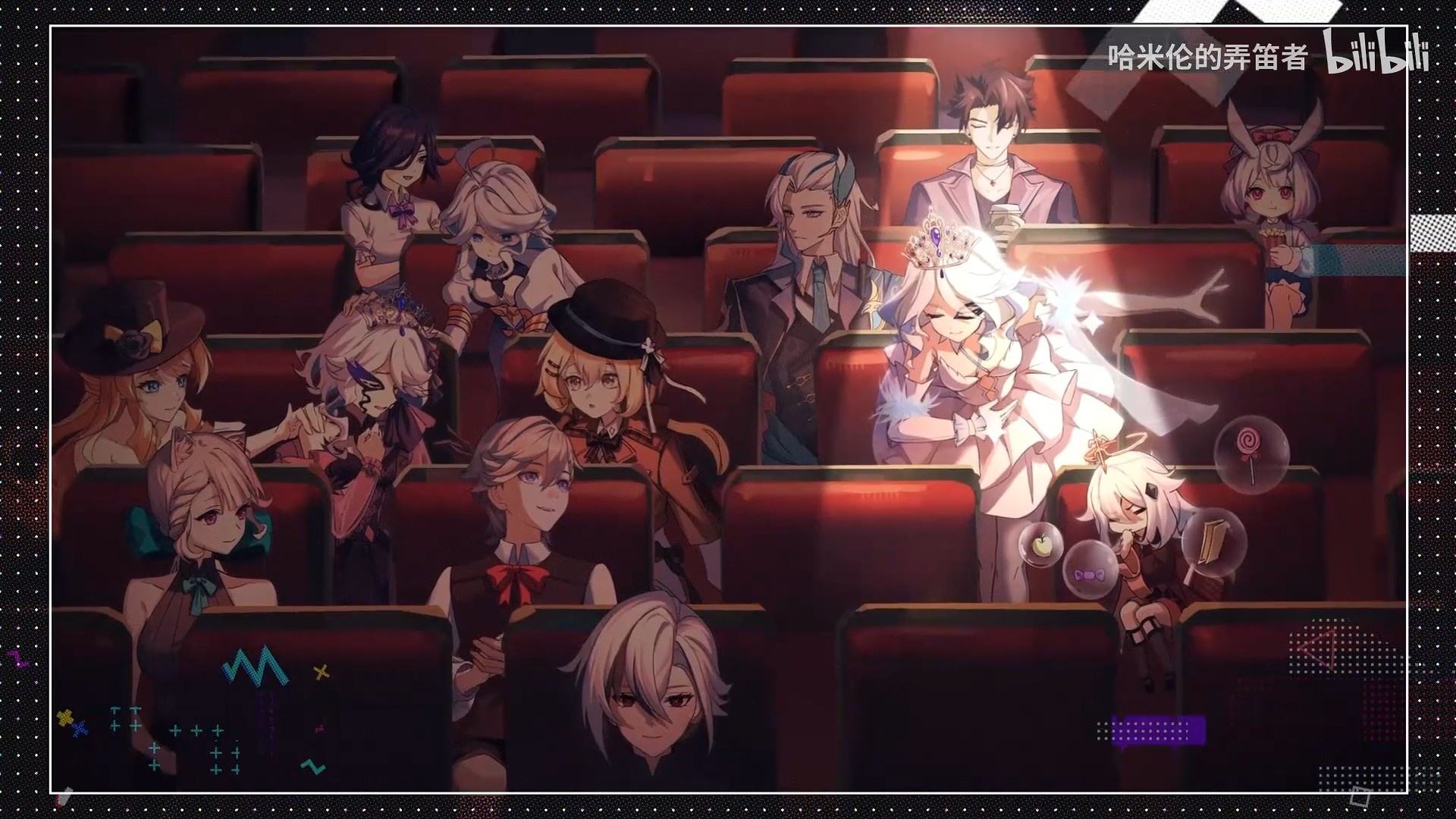
Here, Paimon is thinking of all sweets, which fits Fontaine's style and Paimon's gluttonous nature. For the three Furinas in this scene, my personal speculation: under the spotlight is the white Furina who played the role of a god for 500 years; on the far left is the black Furina who shed the burden of godhood; in the middle is the Hydro Archon Focalors.
Natlan
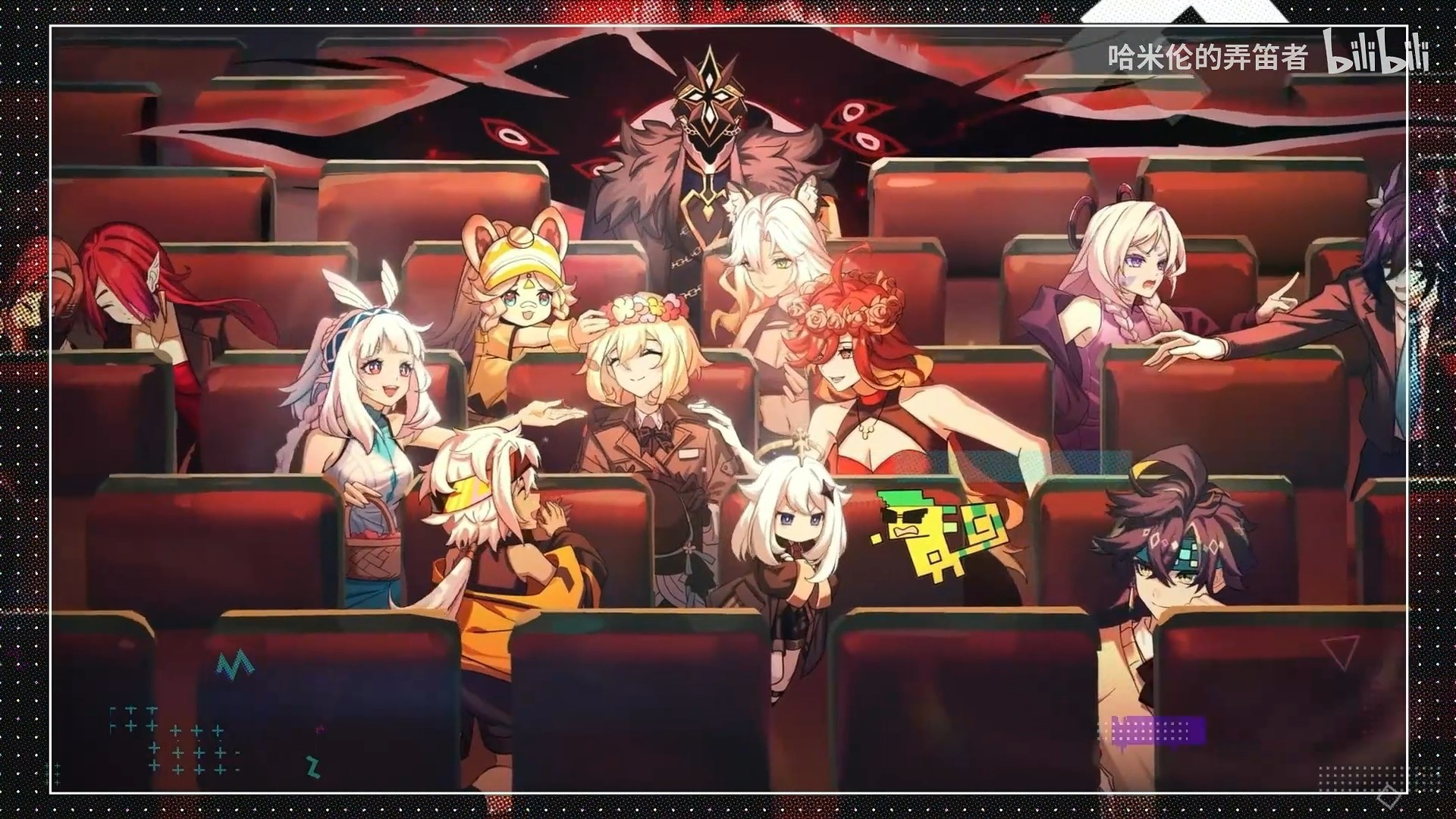
The scene of Capitano and the Ruler of Death in the back row is truly breathtaking. On the right, Granny is scolding Ororon. On the left, it should be Chuychu and Chasca (so heartbreaking 😭).
Snezhnaya
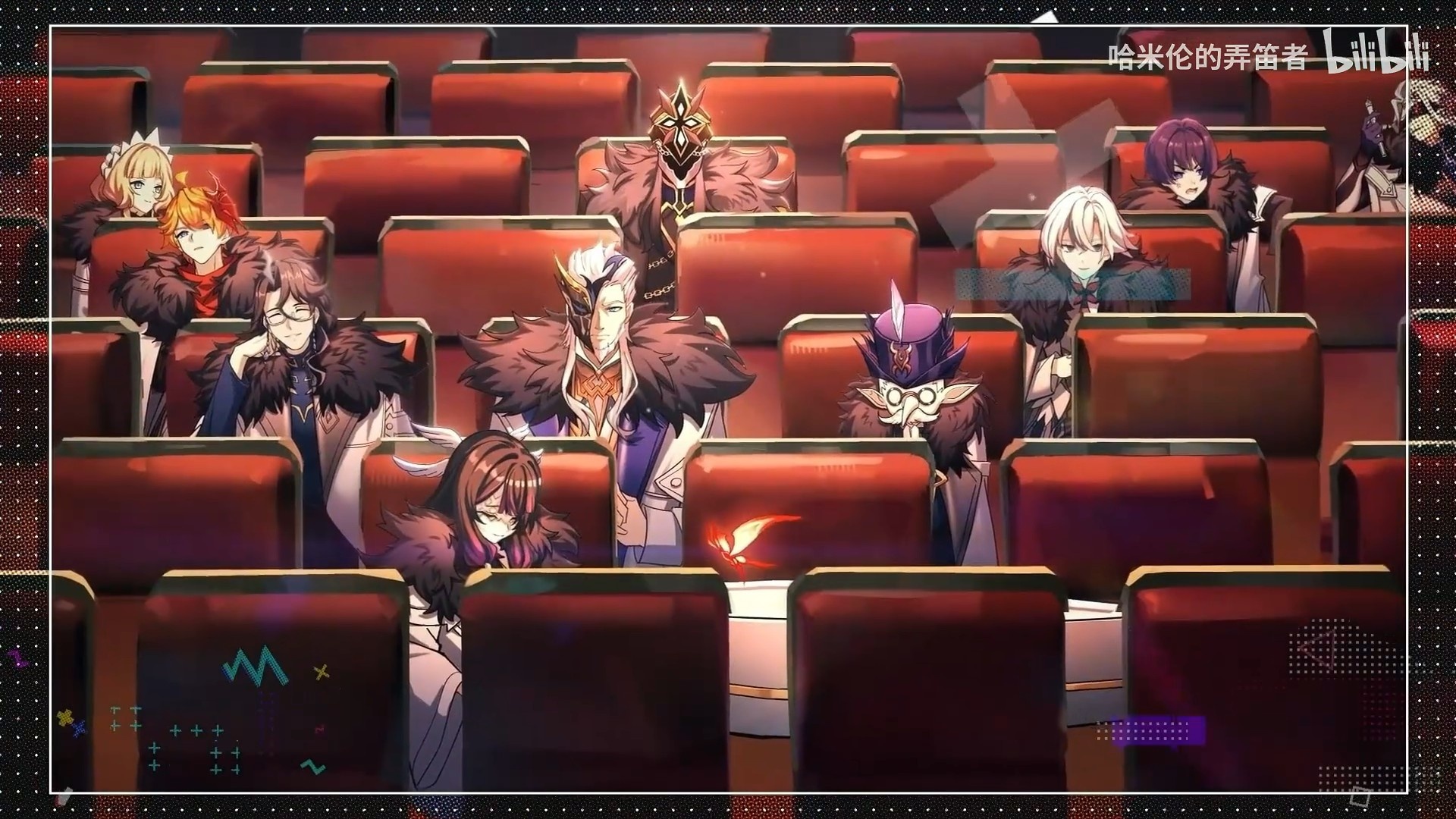
Here are the 11 Fatui Harbingers. La Signora lying in a coffin, along with the Maiden beside her, fits the storyboard of "A Winter Night's Lazzo" quite well.
||The placement of Dottore and Scaramouche together in the top right corner is probably a clever touch by the production team.||
||By the way, Capitano has been sitting motionless in the same spot since the previous scene. Does anyone have any ideas?||
Siblings, Paimon, Dainsleif
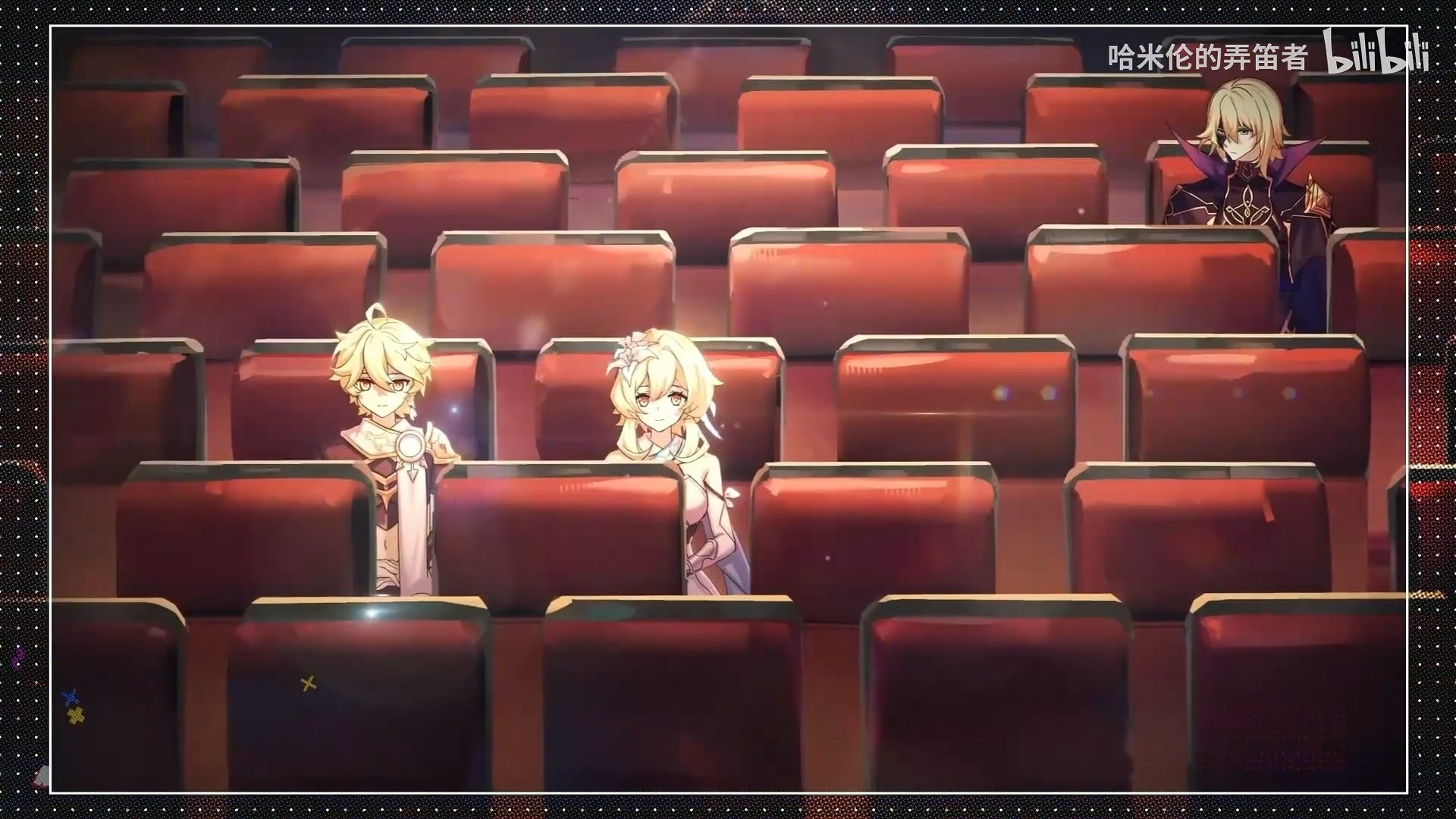
In the middle, a few frames of the siblings flash by. Then the brother's position changes to Paimon.
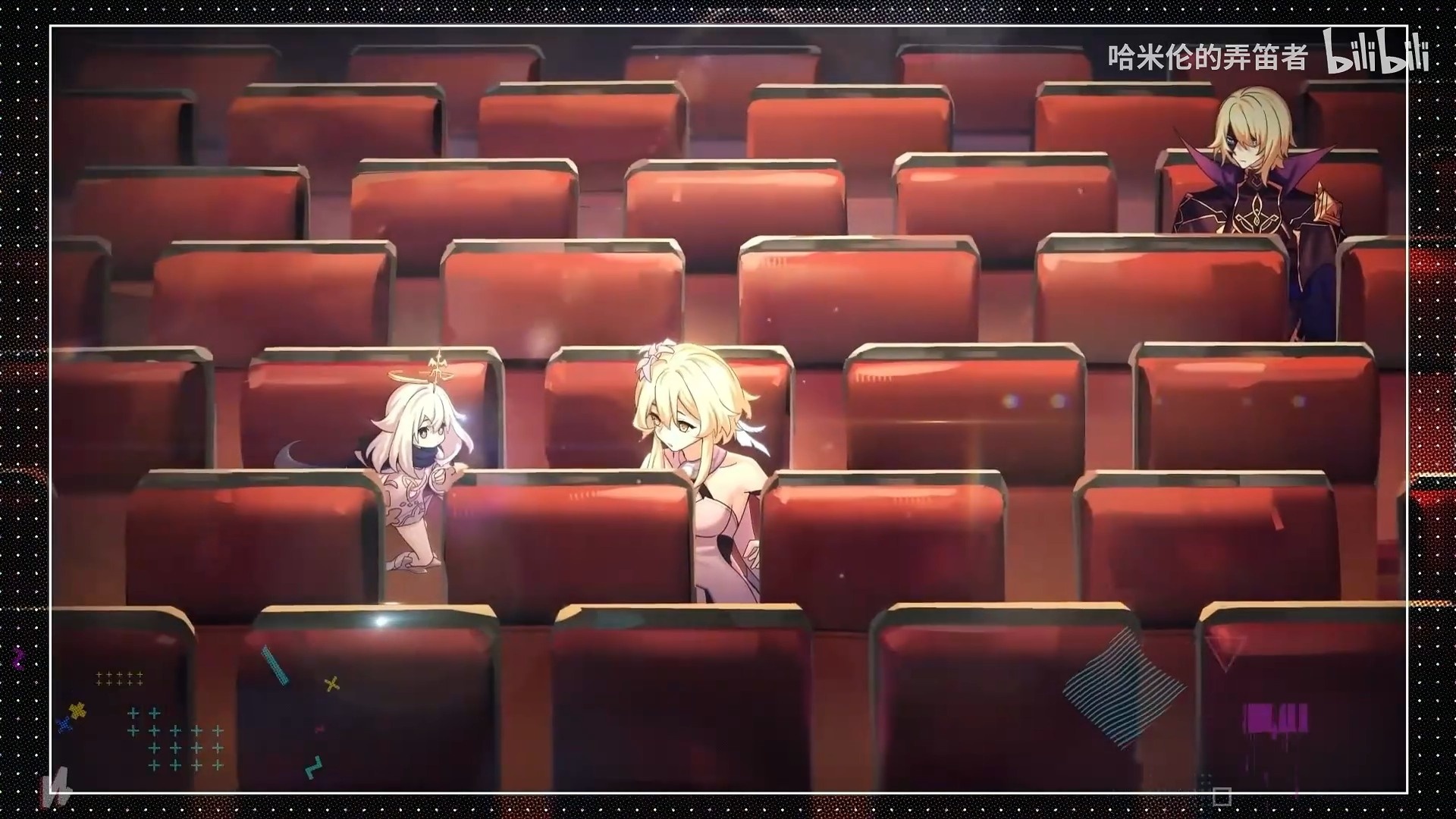
Combined with Films, Narrated in Chapters
From 00:16 to 02:52, it combines the Eight Sufferings of Life, narrated in chapters according to the seven elements, and each chapter's subtitle fits the corresponding god's storyline very well. Here I directly quote the analysis from commenter 百味纷呈:
Suffering of Birth: The pain of being born, corresponding to the Dendro Archon Nahida Suffering of Aging: The physical and mental torment brought by aging, corresponding to the Geo Archon Zhongli Suffering of Illness: The physical and mental pain caused by disease, corresponding to the Hydro Archon Furina Suffering of Death: The fear and pain in the process of death, corresponding to the Pyro Archon Mavuika Suffering of Parting from Loved Ones: The pain of separation from loved ones, corresponding to the Anemo Archon Venti Suffering of Meeting the Hated: The affliction of having to encounter people or things one despises, corresponding to the Electro Archon Ei Suffering of Unfulfilled Desires: The anguish of desires that cannot be satisfied, corresponding to the Cryo Archon Suffering of the Five Skandhas: The fundamental suffering caused by the accumulation of the five aggregates (form, sensation, perception, mental formations, consciousness), the root of the previous seven sufferings, the cycle of karma, corresponding to the twins
And the analysis from shut零度:
Suffering of Birth: Nahida's amnesia and broken branch, new birth Suffering of Aging: Zhongli's erosion Suffering of Illness: Focalors creating a human body and bearing original sin Suffering of Death: Mavuika's 500-year death leap Suffering of Parting from Loved Ones: Venti losing his friend Suffering of Meeting the Hated: Raiden Ei's isolation and self-seclusion Suffering of Unfulfilled Desires: The Cryo Archon's inability to love The Suffering of the Five Skandhas is the sum of the above seven sufferings, corresponding to the Traveler experiencing one suffering with each nation they pass through
Below, I will still analyze in the order of the video, and the eighth chapter "Suffering of the Five Skandhas" starting at 3:21 does not have scenes combined with films, so I won't include it in this section.
Chapter 1: Parting from Loved Ones - Anemo
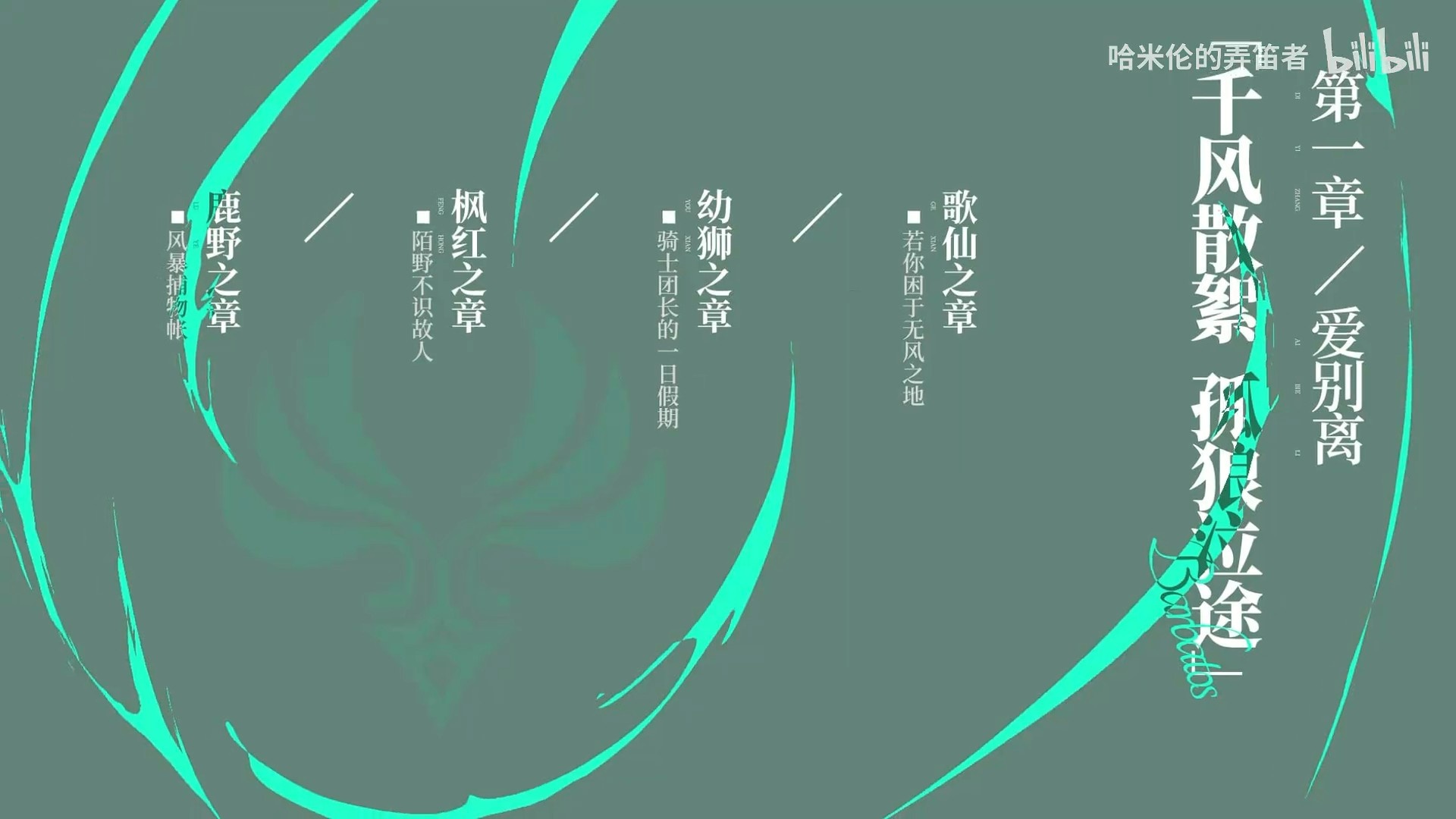
The four quests at the title:
- Carmen Dei Chapter - Should You Be Trapped in a Windless Land: Venti's Story Quest
- Leo Minor Chapter - A Day Off for the Knight Captain: Jean's Story Quest
- Acer Palmatum Chapter - A Stranger in a Foreign Land: Kazuha's Story Quest
- Cervus Chapter - The Storm's Capture Ledger: Shikanoin Heizou's Hangout Event
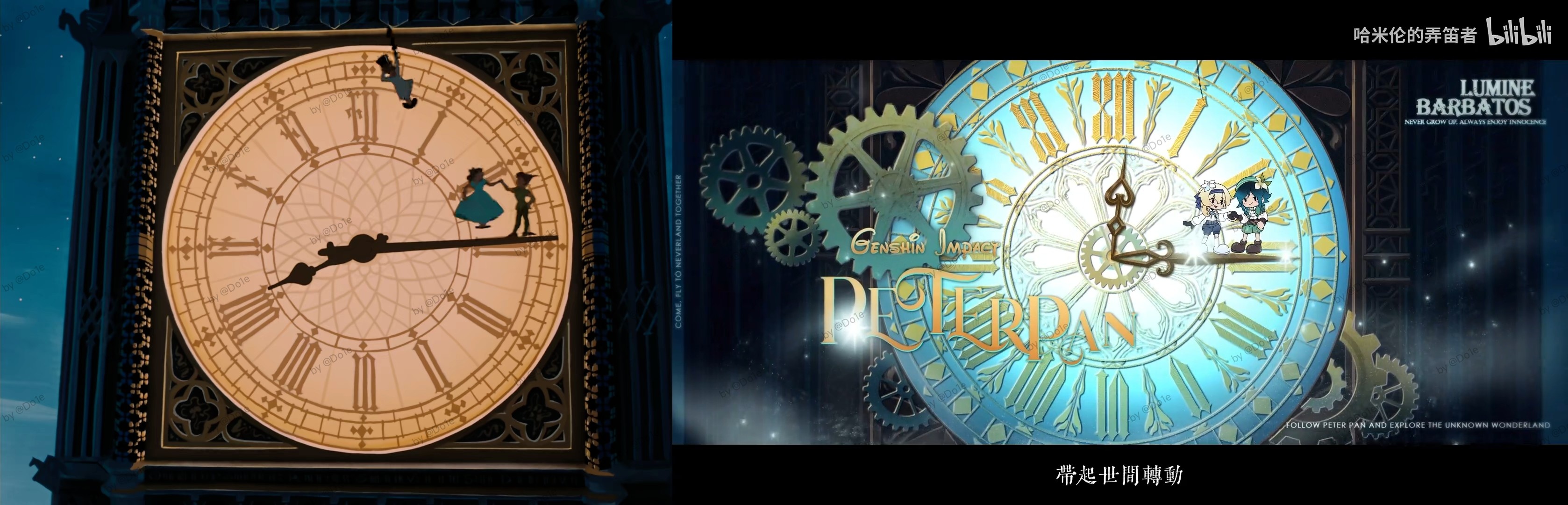
Peter Pan
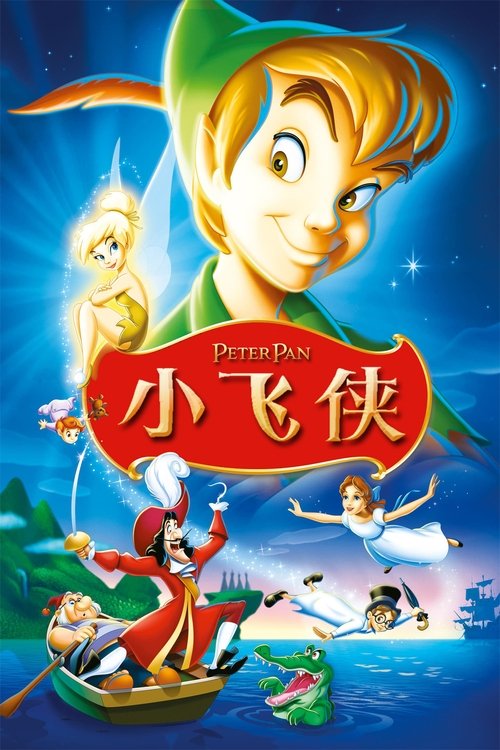
The female lead in the movie[5] is also named Wendy, and in the film, the male lead Peter Pan has the ability to fly and is a childlike, free-spirited boy, which also fits Venti in the game. This scene corresponds to a scene around the 19-minute mark in the movie.
This frame's background is all Anemo characters, from left to right: Ifa, Sayu, Jean, Sucrose, Yumemizuki Mizuki, Shikanoin Heizou, Faruzan, Lan Yan, Chasca, Lynette.
Hero
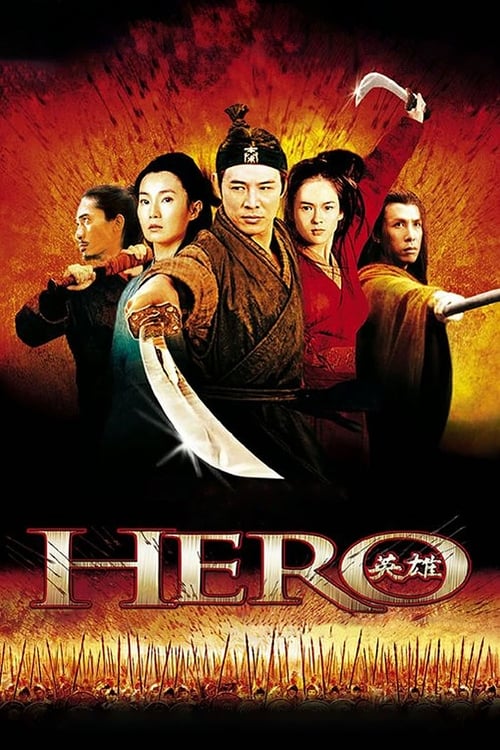
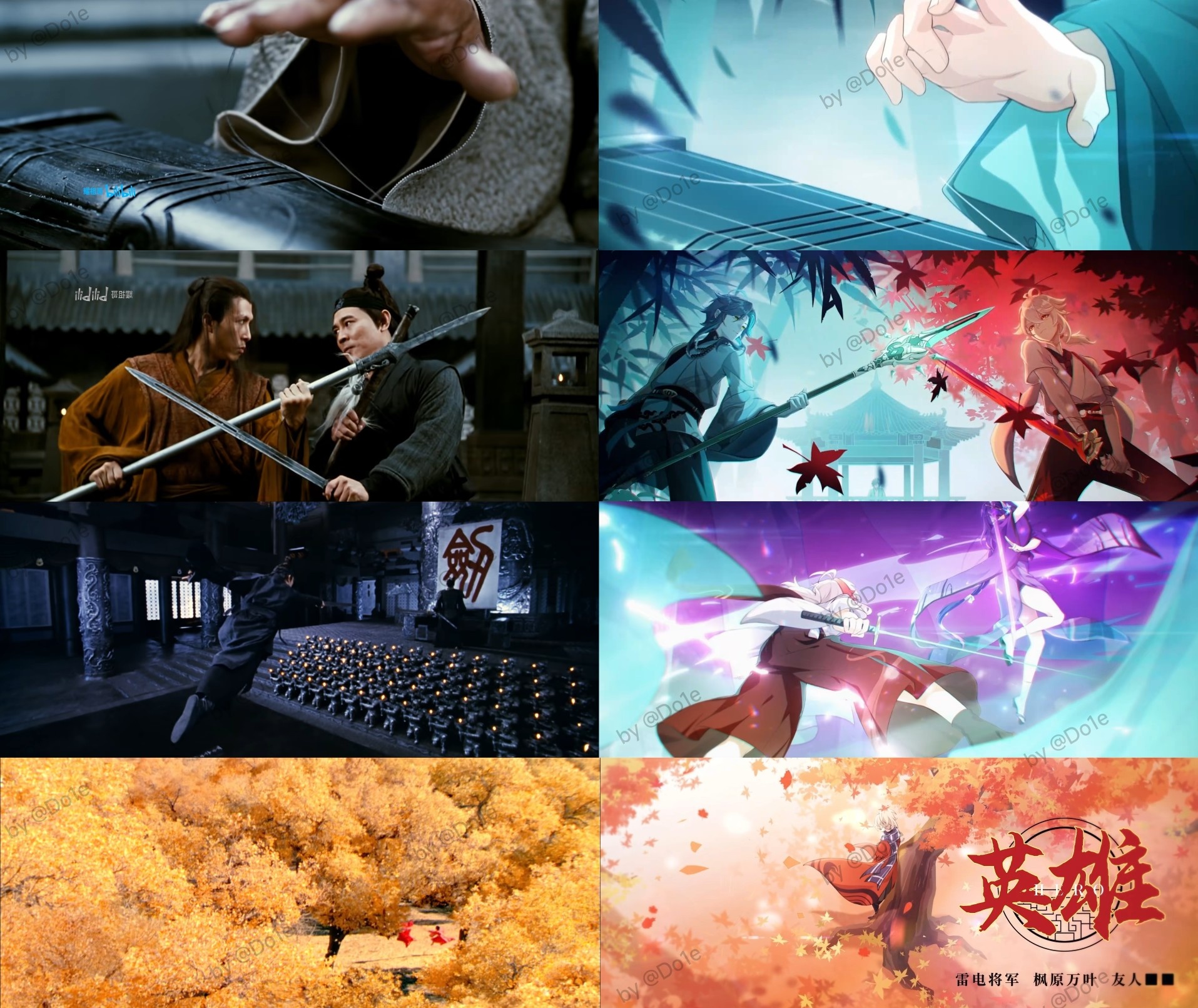
In the movie's[6] plot, the three top assassins of the Zhao Kingdom—Sky, Broken Sword, and Flying Snow—repeatedly threatened the life of the King of Qin, leaving him sleepless for ten years. A nameless sheriff from Qin claims to have killed these three assassins and presents their weapons to the King. According to Qin law, one who kills three assassins is granted the honor of "approaching the king within ten paces." Nameless uses this rule to attempt to assassinate the King. In the second row of the image below, the sword-wielding Nameless corresponds to Kazuha, and the movie's plot parallels the Genshin Impact story where Kazuha blocks the Raiden Shogun's Musou no Hitotachi.
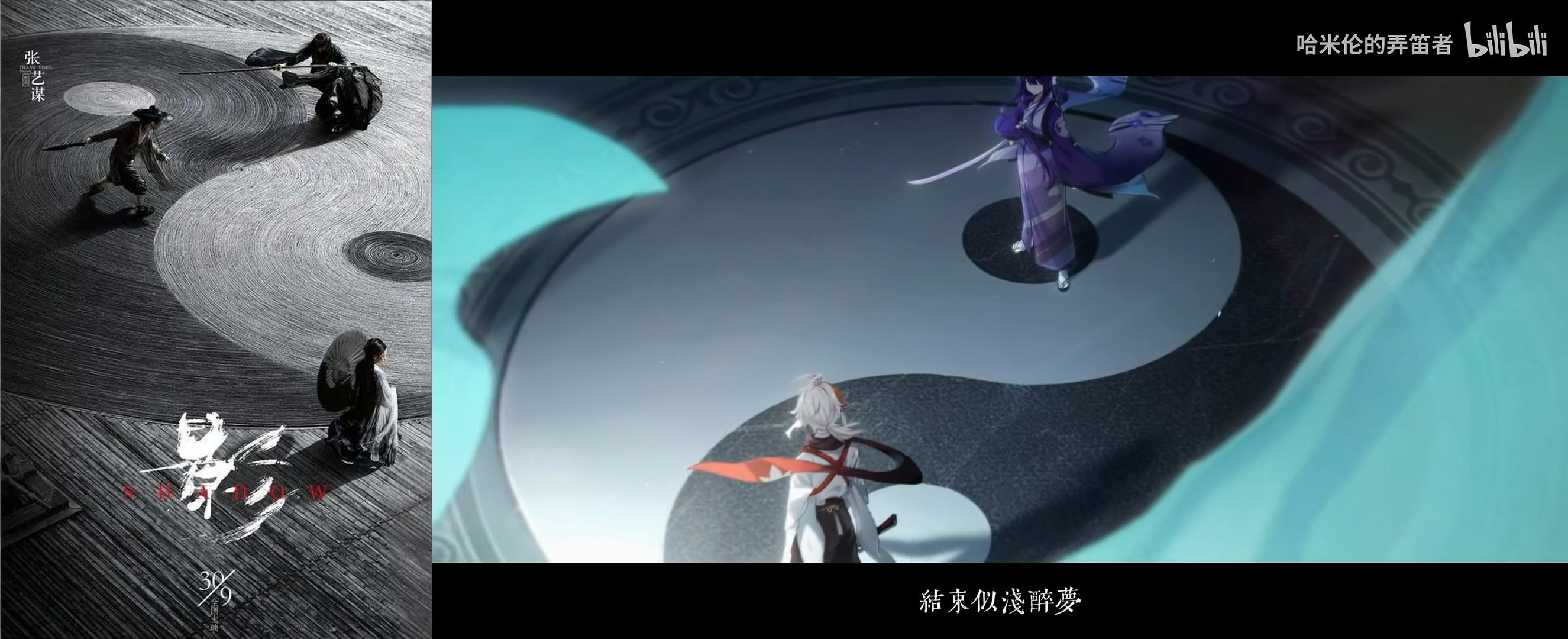
Shadow
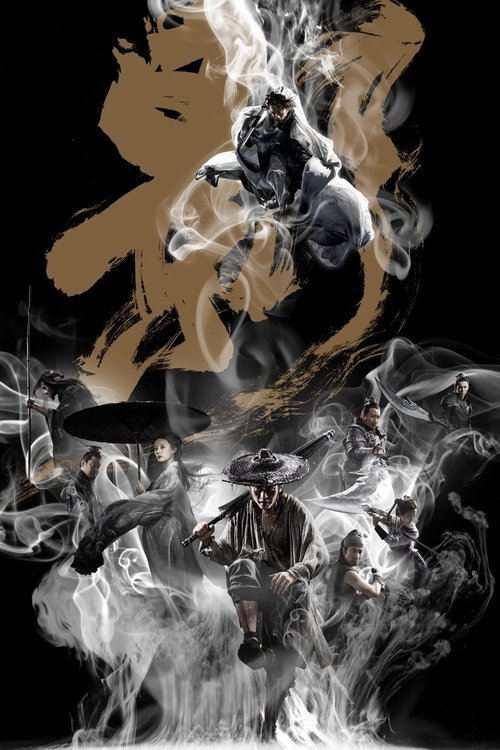
This scene references the poster of the movie Shadow.[34] In the film, Ziyu is injured in a war with an enemy state, leaving him weak and unable to attend court or fight. He secretly trains a body double named Jingzhou who looks almost identical to him, to handle state affairs and go to war in his place. Ziyu is determined to reclaim Jingzhou City but can only manipulate the double from behind the scenes due to his physical condition. As the plot progresses, Jingzhou, in constantly playing the role of Ziyu, gradually develops self-awareness and begins to question his identity and fate. This is very similar to the relationship between Raiden Ei and the Raiden Shogun.
The Pig, the Snake and the Pigeon
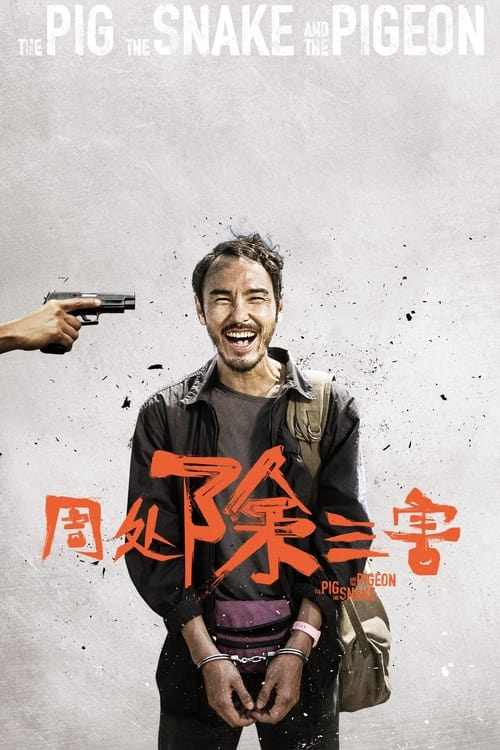
The English text "The Pig, The Snake and The Pigeon" in the next scene corresponds exactly to the English title of The Pig, the Snake and the Pigeon[7]. Then comes the famous scene from the movie.
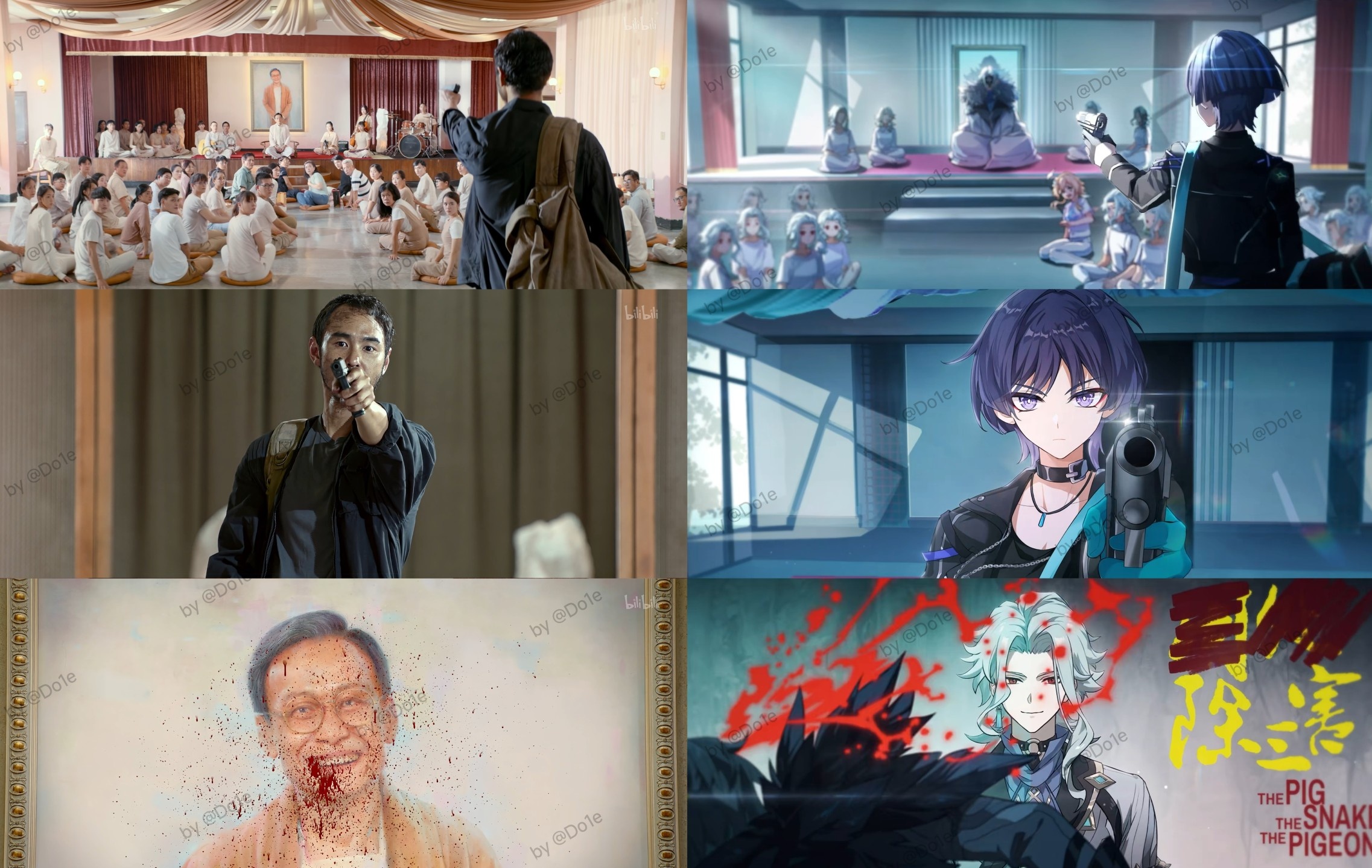
In the movie's plot, the male lead Chen Guilin is originally a ruthless gangster. Upon learning he has terminal cancer and little time left, he decides to turn himself in, only to discover he is only ranked third on the "Taiwan's Three Most Wanted" list. He then resolves to eliminate the top two fugitives, to make a name for himself by "ridding the people of evils" and leaving a legend.
The scene paying homage here is when, after nearly being brainwashed by the cult "master" Lin Luhe into "turning over a new leaf" and abandoning his plan, he accidentally discovers the cult's deception and awakens, preparing to shoot Lin Luhe. Chen Guilin and Lin Luhe corresponding to the Wanderer and Dottore respectively couldn't be more fitting. The Wanderer, once Scaramouche, also bears sins, and now, as revealed in the "Moonlit Ode" PV — "Ballad of the Moonlit Night", he is probably coming to settle old scores with Dottore.
By the way, having a bunch of Dottore's segments sitting below is hilarious. But in the movie, right after Lin Luhe dies, someone next to him immediately takes his place and continues the "music," which also fits Dottore's segment concept.
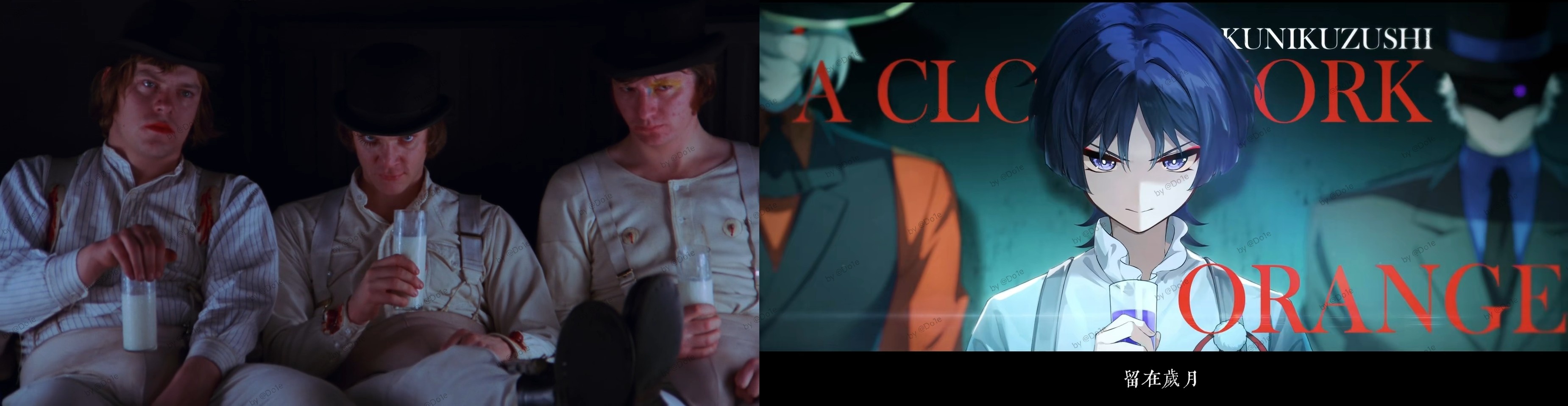
A Clockwork Orange
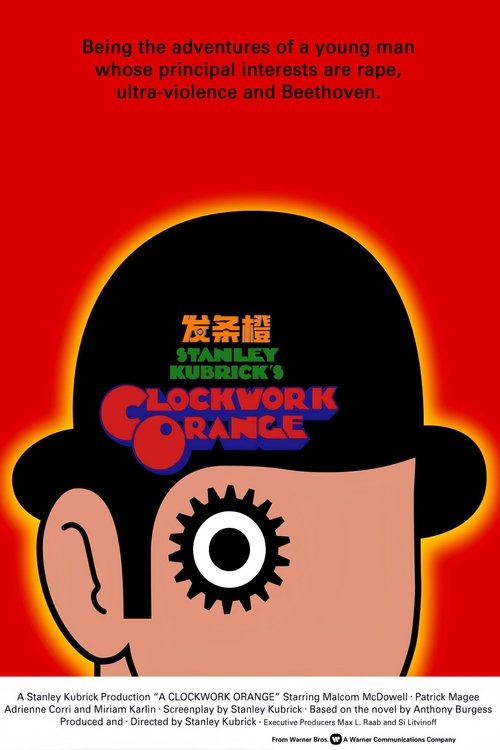
No time to mourn Dottore's death, as the Wanderer immediately rushes to the set of A Clockwork Orange[8]. This movie seems quite controversial. The male lead is a troubled youth, and the plot tells the absurd story of his journey from wanton evil to being "reformed" and then facing society's revenge, which is quite similar to the Wanderer.
Chapter 2: Suffering of Aging - Geo
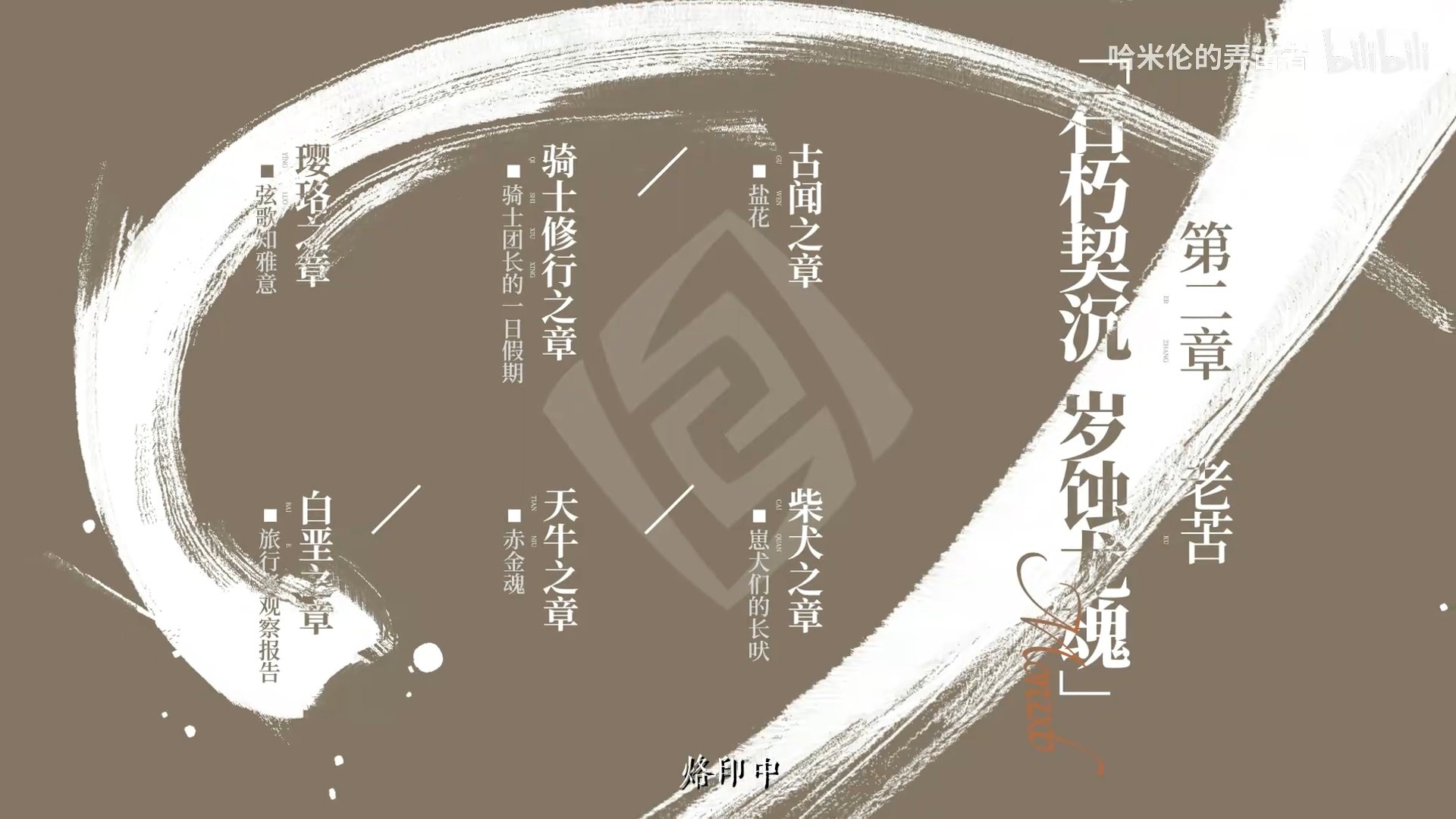
The six quests at the title:
- Historia Antiqua Chapter - Sal Flore: Zhongli's Story Quest.
- Knight's Training Chapter - A Day Off for the Knight Captain: Noelle's Hangout Event (the subtitle might have a typo; the quest names are "Knight's Training Path" and "Knight's Exam Prep Path").
- Yingluo Chapter - The Sound of Elegance: Yun Jin's Hangout Event.
- Shiba Chapter - The Long Howl of the Pups: Probably Gorou's Hangout Event (if so, the quest name is "The Great General's Special Operation").
- Taurus Chapter - Crimson Soul: Arataki Itto's Story Quest.
- Albedo Chapter - Traveler Observation Report: Albedo's Story Quest.
The Last Supper
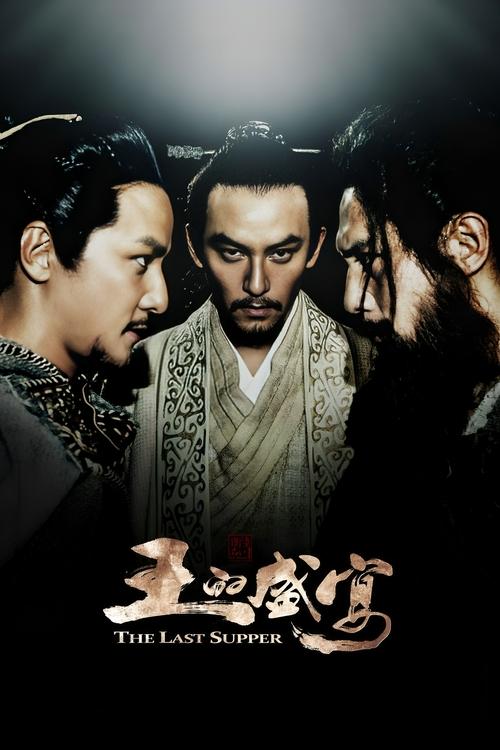
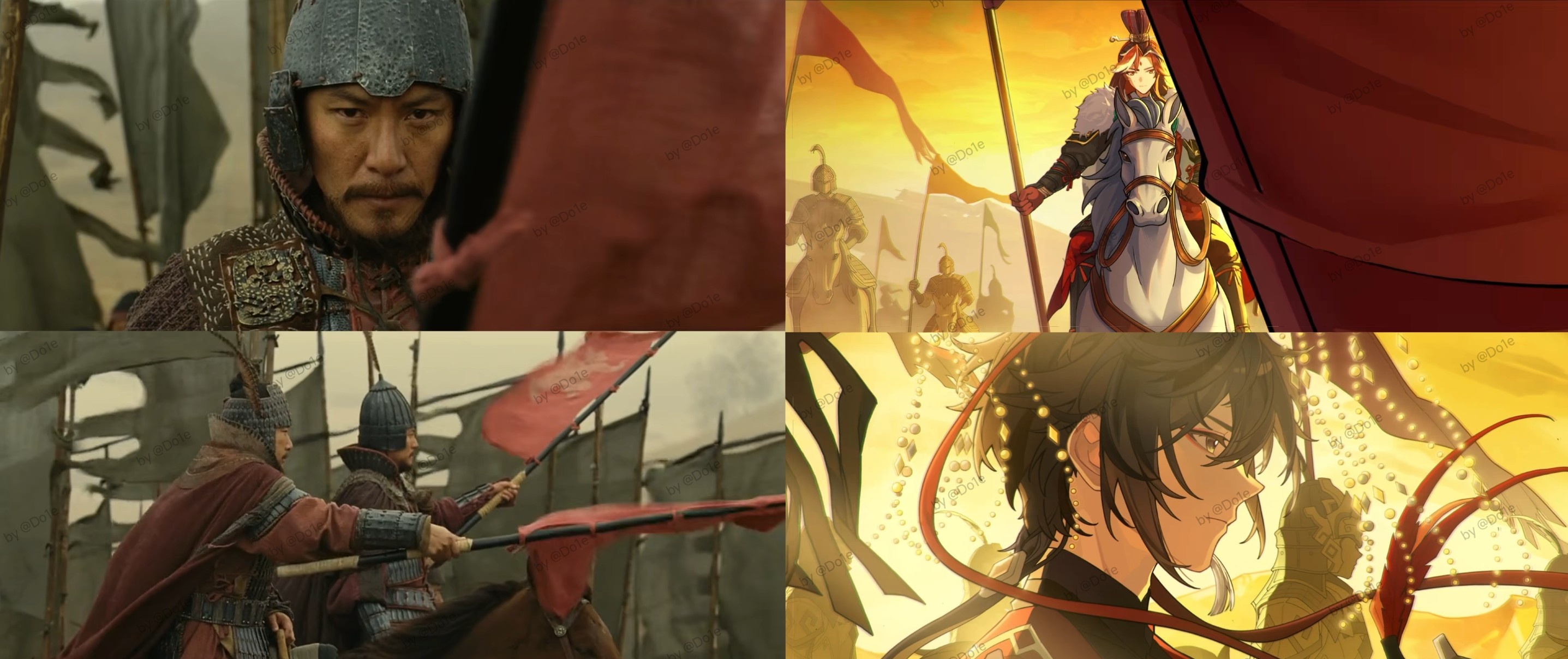
The two figures on horseback in the first shot are probably Mountain Shaper and Moon Carver, with the background being The Chasm. After the transition, Azhdaha also appears in the background.
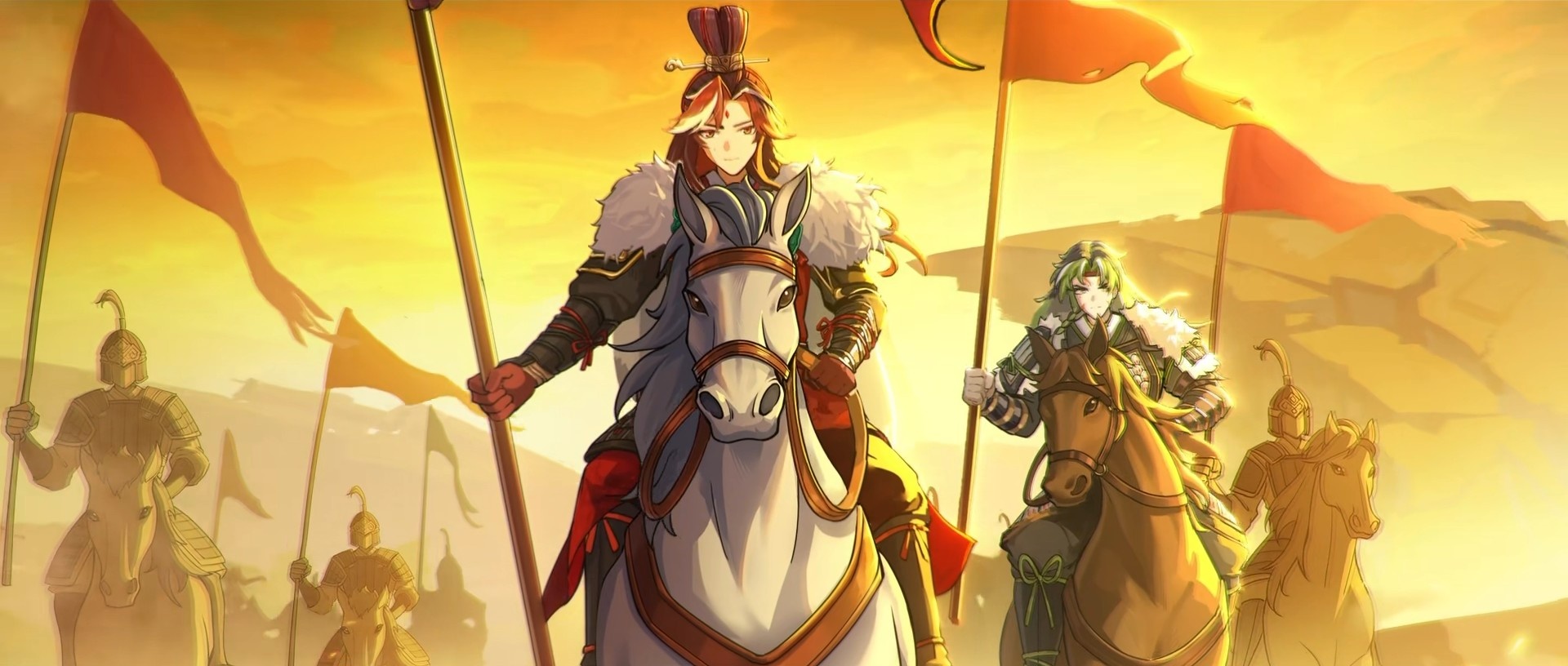
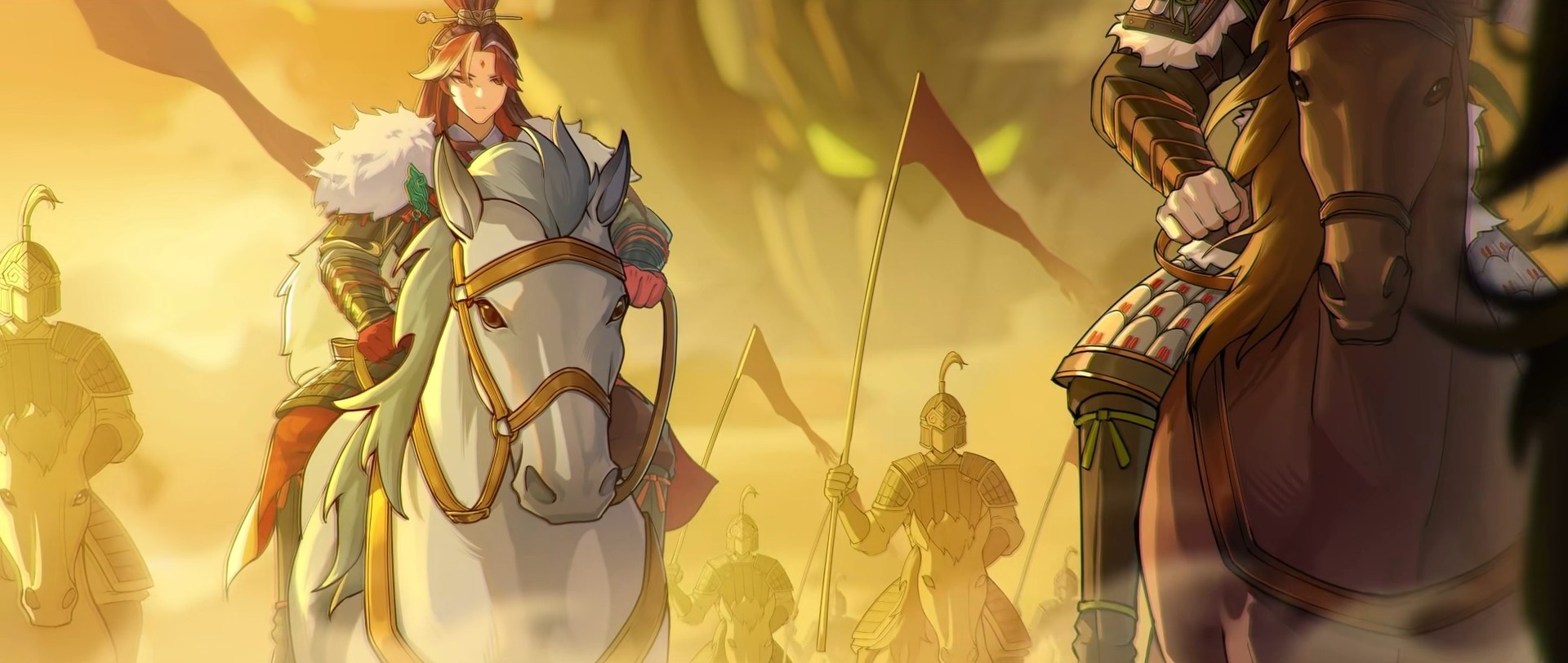
The movie[9] depicts Liu Bang recalling his life story, including key historical events like the Feast at Hong Gate, the Chu-Han Contention, and the death of Han Xin. The aging Liu Bang, paranoid, anxious, and somewhat mad, perhaps reflects the concept of erosion. Using Liu Bang to represent Zhongli likely also highlights his imperial bearing.
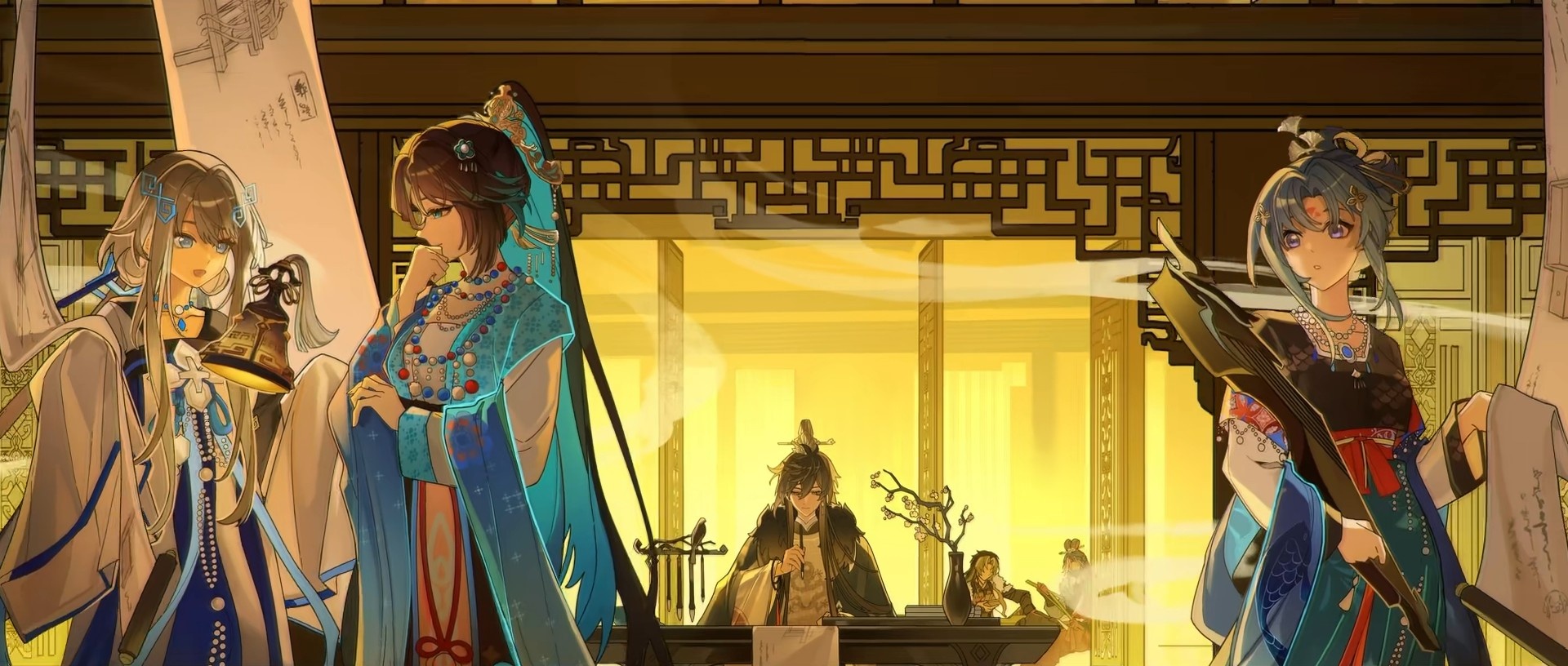
The Journey of a Legendary Landscape Painting
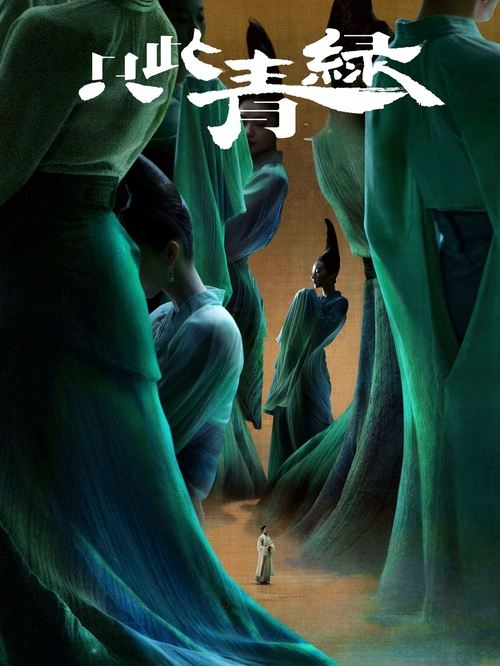
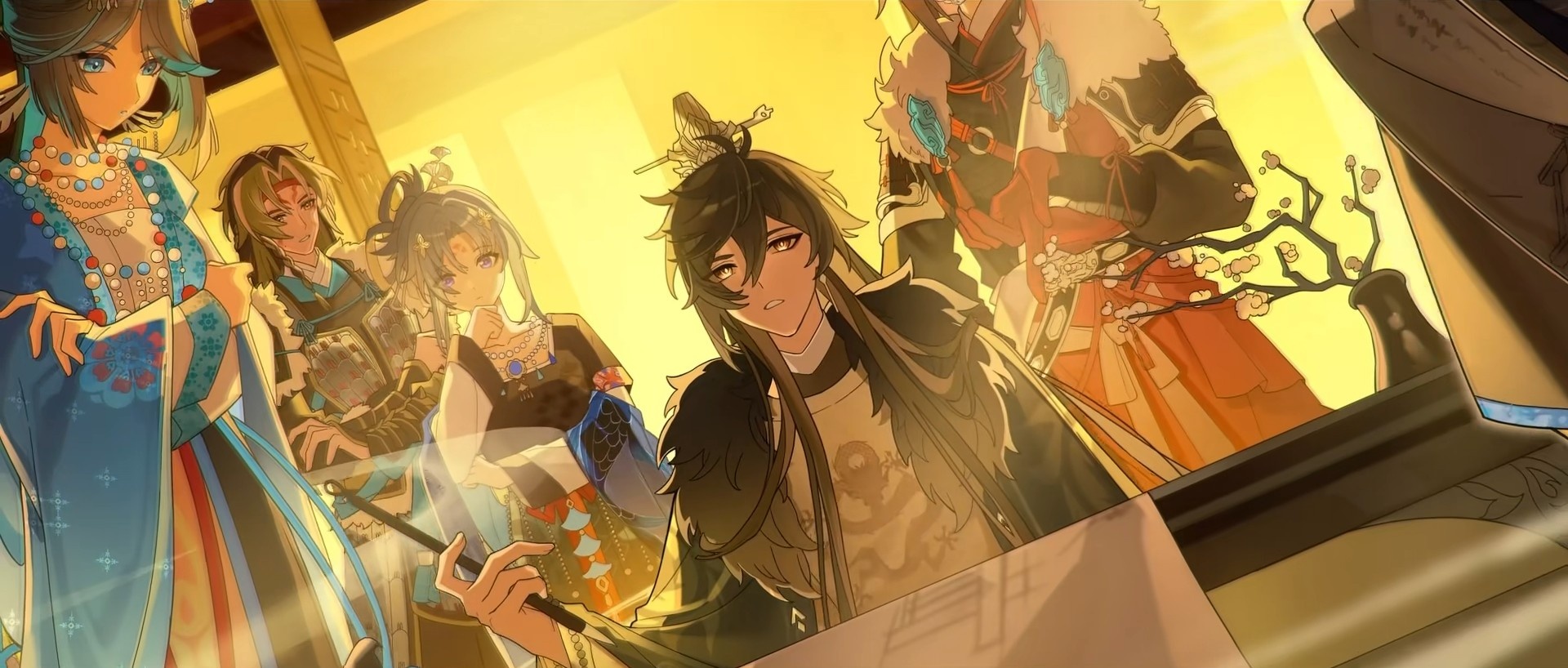
The scene below probably corresponds to The Journey of a Legendary Landscape Painting. However, I couldn't find a way to watch the original film, and I haven't seen it, so I can only guess based on the video description and style.
Millennium Actress
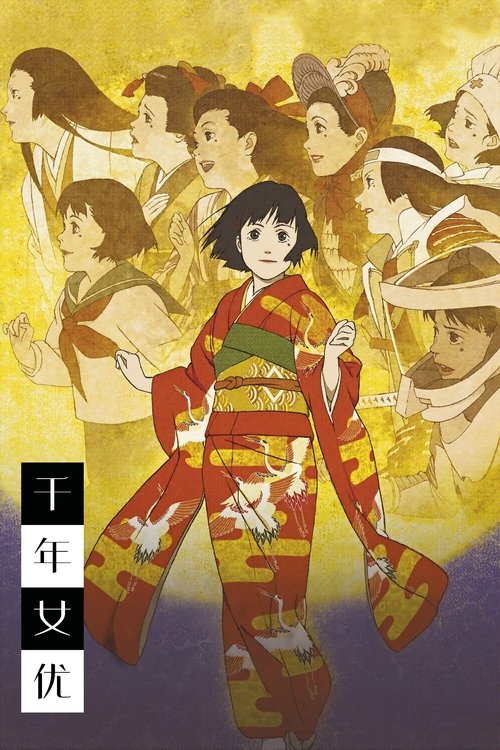
This scene should be a homage to Millennium Actress[35].[36]
The film tells the story of the female lead Chiyoko Fujiwara, who enters the film industry to pursue a man whose name and appearance she can barely remember. On screen, she constantly plays various roles—a Warring States princess, a late Edo courtesan, a Taisho-era ninja, a Showa-era female doctor... Each character is "running," "searching." In the film, "reality" and "movie" plots intertwine, with time and space constantly jumping, very cleverly. This is very similar to the Traveler's journey across nations while searching for their blood relative.
The transition poster here is "Suffering of Aging," corresponding to this chapter's name. At the end of the video, there is a compilation of the eight chapter posters.
Orlando
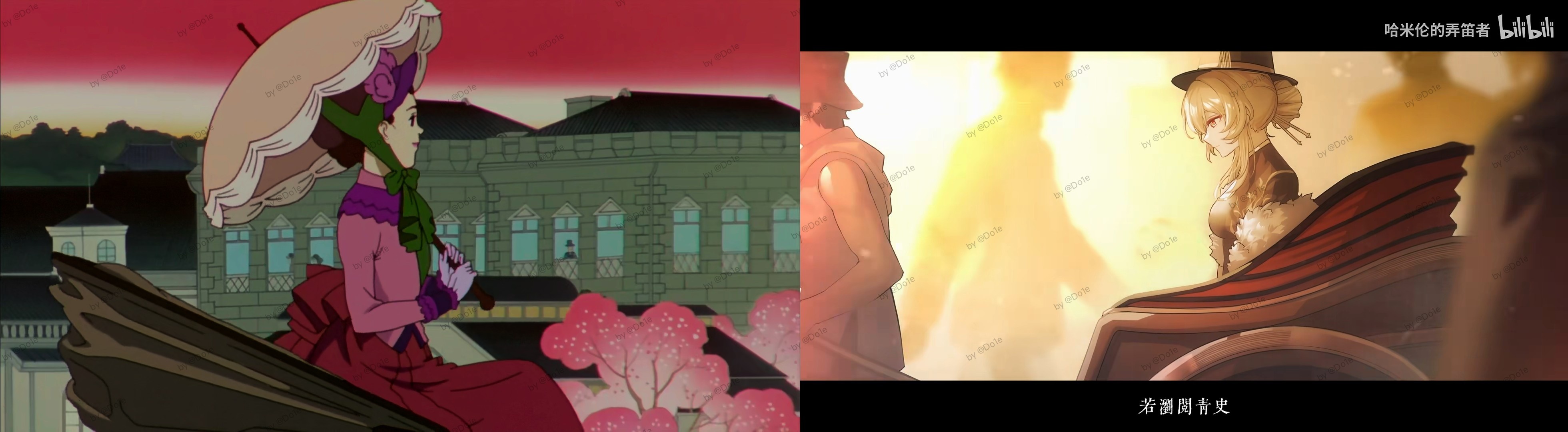
The next three scenes respectively represent Liyue's transition from the Archon War to the present era of human rule. This part's storyboard pays homage to the famous scene in Orlando[32] where the protagonist traverses a maze, with centuries passing and eras and costumes changing. In this somewhat stream-of-consciousness film analysis, the changes of the individual Orlando are often used as a metaphor for the transformation of the British Empire, which also brings to mind, "The Geo Archon must have watched over Liyue's changes in this way," and what the Geo Archon represents goes without saying.[33]
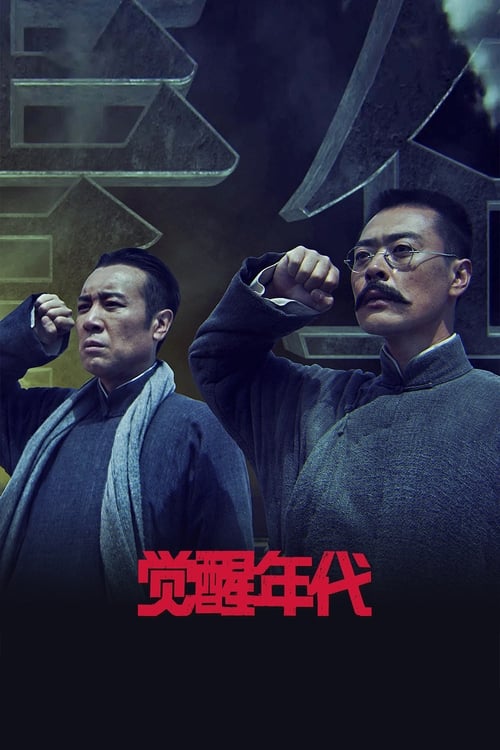
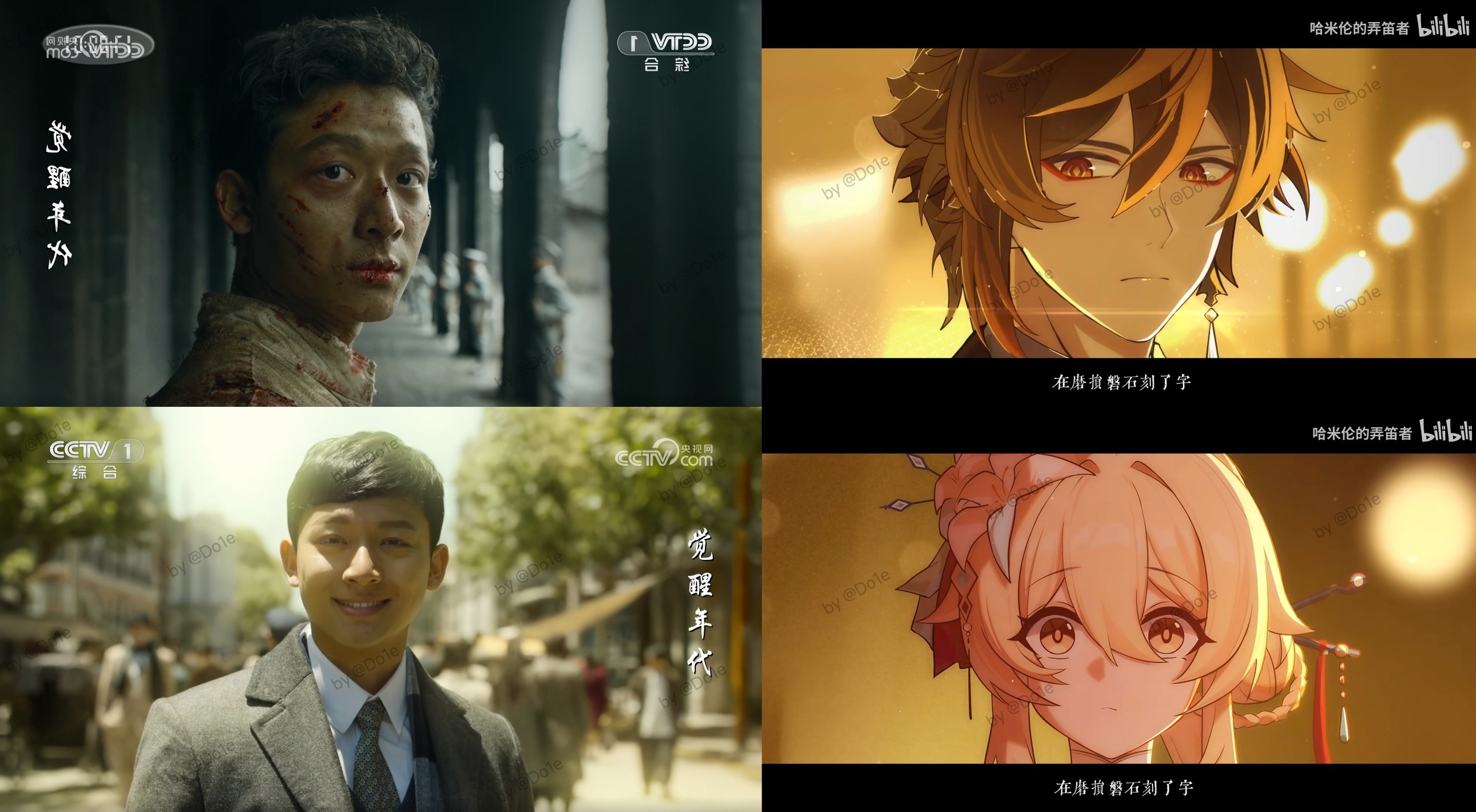
The Awakening Age
This TV series[10] is set against the backdrop of China's drastic social changes from 1915 to 1921, focusing on the magnificent historical process from the New Culture Movement and the May Fourth Movement to the founding of the Communist Party of China. The entire series centers on the "Southern Chen and Northern Li" (Chen Duxiu and Li Dazhao) agreeing to establish the party, depicting the ideological clashes and life choices of historical figures like Li Dazhao, Chen Duxiu, Mao Zedong, Zhou Enlai, Lu Xun, Hu Shi, Cai Yuanpei, and Gu Hongming, showing how China's progressive intellectuals explored a path to save the nation in a time of peril, ultimately choosing Marxism and founding the Communist Party of China. This is somewhat similar to Liyue's journey through hardship and eventual transition to human rule.
Here, the shot of the Geo Archon looking back at Lumine probably pays homage to this look back in Episode 39.
Farewell My Concubine
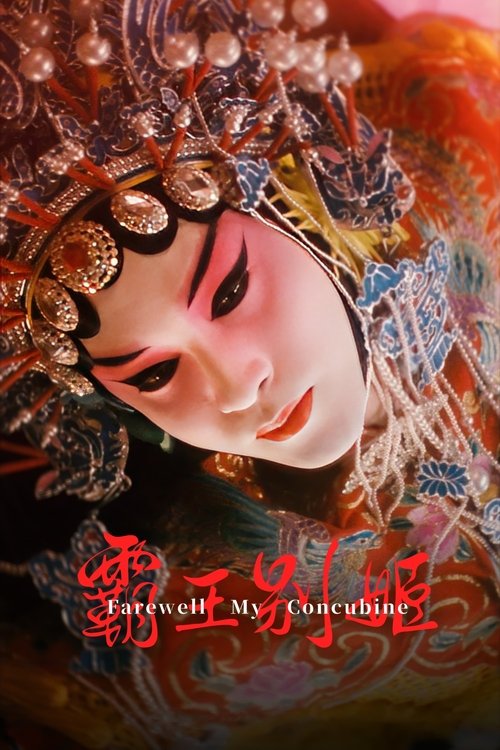
A film[11] related to Peking opera, with Yun Jin as the lead—nothing could be more fitting.
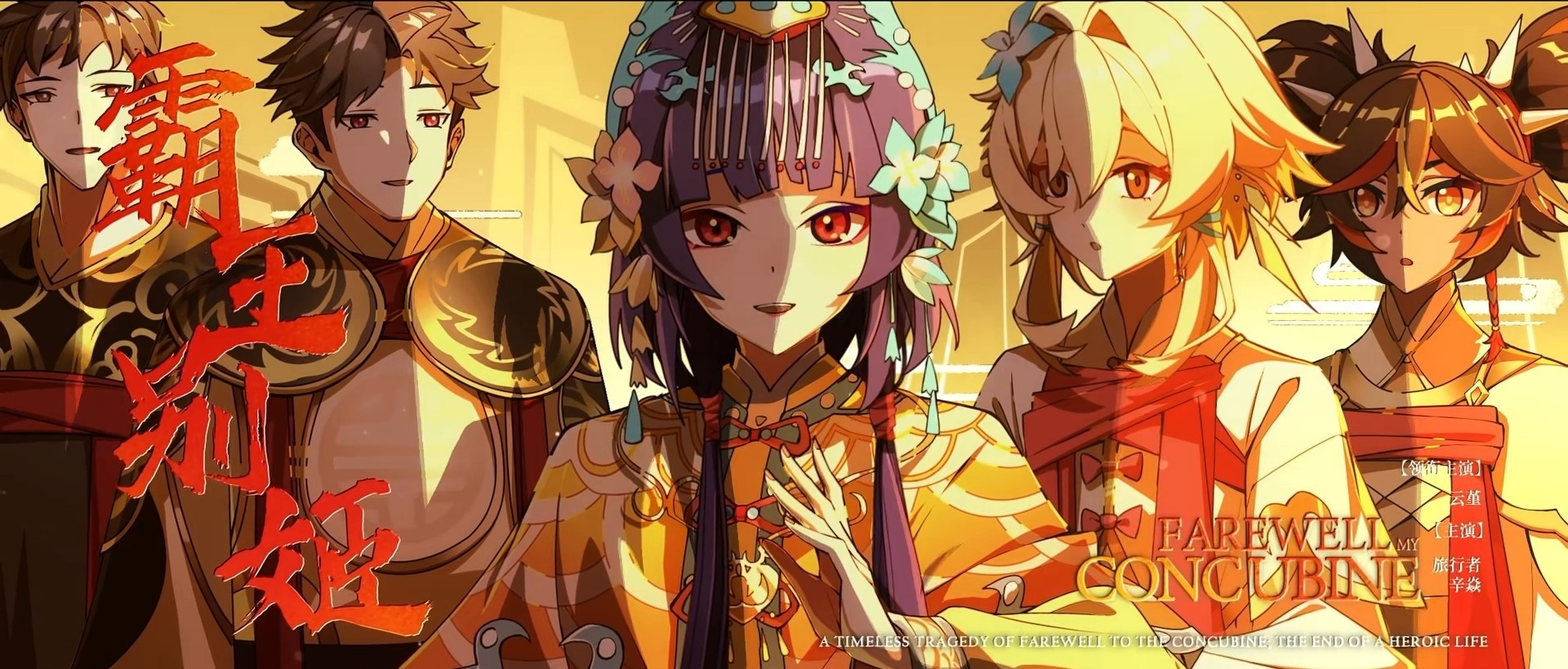
Indian Summer

Albedo eating an apple in the bathtub pays homage to Indian Summer[12]. In the film, the relationship between the female lead Klara and her cousin is somewhat like Albedo and "Albedo Junior." Klara is jealous of her cousin and commits some retaliatory acts. So, is the one lying in the bathtub "Albedo Junior"?
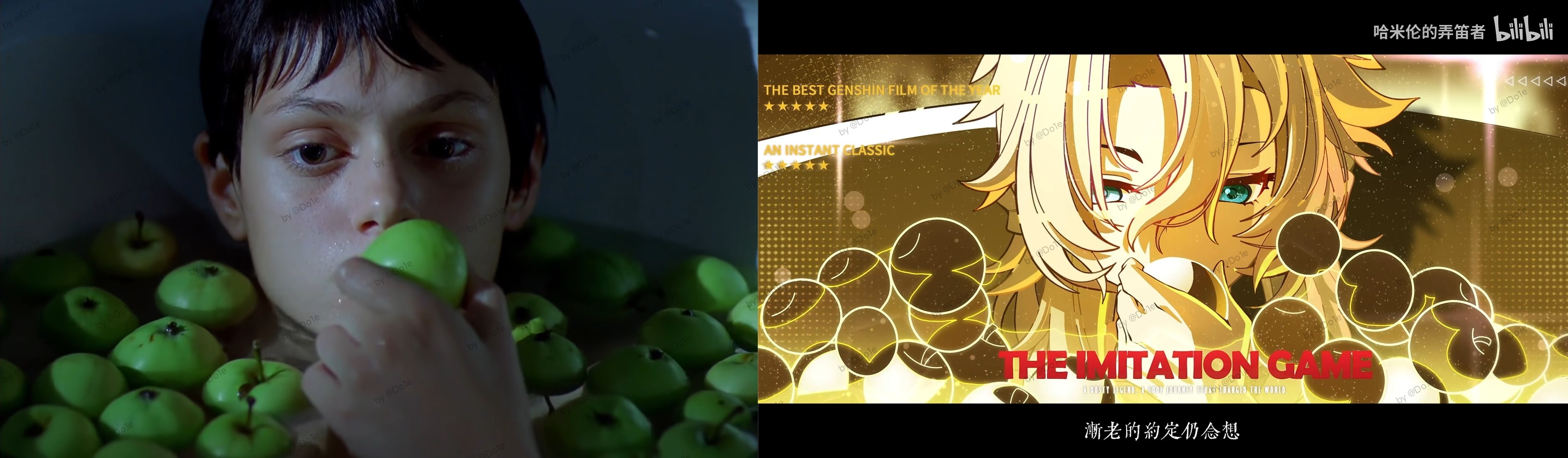
The Imitation Game

This movie[13] doesn't seem to have a similar shot, but there's a reason its title is placed on Albedo's scene.
It's a film about Alan Turing. Albedo and Turing are both socially awkward, transcendent geniuses. Albedo's attempt to create life parallels Turing's Turing Test (a test to create a machine that can think like a human and deceive humans). In many ways, Albedo and Turing are very similar.
It is said that Turing committed suicide by biting an apple laced with potassium cyanide, which matches the scene above.
The Great Gatsby
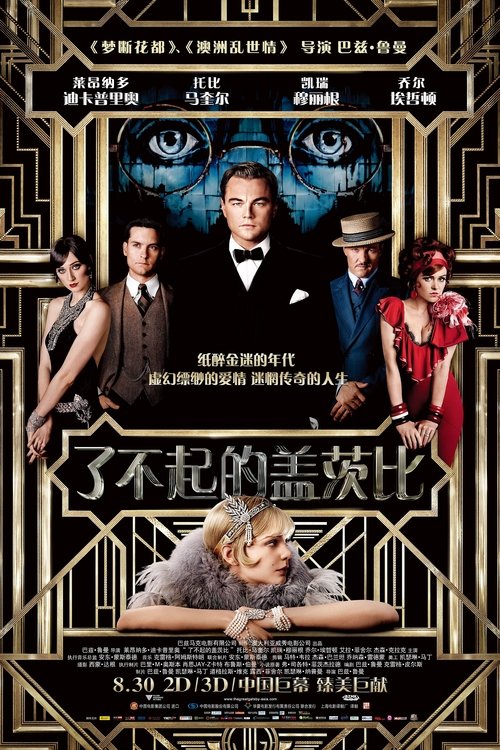
A famous scene in many senses. Like Ningguang, the movie's[14] Gatsby came from humble beginnings and built his wealth through his own efforts, a mysterious and wealthy figure.
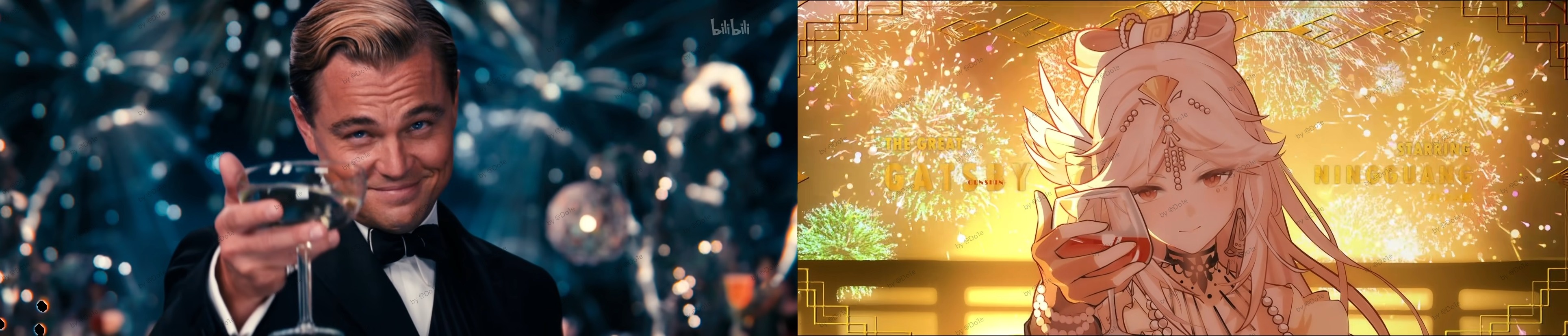
Then two images with small seal script flash by:
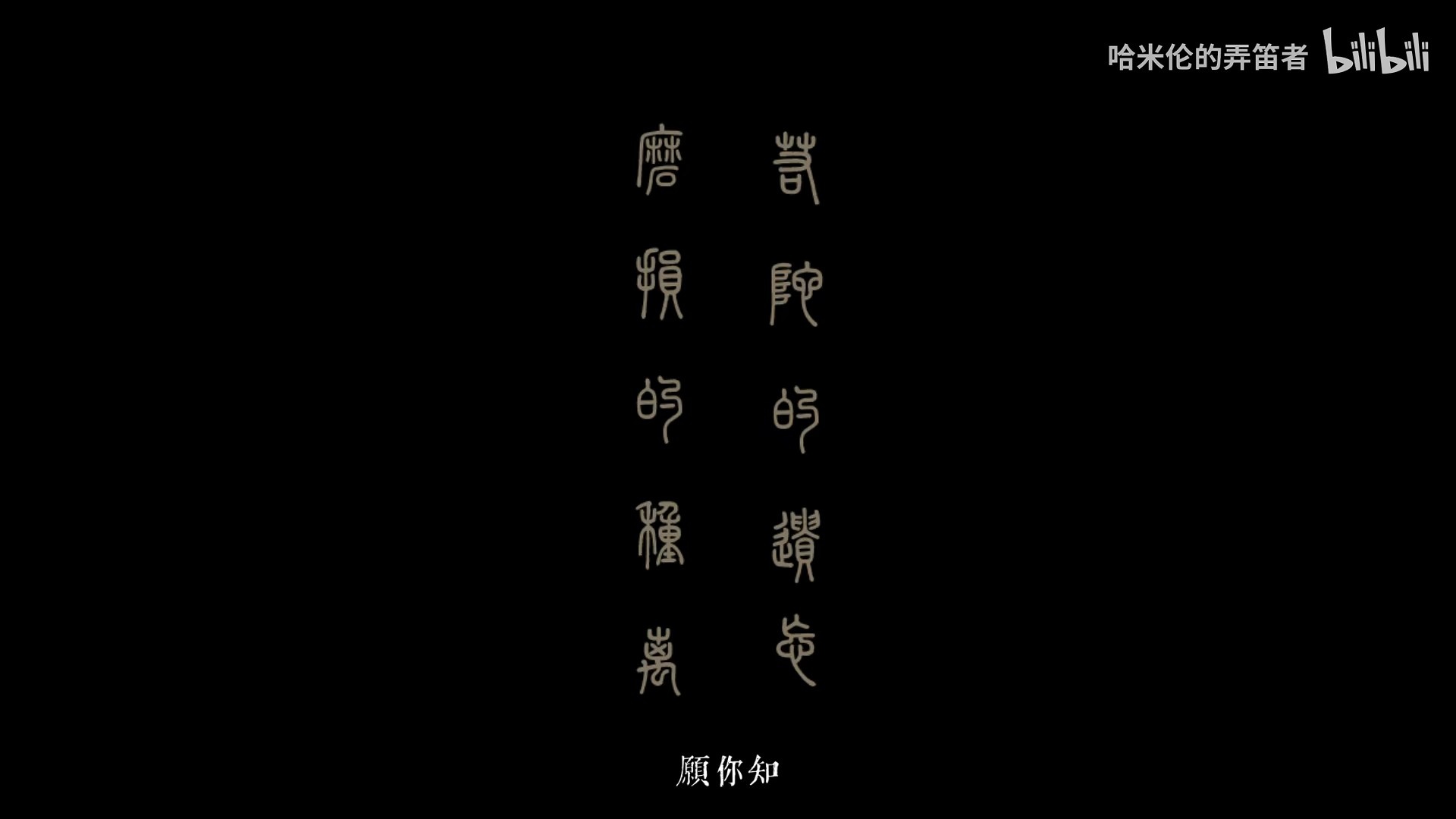
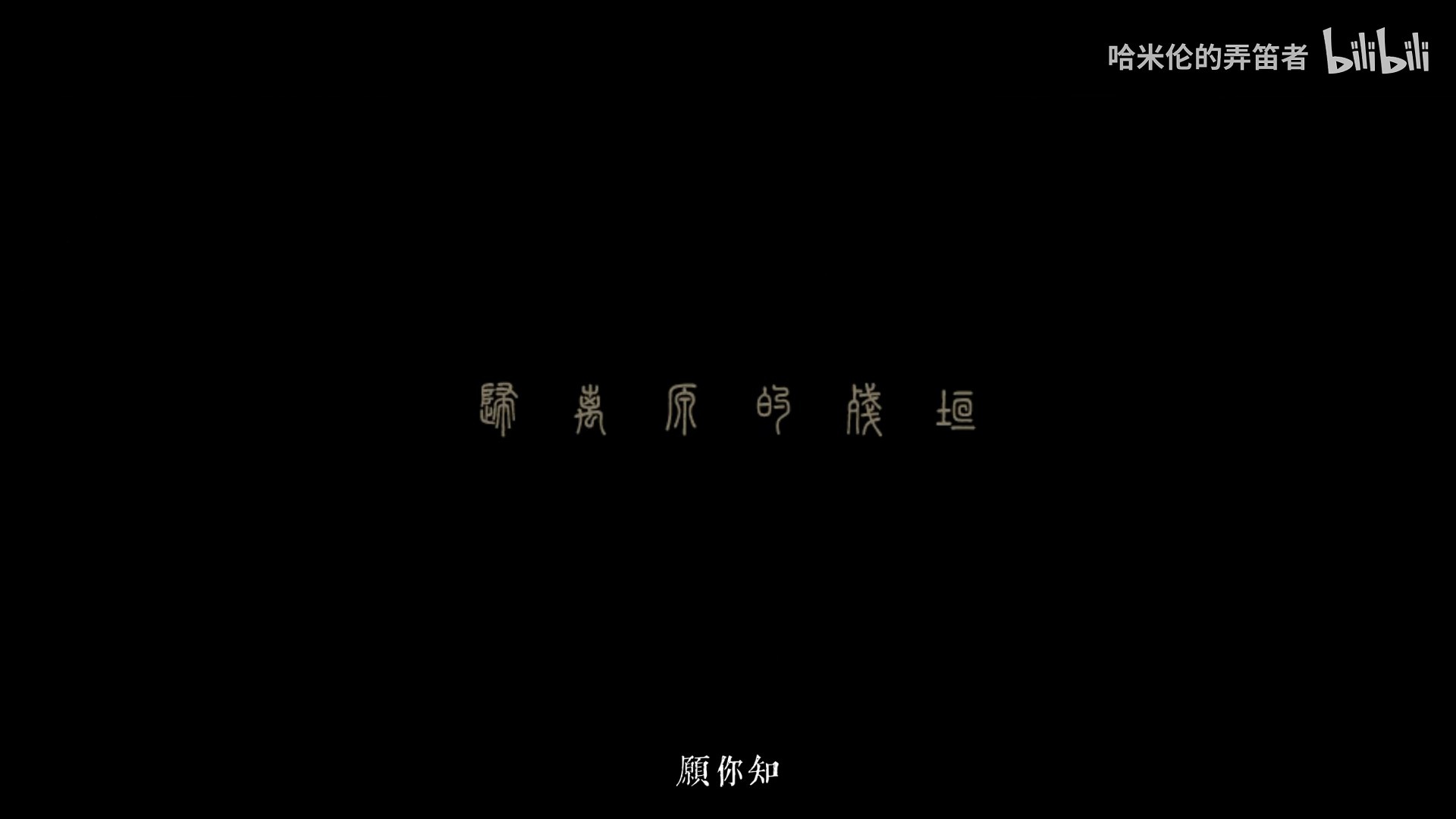
The Godfather
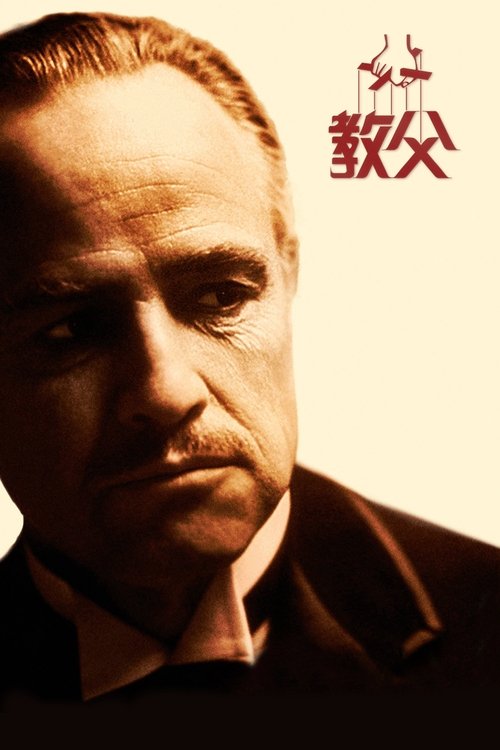
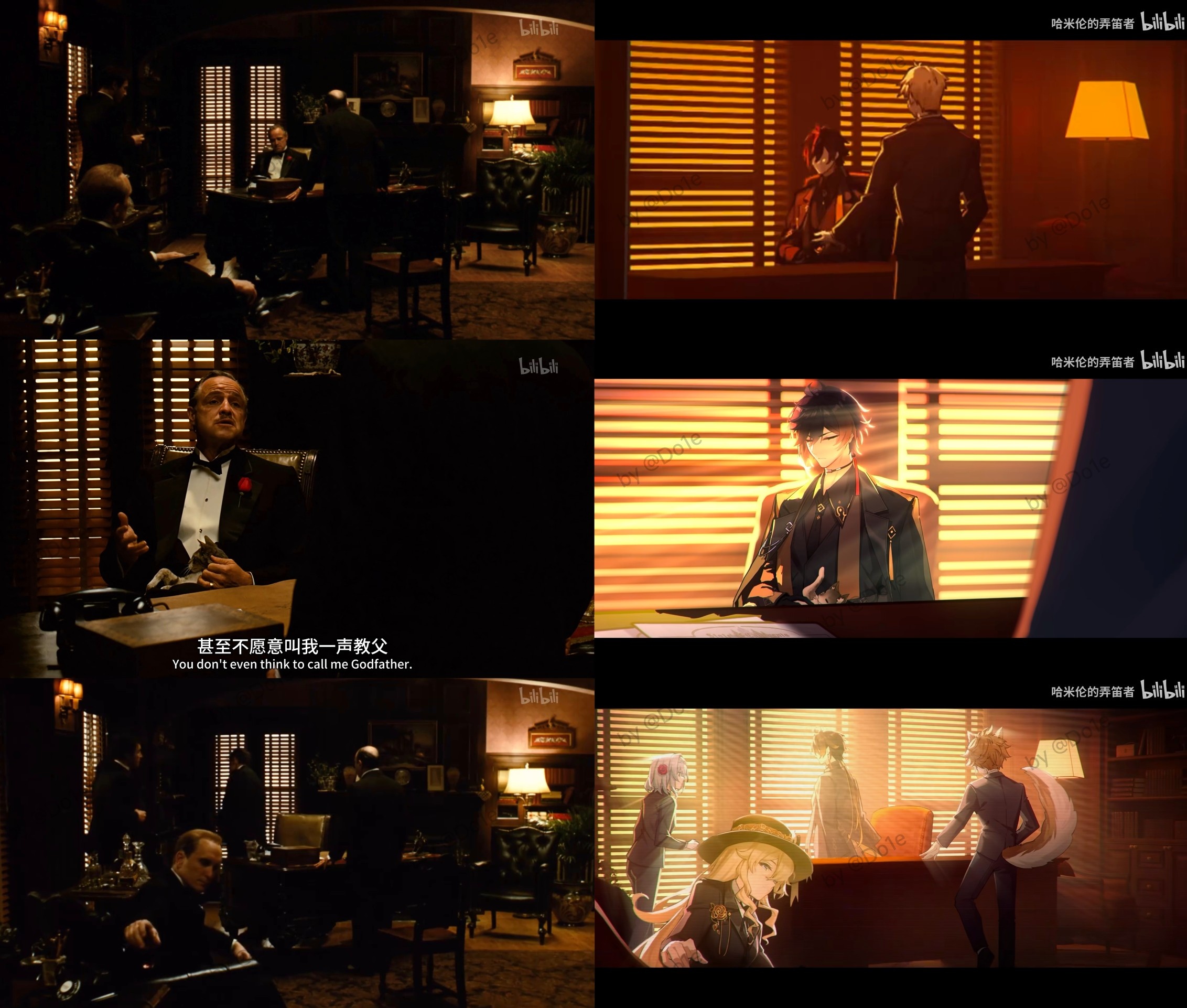
These four shots below look like they're from The Godfather[15], but I couldn't find the corresponding storyboard.
Then comes this famous scene: "You don't even want to call me Godfather." The person standing in the first row here should be Itto.
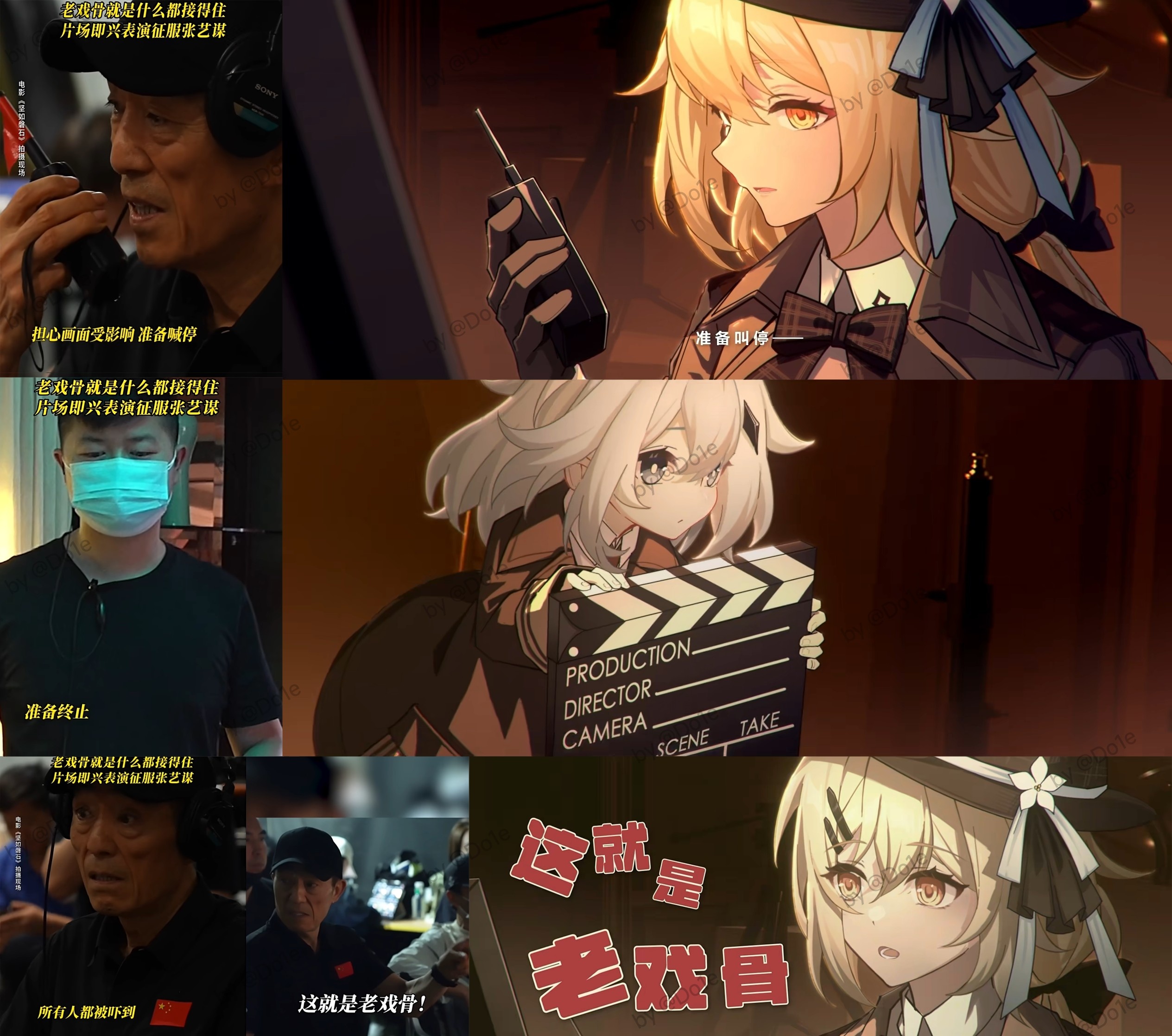
"This is a veteran actor," a well-known meme[16] from the behind-the-scenes of Under the Light, and the film's title also matches Zhongli.
Chapter 3: Meeting the Hated - Electro
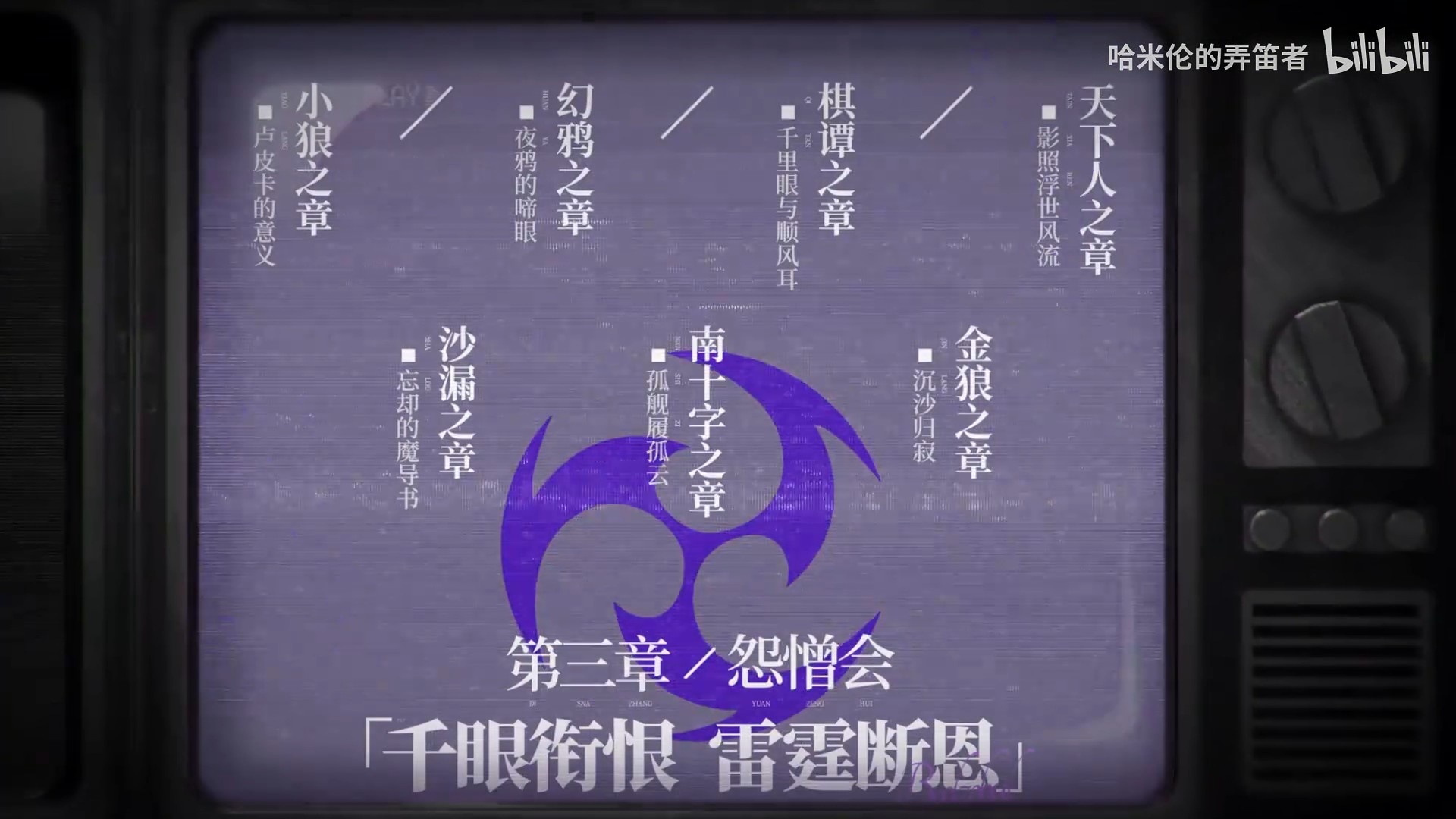
The seven quests at the title:
- Imperatrix Umbrosa Chapter - Reflections of the Floating World: Raiden Ei's Story Quest.
- Chessboard Chapter - Clairvoyance and Clairaudience: Not sure; anyone who knows can comment?
- Corvus Chapter - The Night Raven's Cry: Probably a quest related to Fischl?
- Lupus Minor Chapter - The Meaning of Lupical: Razor's Story Quest.
- Lupus Aureus Chapter - The Sand Buries the Silence: Cyno's Story Quest.
- Crux Chapter - A Lone Ship in Guyun: A quest related to Beidou, the quest name is exactly "A Lone Ship in Guyun."
- Tempus Fugit Chapter - The Forgotten Tome: Probably Lisa's Story Quest "Troublesome Work."
Rashomon
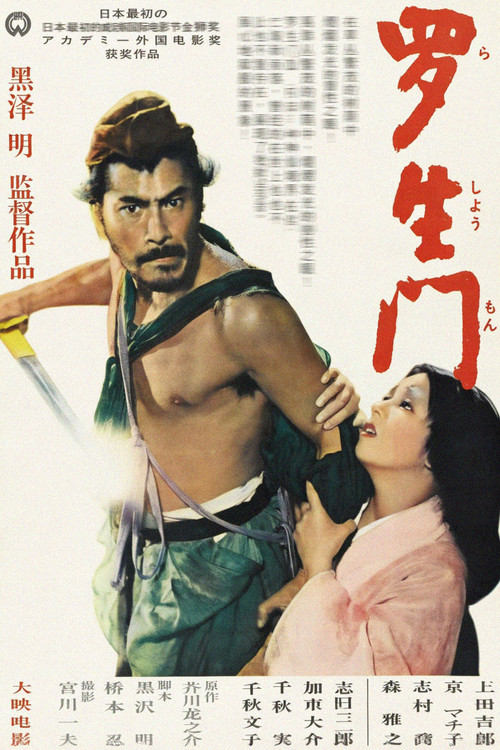
This segment paying homage to Rashomon[17]—I'm not sure if there's a direct visual correspondence, but the plot is quite fitting.
In the film, a samurai is killed, and surrounding his death, three involved parties (the bandit Tajomaru, the samurai's wife Masago, and the samurai's spirit through a medium) each tell completely different versions in court, all contradictory, exaggerated, and heavily self-serving. That's why Lumine says here, "Everyone is lying."
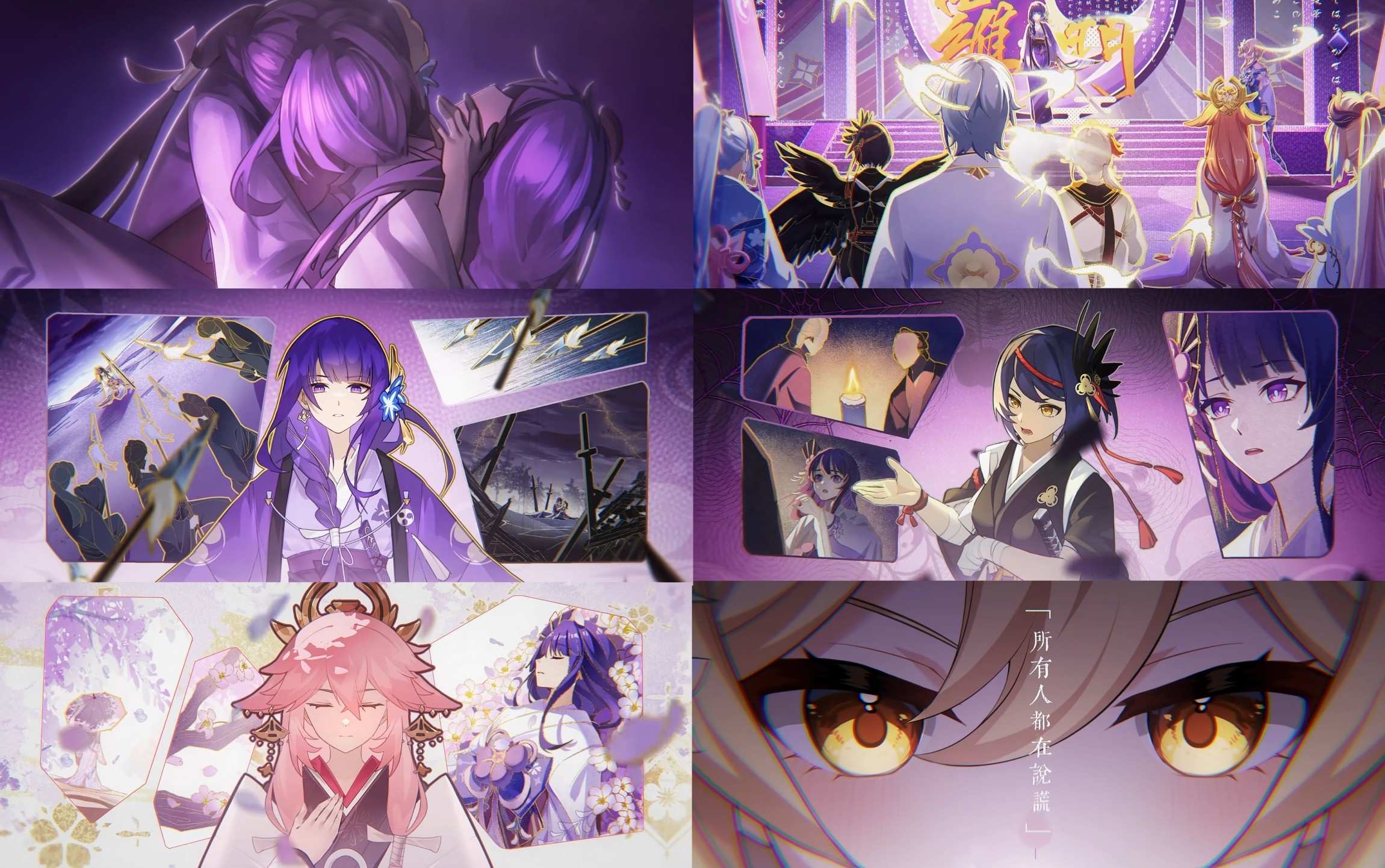
This movie corresponds to the Inazuma storyline, where there are different accounts surrounding the death of Raiden Makoto. However, I couldn't figure out how the three images of Ei, Kujou, and Miko correspond to the plot, so I'll just share my personal understanding below.
- In the eyes of the Inazuma people, Raiden Makoto died heroically in battle against the forces of Khaenri'ah to protect Inazuma.
- In Ei's eyes, Raiden Makoto "went to Khaenri'ah without telling me." Ei believes Makoto went to the battlefield to protect her and died due to insufficient combat strength.
- In Ei's Story Quest Act II, Raiden Makoto foresaw Inazuma's future and chose to become the seed of the Sacred Sakura to protect Inazuma while buying time for Ei to grow, a voluntary sacrifice.
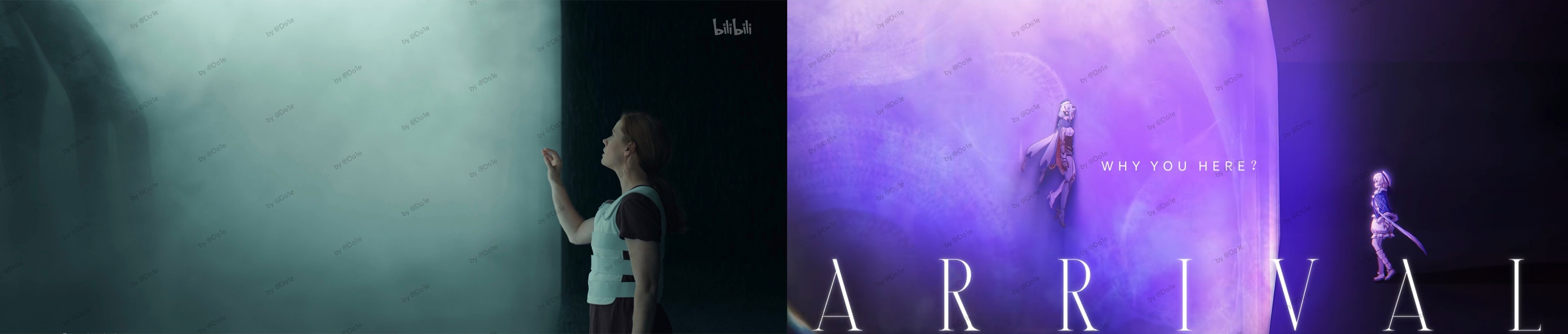
Arrival

The movie's[18] plot revolves around linguist Dr. Louise Banks. The story begins when mysterious giant alien spacecraft suddenly appear at 12 locations worldwide. To avoid global panic and conflict, the U.S. military recruits Louise and physicist Ian Donnelly to decipher the alien visitors' language. The film has a very clever design regarding time, which I won't spoil here. According to bullet comments, compared to the original work, the movie added national narratives and smuggled in some bias, portraying China and Russia as villains.
The line "Why you here?" in the image is also a line spoken to the aliens in the film's opening recording. It probably metaphorically suggests that the Traveler and Iansan come from different worlds.
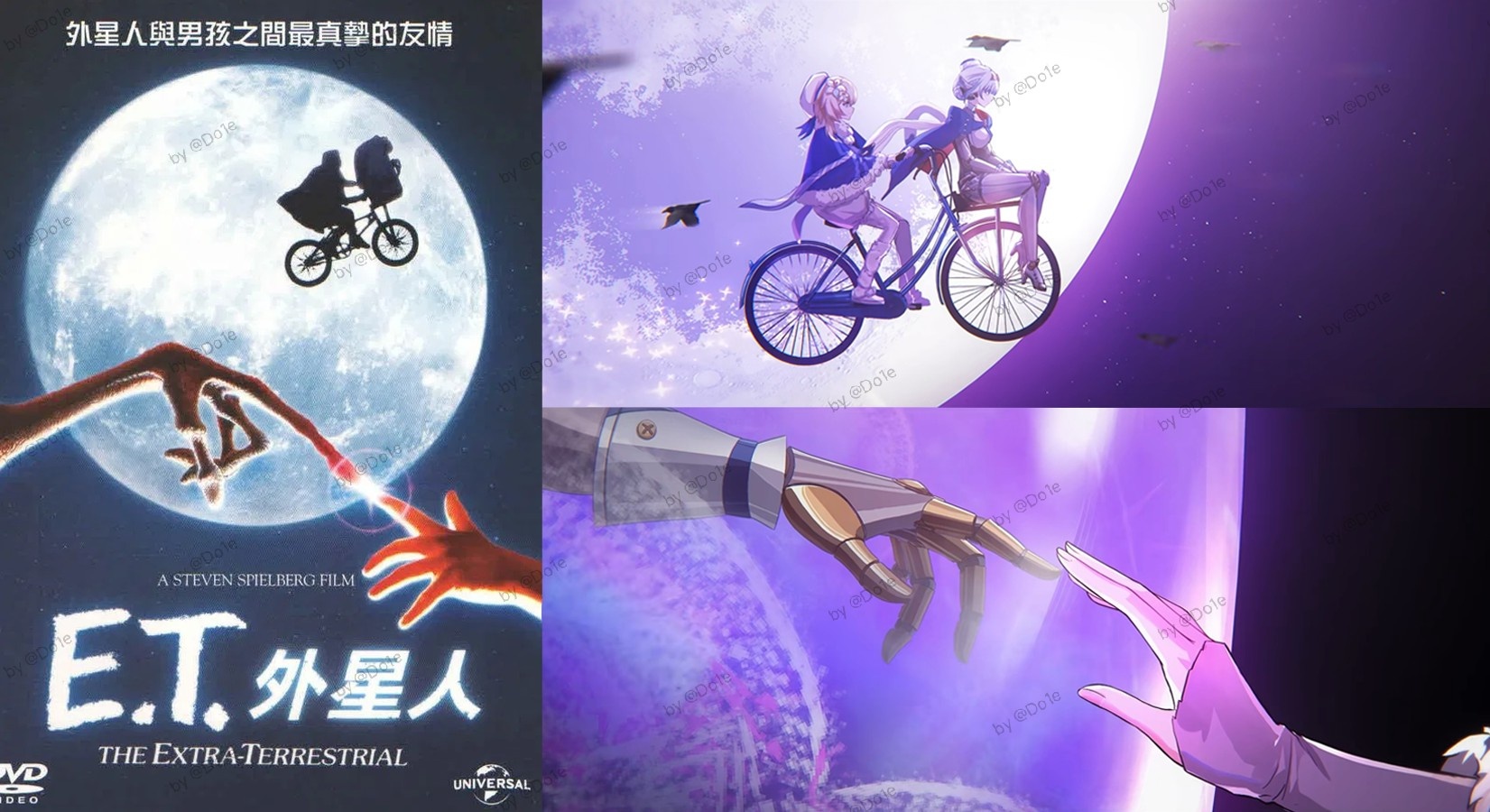
E.T. the Extra-Terrestrial
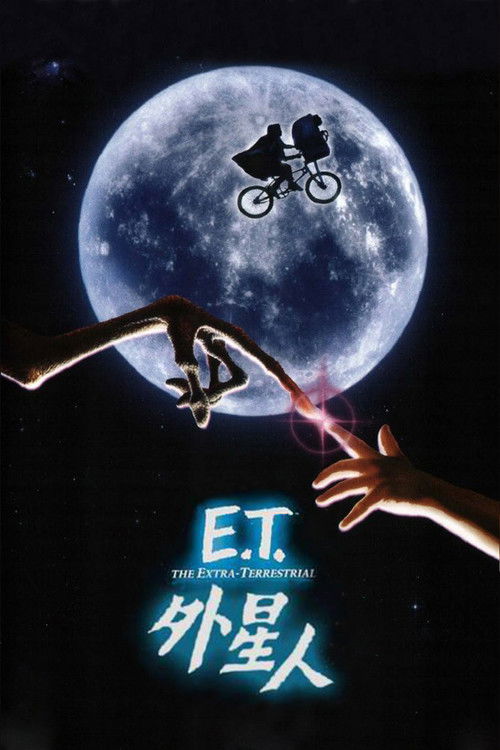
E.T. the Extra-Terrestrial[19] is a classic old film, chosen perhaps for the same reason as above.
The Forgotten Poems

The movie's[20] protagonist is also a gravedigger, holding onto memories against forgetting, which fits Phyllis's identity very well.
The soaring whale in this scene is also an important motif at the film's end.
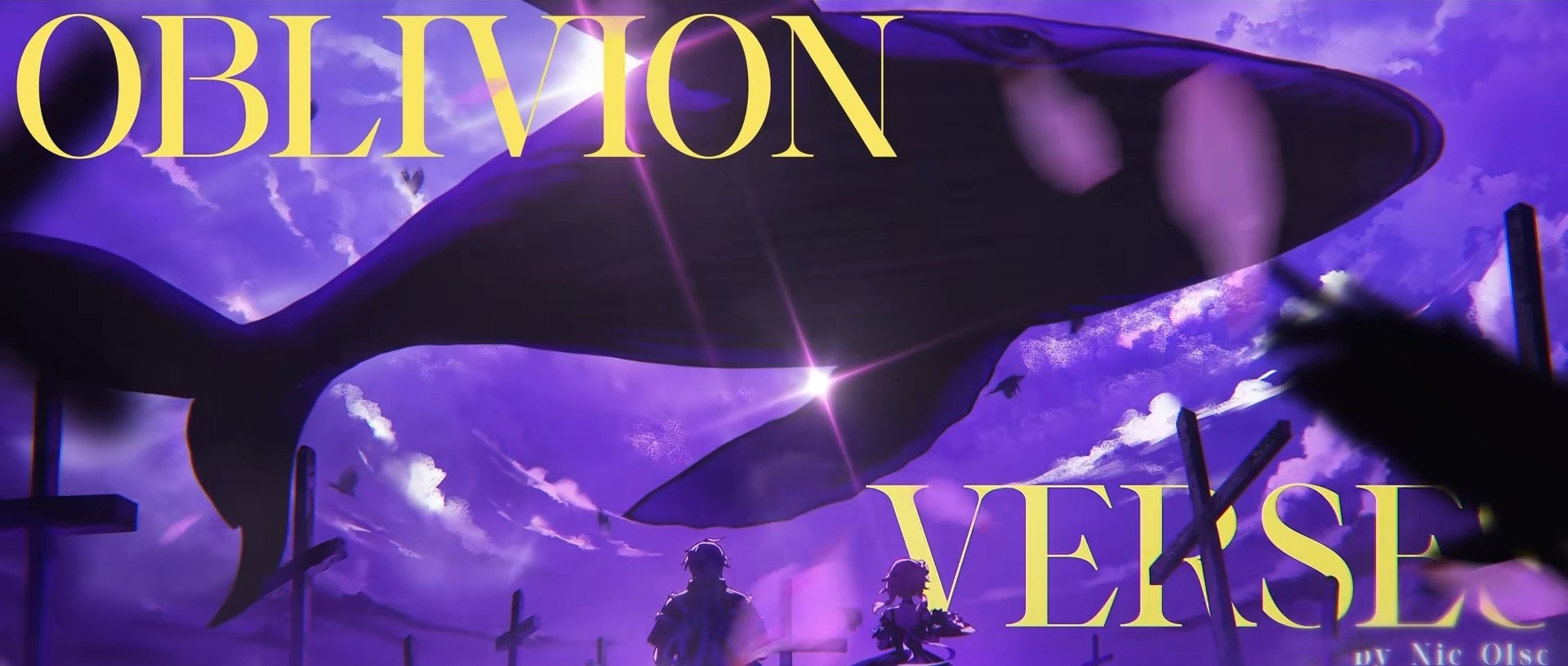
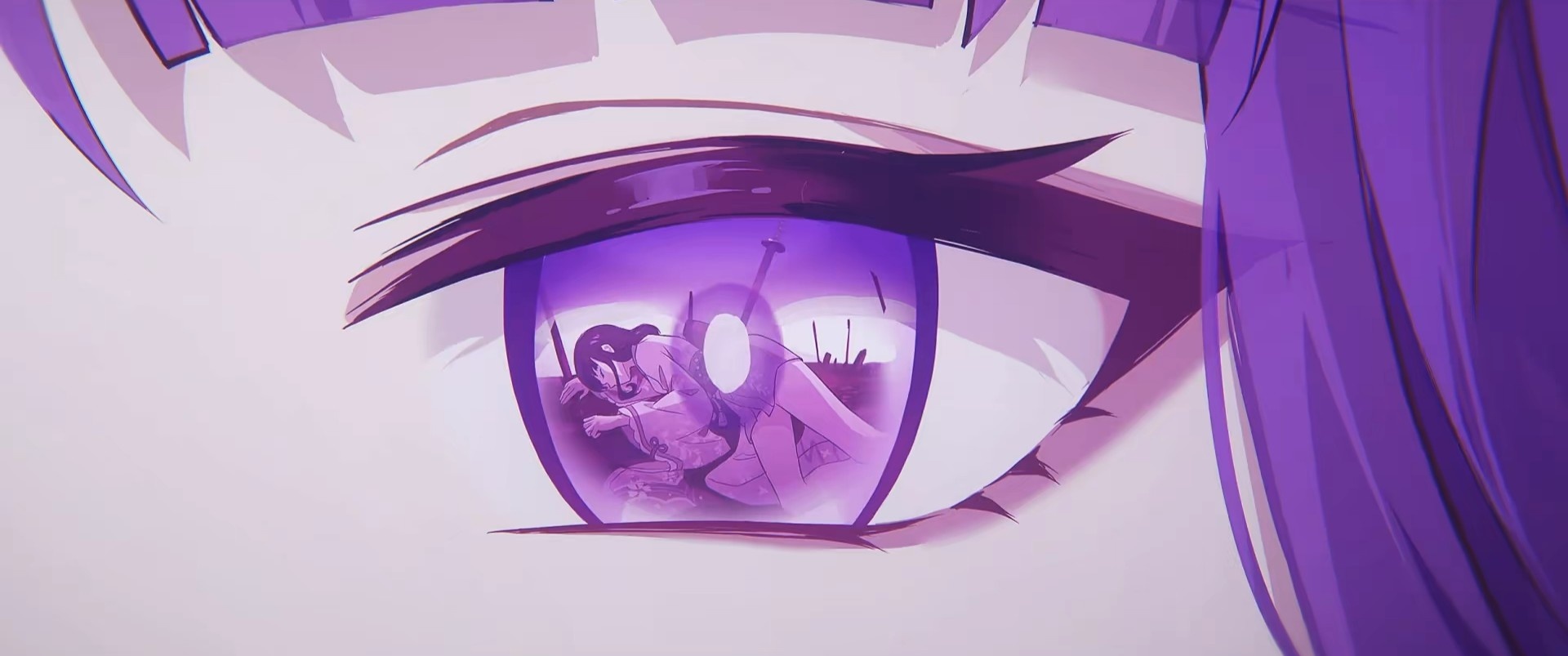
By the way, the camera movement in this segment is so cool!
Then a quick flash of this scene probably represents what the characters see as their inner knots.

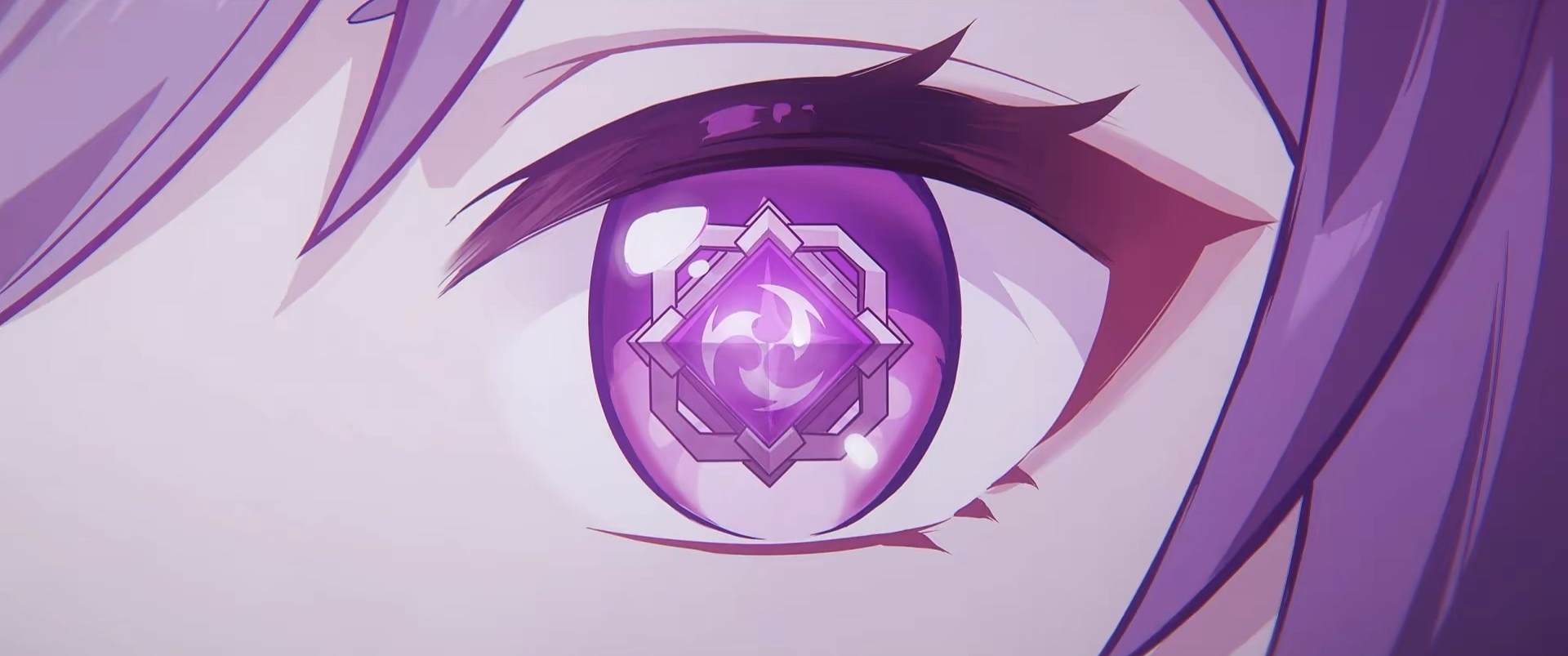
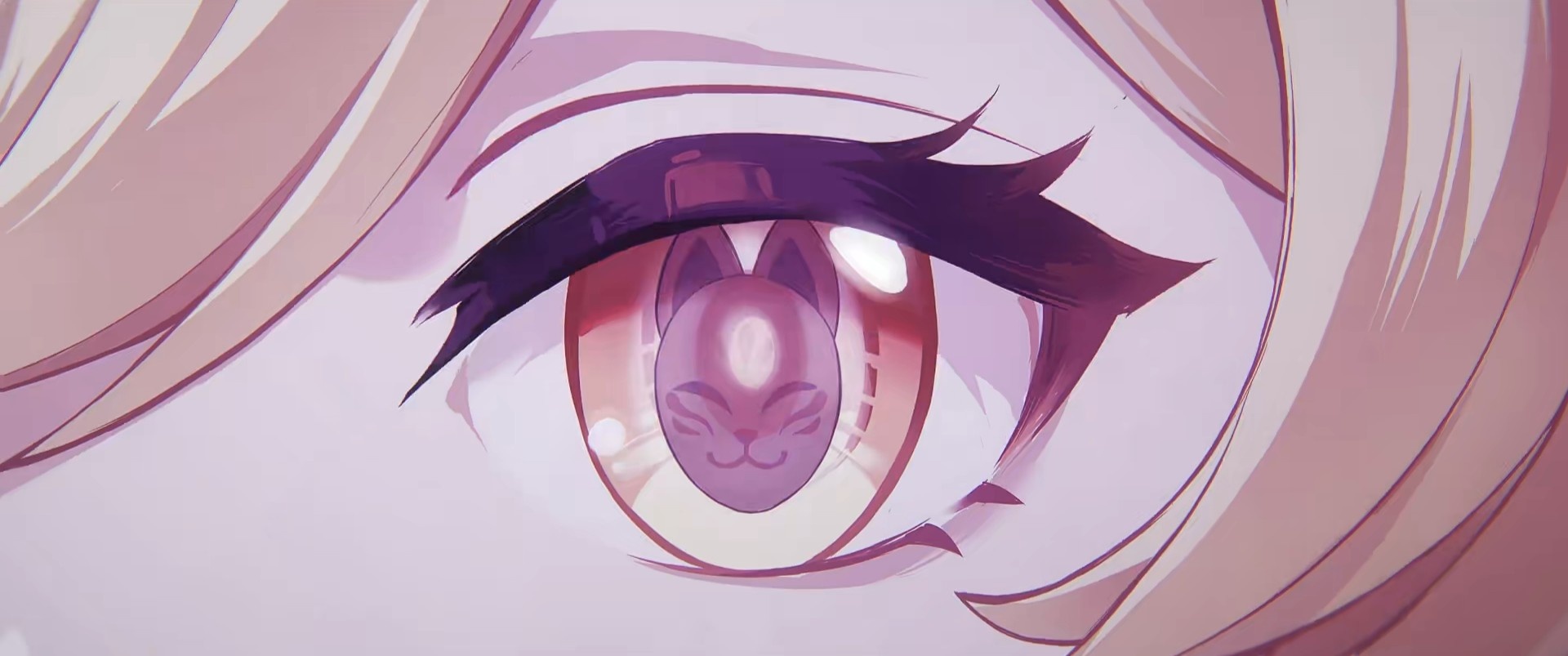
The other three are easier to understand. For Keqing, you can refer to her character story about Visions:
In the matter of not respecting Visions, Keqing is probably unique. Keqing knows well that all her achievements are clearly the result of her own efforts, yet in the eyes of others, they become the credit of the Vision. She can't help but feel that this purple crystal has stolen the pride that belongs to her, a provocation and insult from the gods. To destroy the Vision, she tried countless methods: burning it in a great fire for three days and nights, crushing it under a minecart full of stones, or simply throwing it off the Jade Chamber. Unfortunately, all of the above ended in failure. Keqing was at her wit's end, but not wanting it to fall into the hands of thieves, she ultimately reluctantly accepted this Vision that belonged to her. As time passed, Keqing gradually came to accept the Vision. She realized that this item was not inhabited by a god's consciousness and had provided practical help in many matters, so she decided to make good use of this power. "More important than the source of power is the one who wields it." Regardless of how she once viewed the Vision, this power has now become an indispensable part of Keqing. It's a good thing she didn't destroy it back then, or she would surely regret it—after all, she is a pragmatist.
Chapter 4: Suffering of Death - Pyro
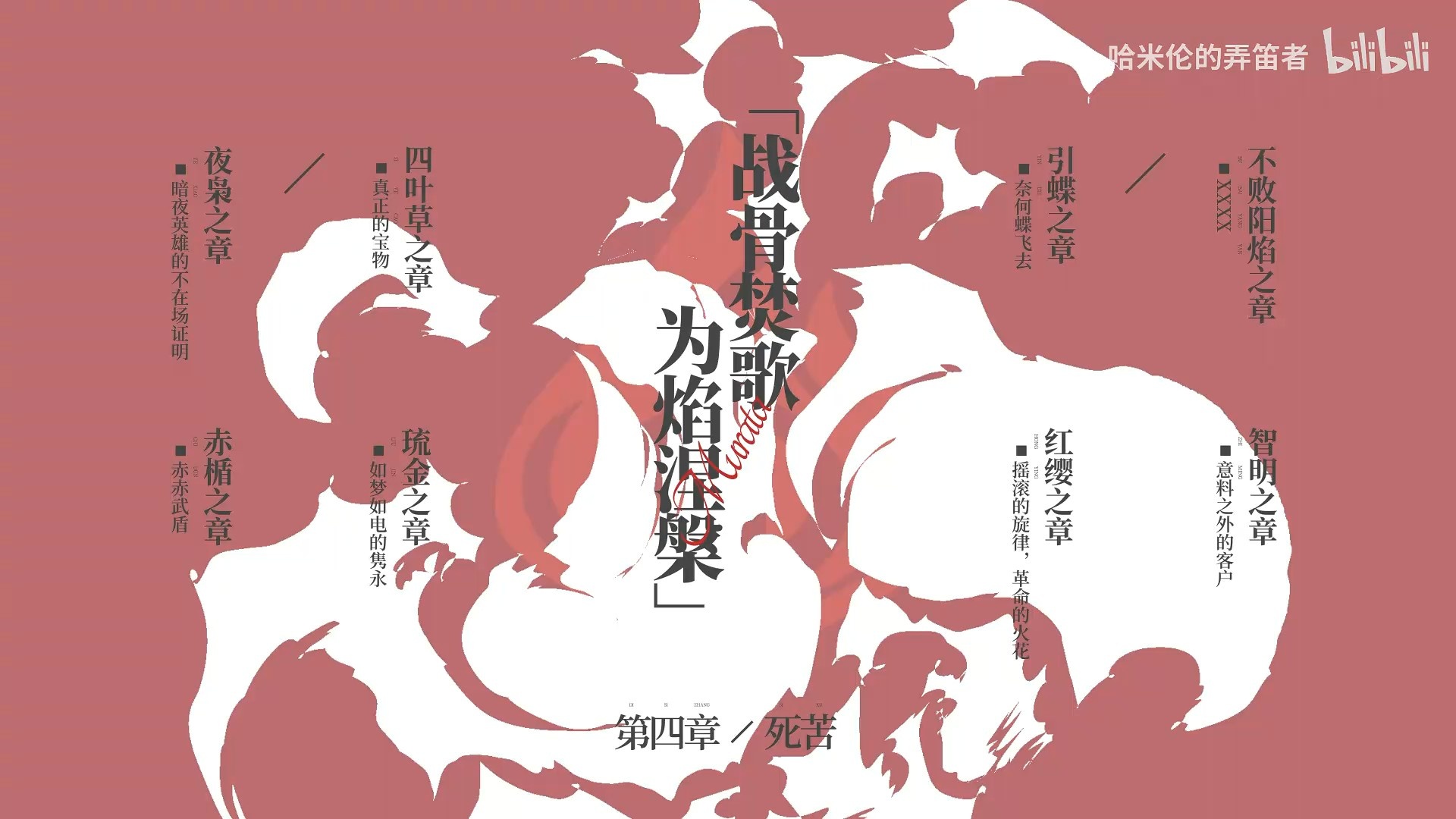
The eight quests at the title:
- Sol Invictus Chapter - XXXX: Mavuika's Story Quest, the quest name is "As the Blazing Sun." If "XXXX" was intentionally written wrong, it also fits Natlan's theme.
- Papilio Charontis Chapter - Yet the Butterfly Flies Away: Hu Tao's Story Quest.
- Trifolium Chapter - True Treasure: Klee's Story Quest.
- Noctua Chapter - Darknight Hero's Alibi: Diluc's Story Quest.
- Sapientia Oromasdis Chapter - An Unexpected Customer: Probably a quest related to Gaming. In the 4.4 Lantern Rite plot, Cloud Retainer set up a scheme involving a shipment, and the client was Gaming's father (an unexpected customer).[41]
- Crimson Tassel Chapter - The Melody of Rock, the Spark of Revolution: Probably some event quest related to Xinyan.
- Carassius Auratus Chapter - The Fleeting Eternity of Dreams: Yoimiya's Story Quest Act I.
- Rubrum Scutum Chapter - The Crimson Shield: Probably a quest related to Thoma.
The production team combined Pyro and Cryo characters together, and the collision between ice and fire shows the team's clever arrangement. Therefore, this chapter has no analysis; moving on.
Chapter 5: Unfulfilled Desires - Cryo
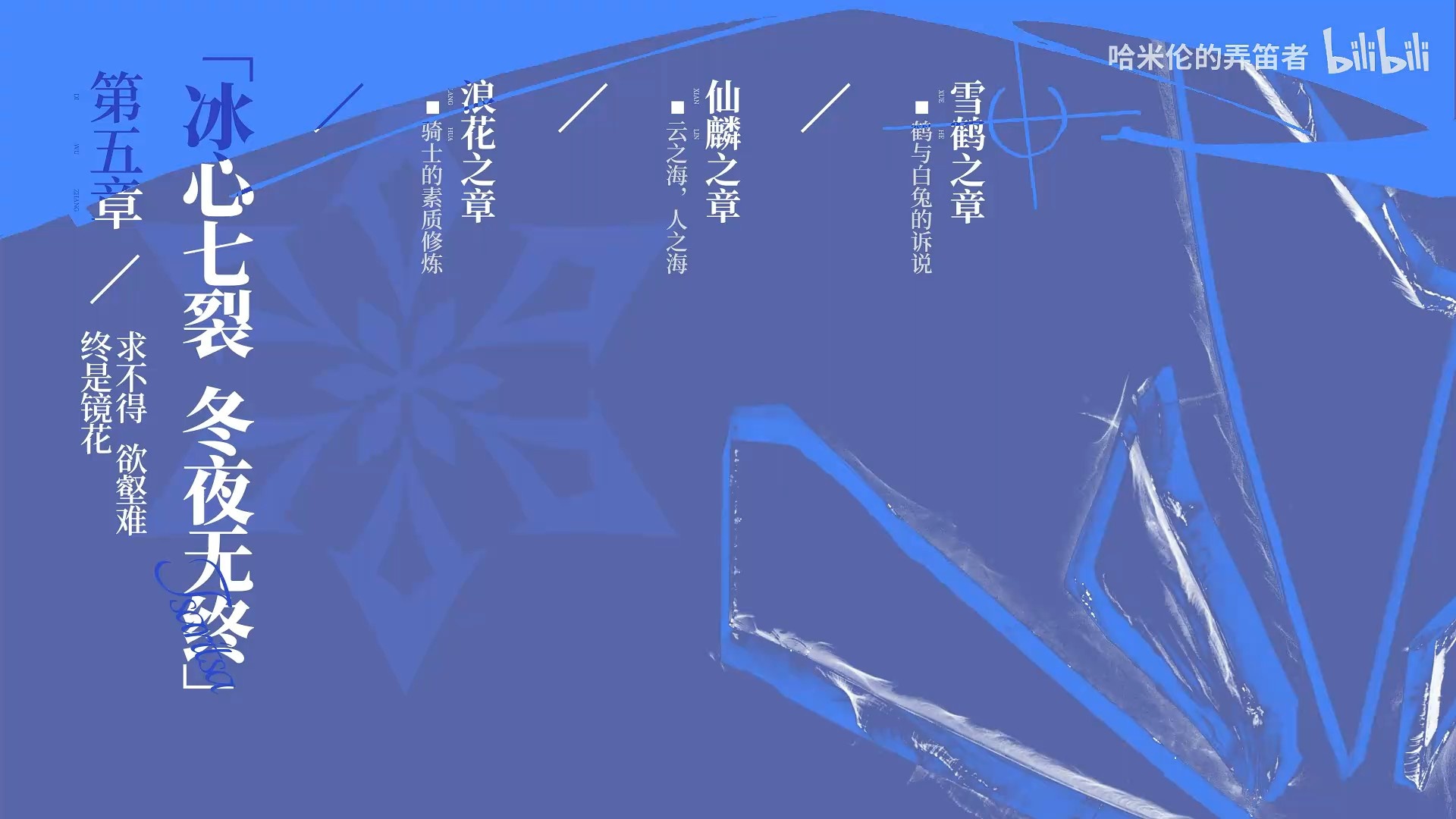
The three quests at the title:
- Grus Nivis Chapter - The Heron and the Rabbit's Tale: Ayaka's Story Quest.
- Sinae Unicornis Chapter - Sea of Clouds, Sea of People: Ganyu's Story Quest.
- Spuma Chapter - Knight's Quality Training: Probably Eula's Story Quest, but the correct quest name is "Aphros Delos Chapter - The Spindrift Shall Never Return to the Sea."
Infernal Affairs
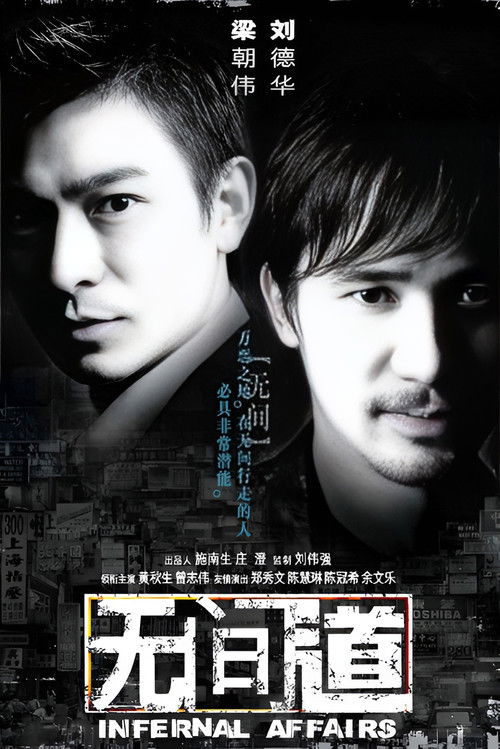
Another classic famous scene[21]. In the film, Chan Wing-yan is an undercover cop planted in the triads, fitting Diluc's Darknight Hero identity; Lau Kin-ming is a triad mole planted in the police force, corresponding to Kaeya, who appears to be a member of the Knights of Favonius but is also "a pawn placed in Mondstadt by Khaenri'ah, supposed to serve Khaenri'ah."
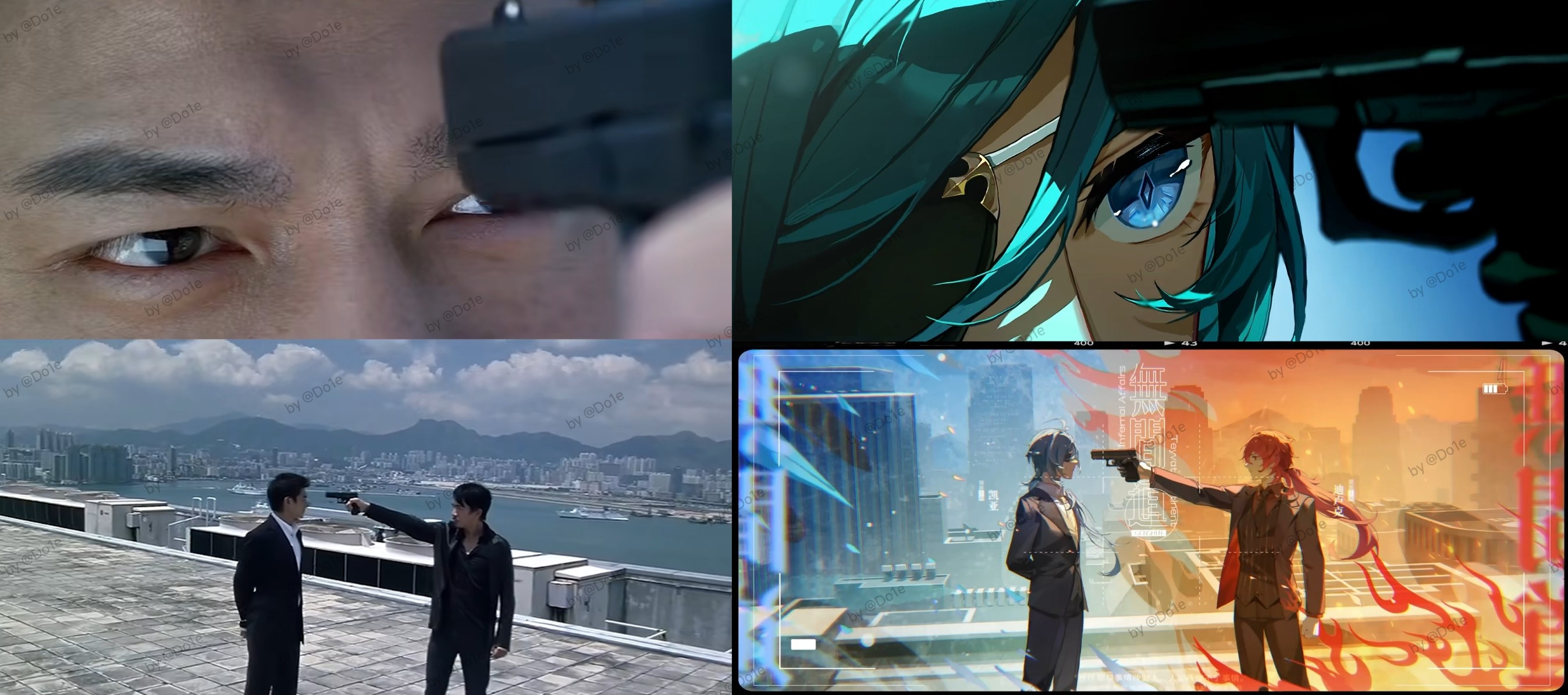
This scene is also very reminiscent of Kaeya's Vision character story: on the rainy night when his father was killed by Diluc's own hand due to Delusion backlash, as the adopted son, Kaeya should have saved Crepus but arrived too late; as the sworn brother, he should have helped Diluc share the pain but hid behind his brother, contemplating the conspiracy of being Khaenri'ah's pawn in Mondstadt. Finally, in the downpour, Kaeya confessed the truth to Diluc, and the two drew swords against each other.
Mr. Vampire
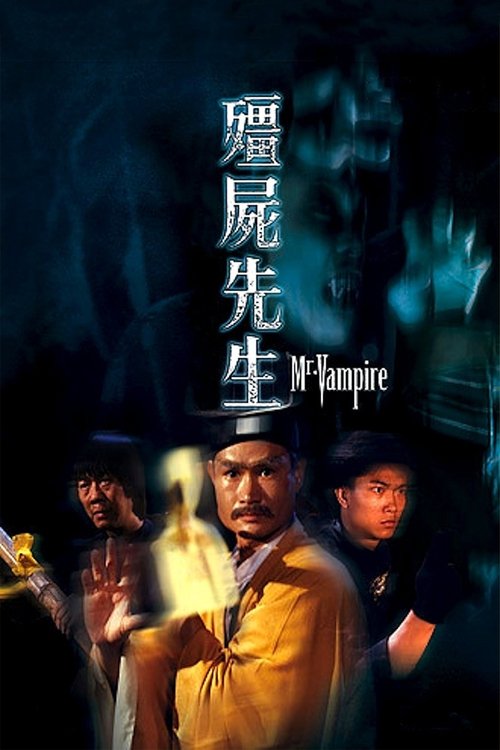
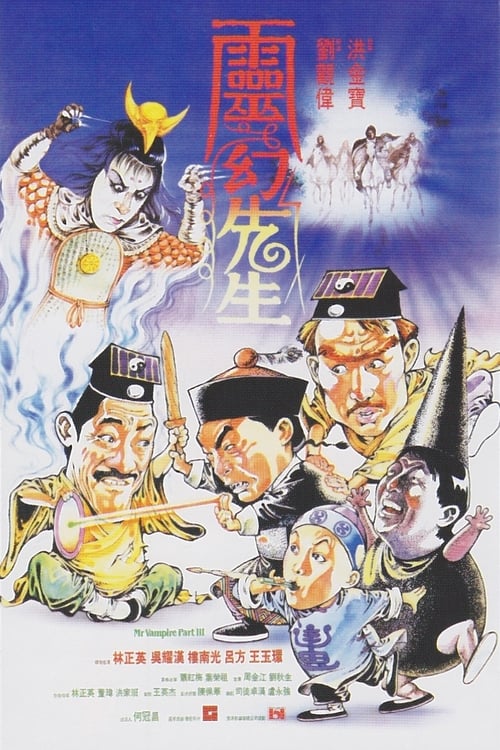
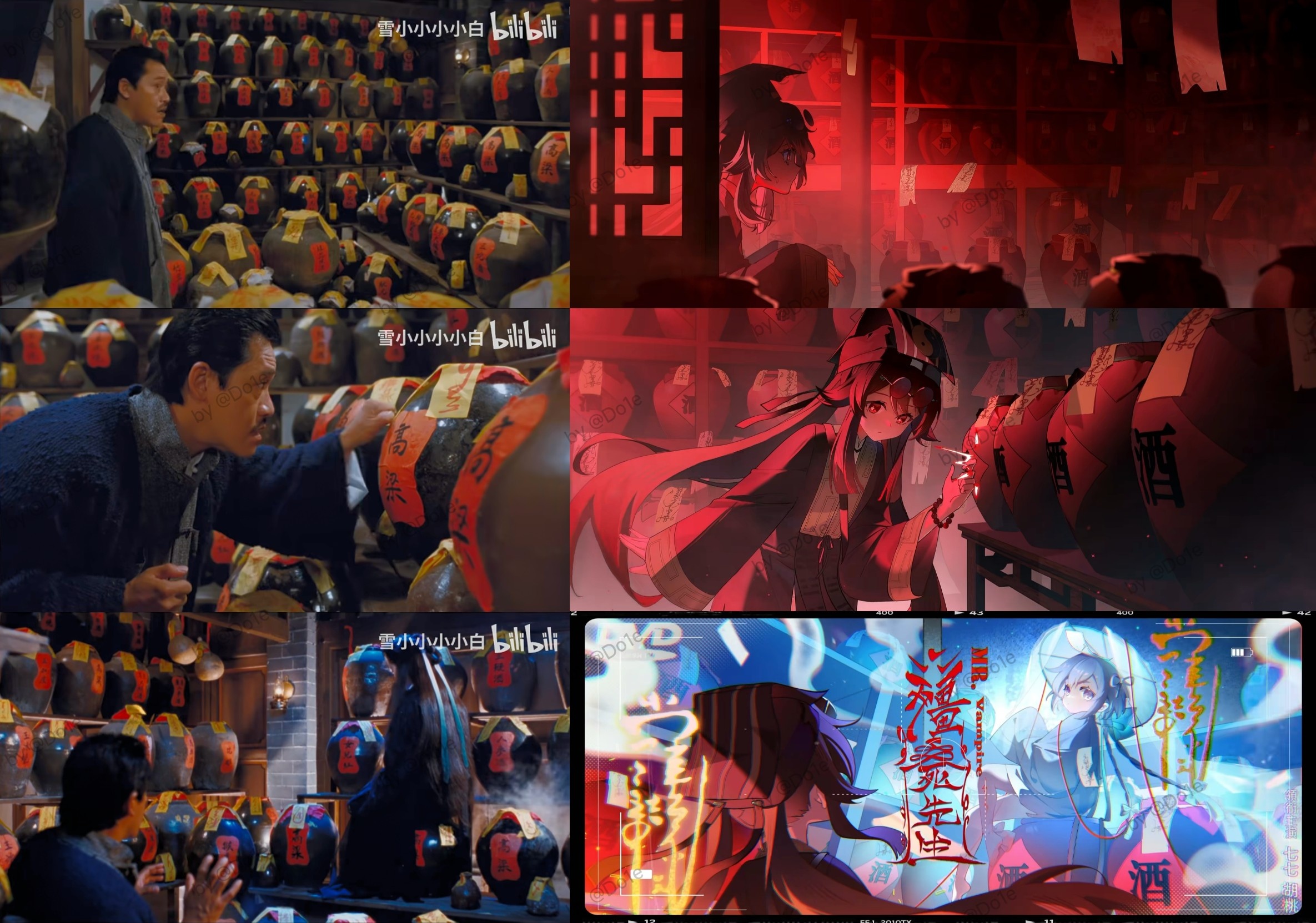
Hu Tao and Qiqi playing the Taoist priest and the hopping vampire respectively—truly playing themselves.
Although the screen says Mr. Vampire[22], the scene should be a homage to Mr. Vampire III[23], where the Taoist priest tries to retrieve his vampire assistant and accidentally releases a beautiful female vampire.
Gladiator
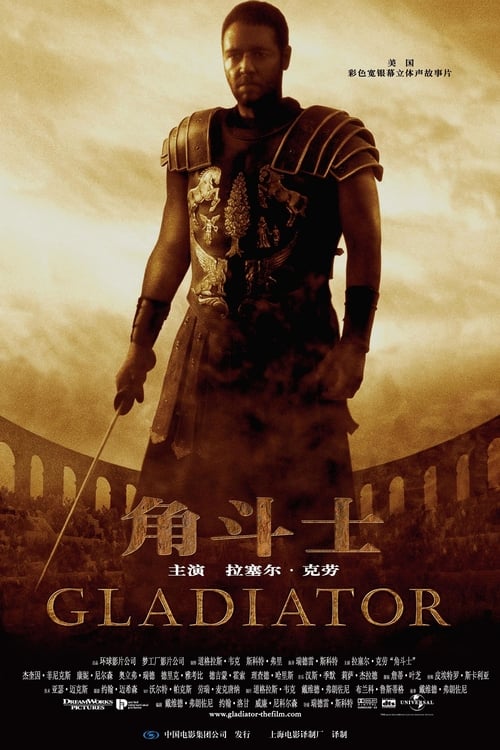
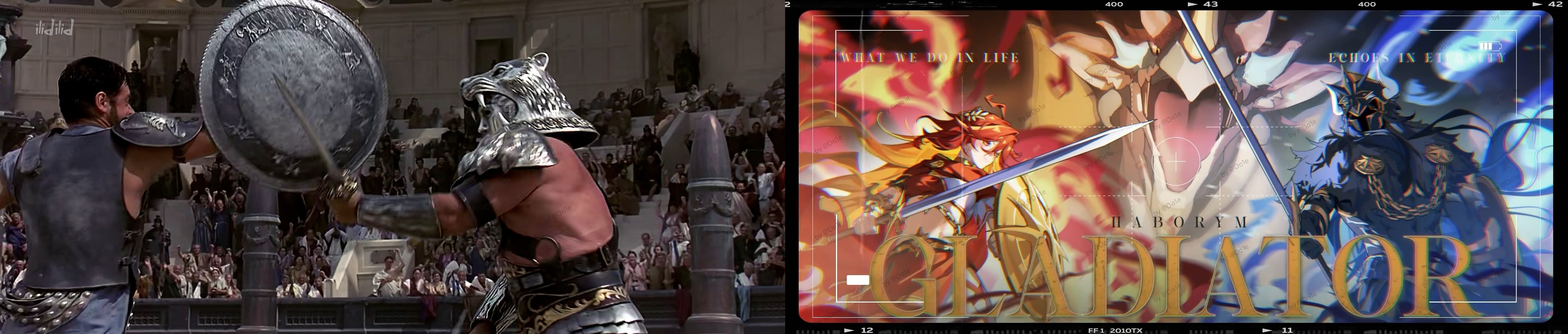
This should correspond to a scene around the 2-hour mark in the movie[24]. The Gallic Tiger on the right, wearing a mask in the duel, perfectly matches Capitano. In the film, there is also a tiger in the arena, which should correspond to the dragon in the image.
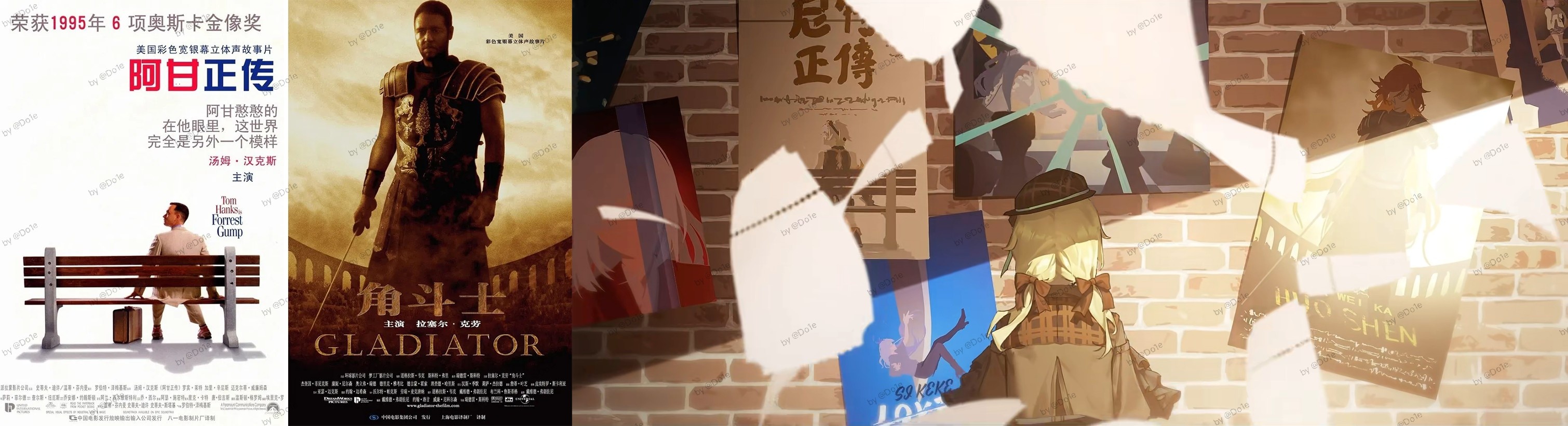
From this segment's movie posters, I only recognize two: "Neet Story" is clearly a homage to Forrest Gump, and the one with Mavuika on the right corresponds to Gladiator. Others are welcome to add if you know.
Chapter 6: Suffering of Birth - Dendro
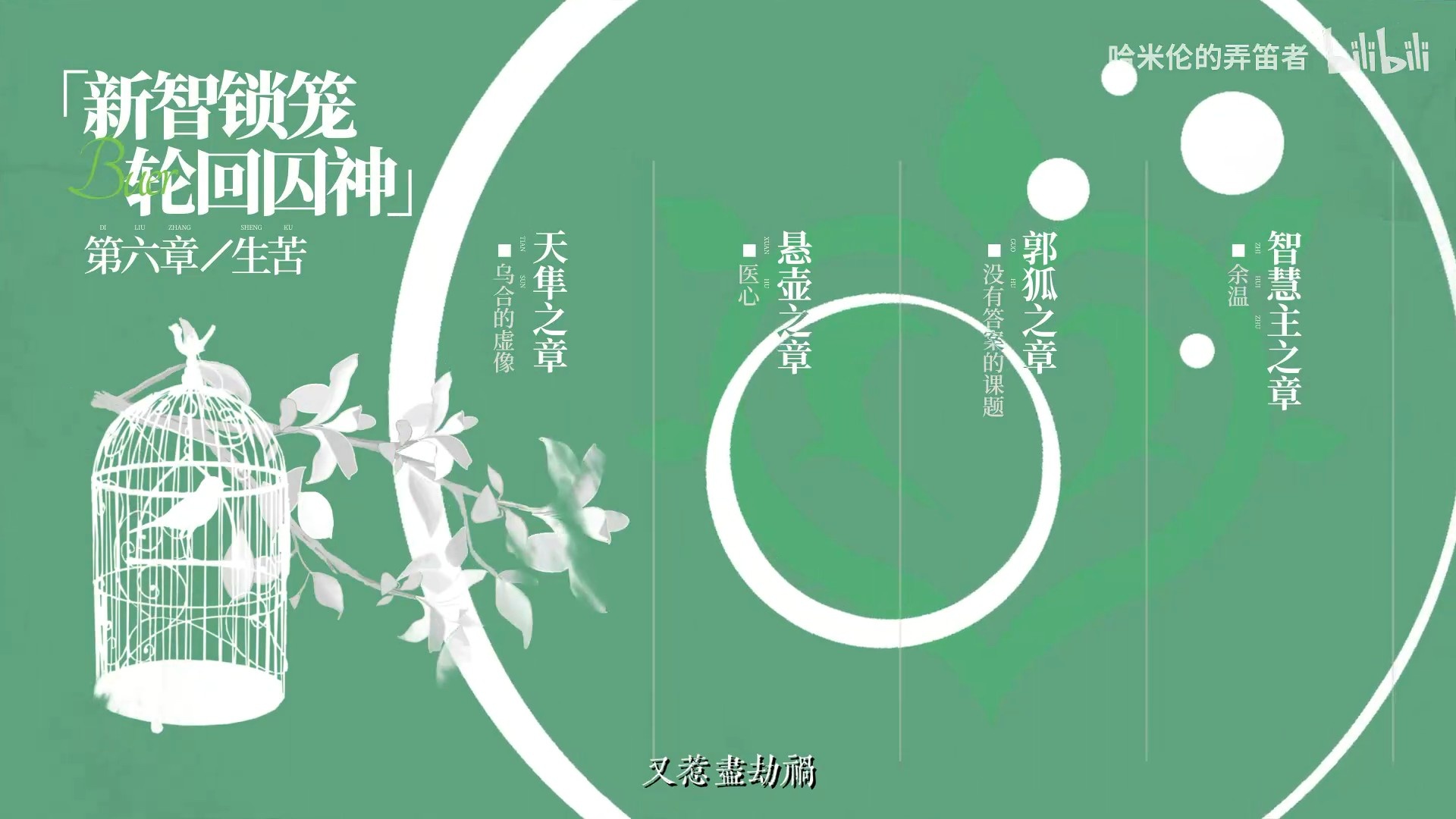
The four quests at the title:
- Sapientia Oromasdis Chapter - Lingering Warmth: Nahida's Story Quest Act I.
- Vulpes Zerda Chapter - The Unanswered Question: Tighnari's Story Quest.
- Lagenaria Chapter - The Heart of Healing: Baizhu's Story Quest.
- Accipiter Chapter - The Illusion of the Mob: Alhaitham's Story Quest.
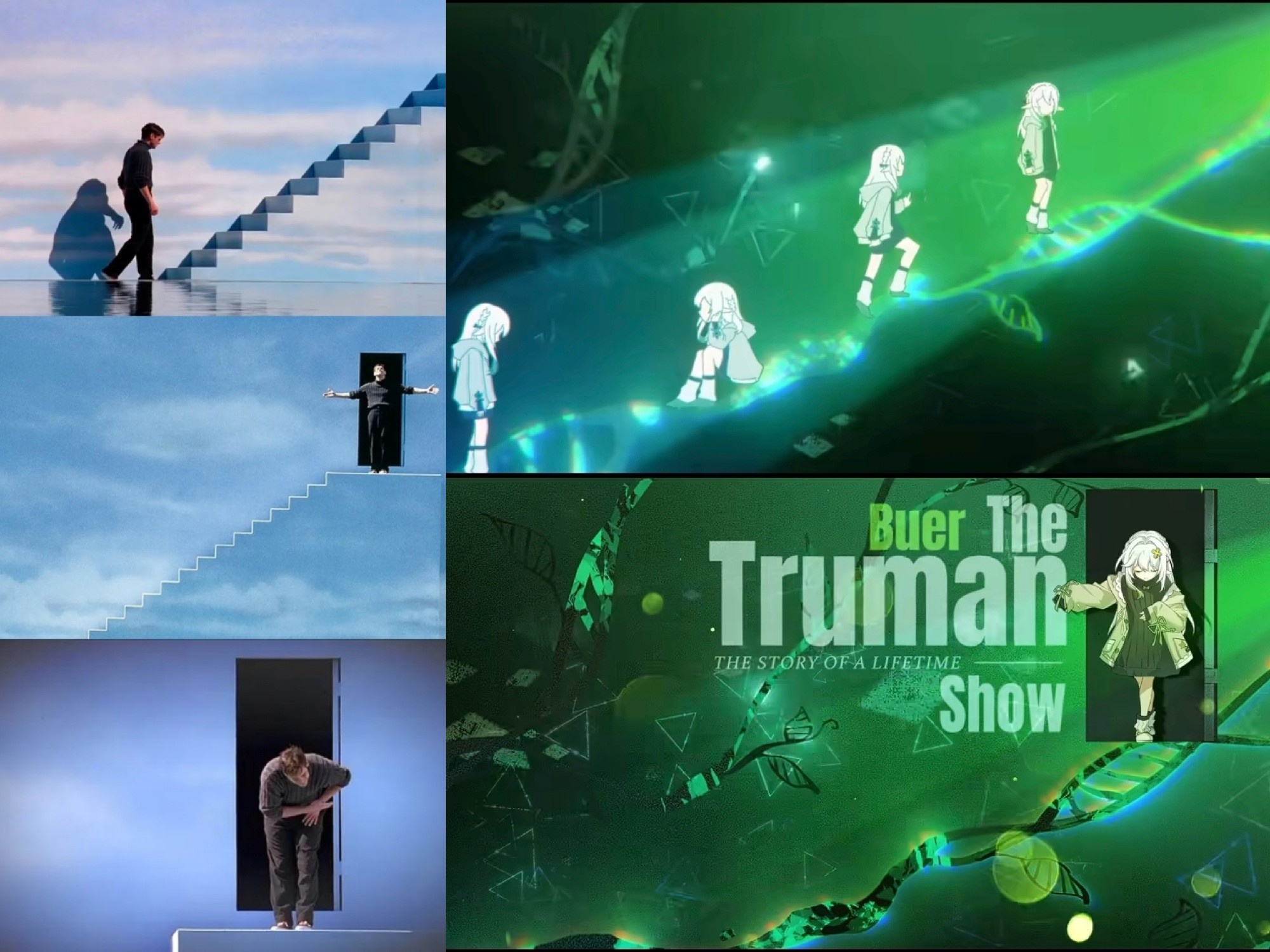
The Truman Show

In the movie[25], the male lead Truman has lived since birth in a giant studio. The town he lives in is actually a 24/7 live reality show set, with all residents being actors, and only Truman is completely unaware. His life is watched in real-time by billions of viewers worldwide, while he himself always believes he is living an ordinary life, until he discovers anomalies through some details and begins to doubt reality, wanting to escape the town. But the show's producer, to maintain the show's integrity, constantly sets obstacles to prevent him from leaving. Finally, he sails a sailboat toward the "edge of the world," climbs the stairs, opens the door, and walks out of this fictional world.
This scene[26] is clearly a homage to the film's final escape sequence, leaving a huge impression on me, and it fits Nahida so perfectly. I'm a Nahida fan! My literary skills are limited, and it's really hard to describe in words the excitement I felt when I saw little Nahida open the door and bow. So cool!
The Legend of 1900
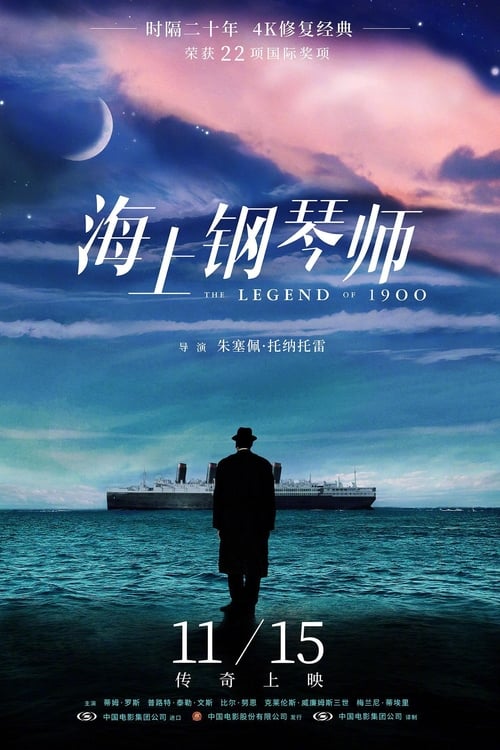
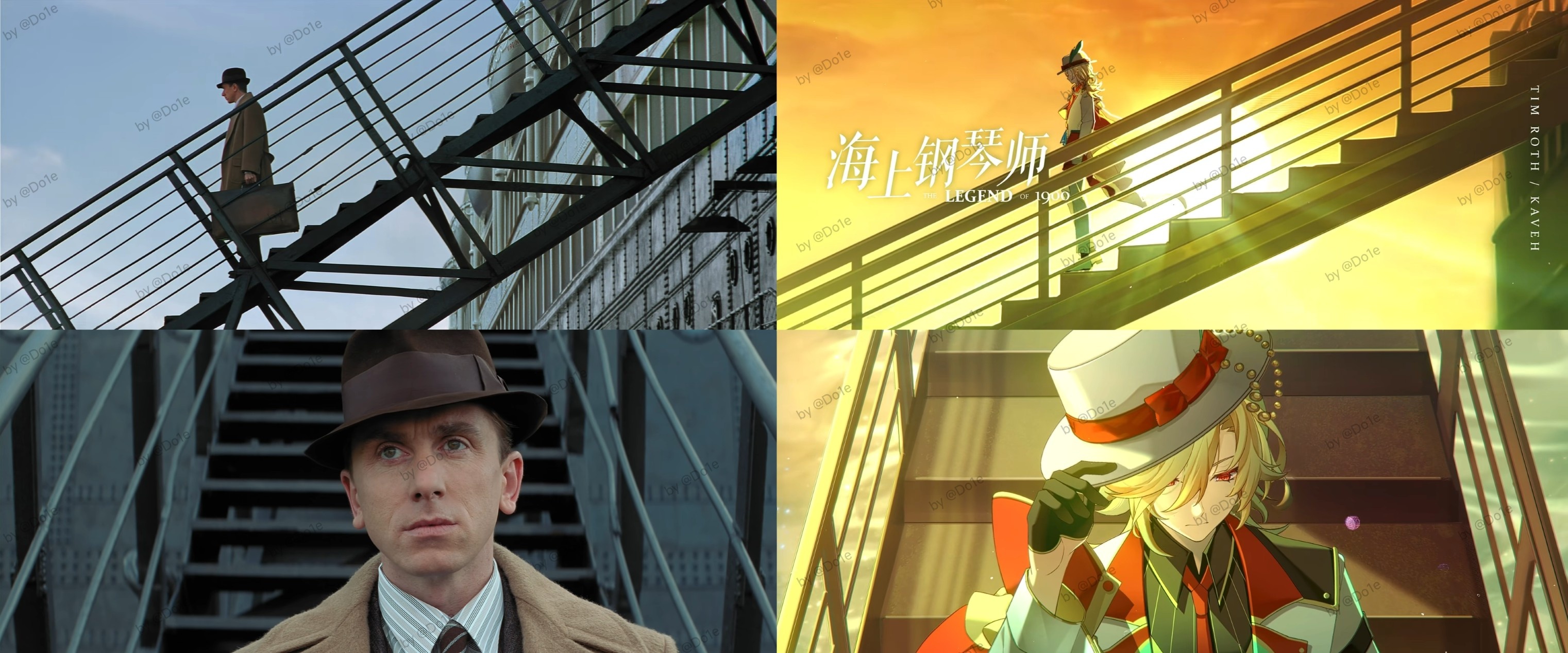
The movie[27] tells the legendary and lonely life of a genius pianist named 1900, who never set foot on land in his entire life. 1900 had many opportunities to disembark but felt he didn't belong on land—not out of fear, but because he was unwilling to compromise with a land world of "infinite choices but no meaning." His music, life, and world were all on the ship, and he ultimately chose to sink with the ship into the sea.
1900 firmly believed that music should be pure, improvised, and from the heart, refusing to record records or commercialize, which is very similar to Kaveh's insistence that architecture should carry beauty and ideals.
This scene pays homage to the moment when 1900, about to disembark, stands hesitating on the gangway.
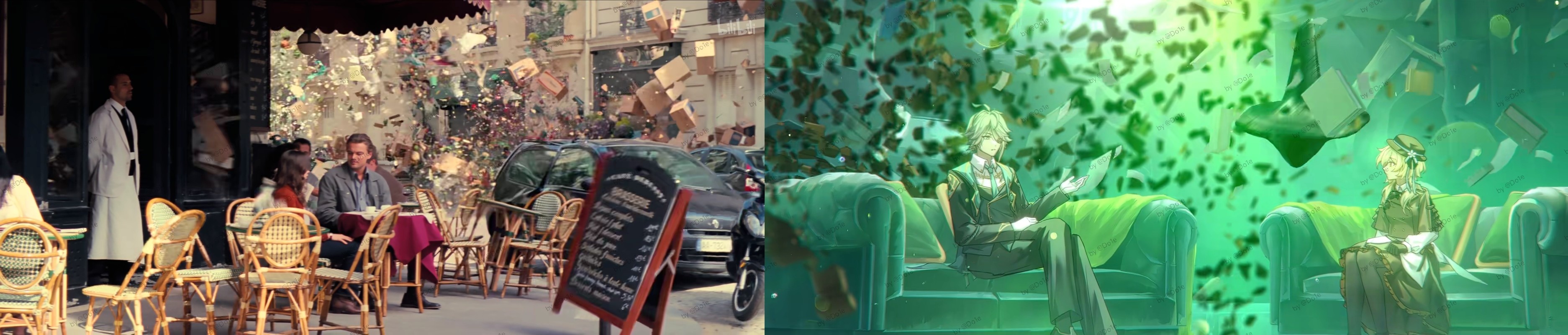
Inception
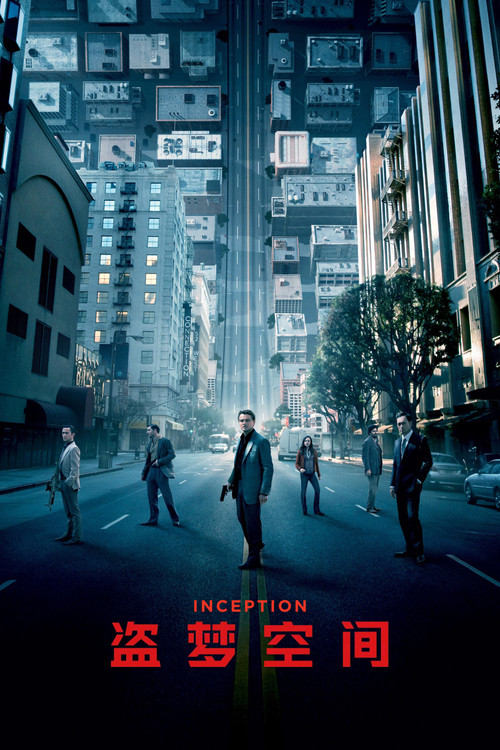
A very famous movie[28], with many works paying homage to it. The film is set in a world where one can enter others' dreams and steal thoughts from them. The male lead and his team are hired by a client to go deep into multiple dream layers to implant an idea in the mind of a corporate heir to dissolve his father's company—a nearly impossible goal. This is very similar to Alhaitham's Story Quest, both revolving around "invading or manipulating others' consciousness/memories."
This scene probably pays homage to the scene where the male lead first introduces the female lead to the concept of inception. The shattering background corresponds to the dream collapse scene in the movie, also a famous scene. The spinning top that appears here is also a key motif in the film—it's the male lead's totem (some say it's his wife's, and his true totem is the wedding ring on his ring finger). A setting in the film: if the top keeps spinning, it means they are still in a dream; if it falls, it means they have returned to reality.
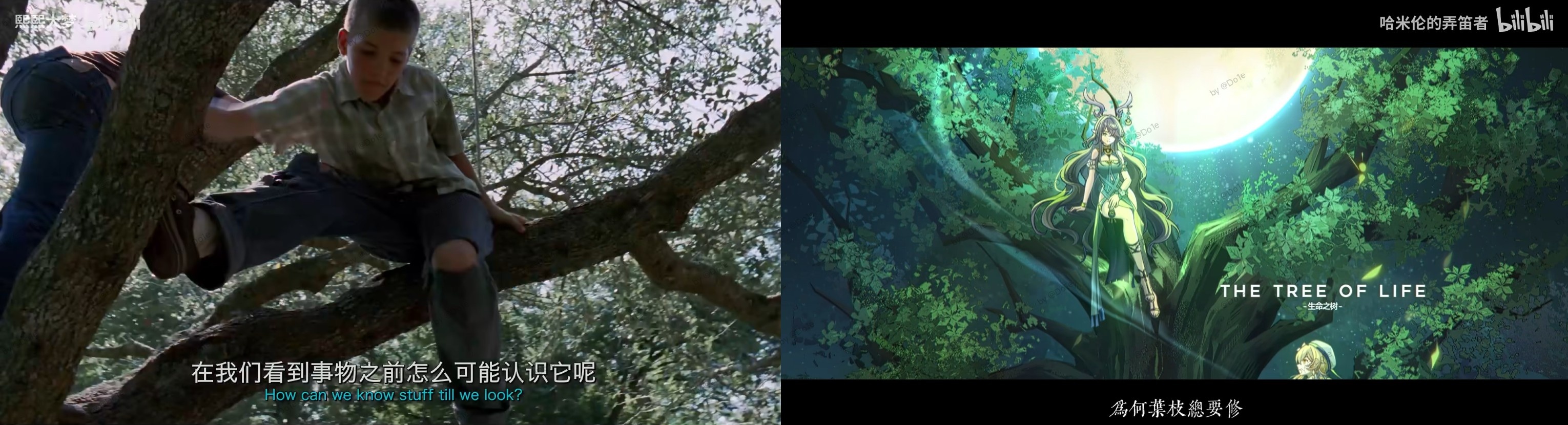
The Tree of Life
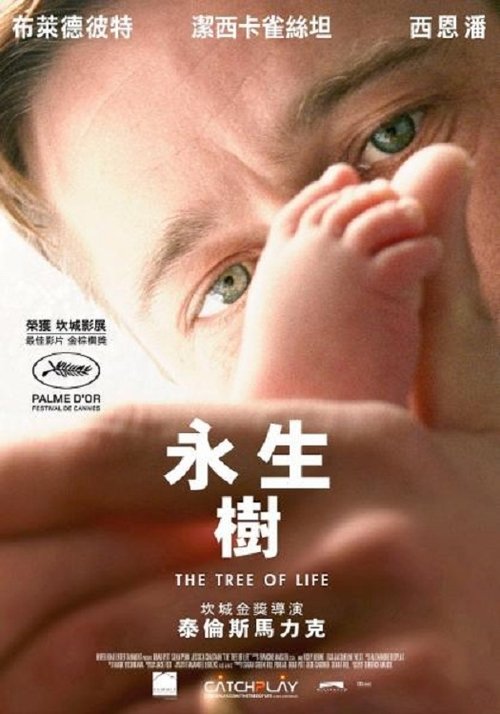
A rather stream-of-consciousness film[29], through the growing pains of young Jack, constantly questions "Does God exist?", "Why is there suffering?", "Is grace real?". The mother is gentle and loving, representing the "path of grace"; the father is strict and pragmatic, representing the "laws of nature"; and Jack struggles between the two, ultimately seeking a transcendent reconciliation within the grand picture of the universe. This is somewhat similar to the story of Rukkhadevata realizing that the moon above is "false," doubting the authenticity of the gods, and ultimately choosing to clarify the truth to her people amidst contradiction.
Chapter 7: Suffering of Illness - Hydro
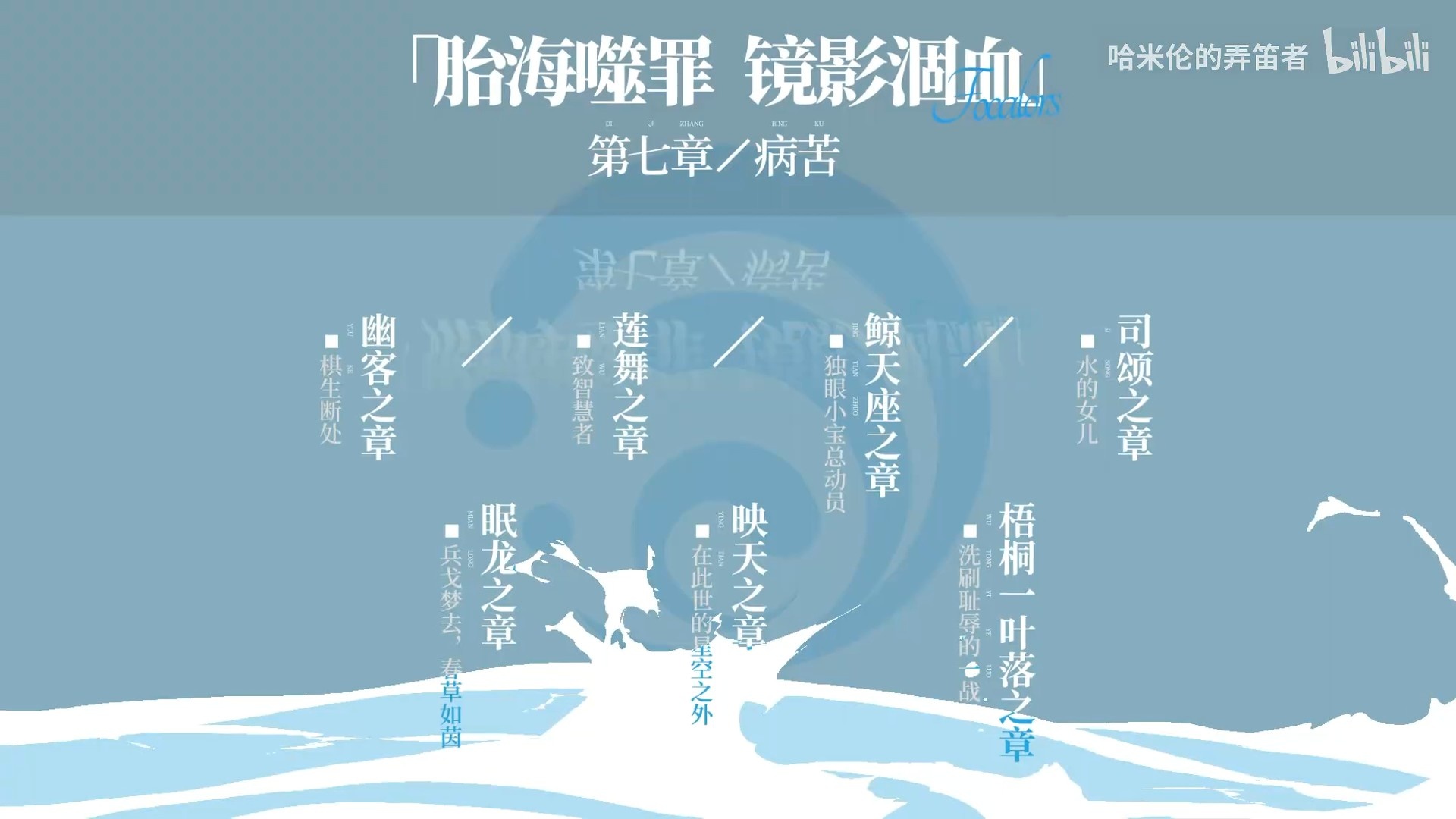
The seven quests at the title:
- Animula Choragi Chapter - The Daughter of Water: Furina's Story Quest.
- Monoceros Caeli Chapter - The Millelith's Treasure: Childe's Story Quest; the production team added the character "座" here.
- Lotus Dance Chapter - To the Wise: Nilou's Story Quest "Nymphaea Chapter," but "Lotus Dance" also fits Nilou.
- Umbrabilis Orchis Chapter - Where the Chess Game Ends: Yelan's Story Quest.
- Cypressus Custos Chapter - The Battle to Wash Away Shame: Ayato's Story Quest, "Cypressus Custos Chapter - A Single Fallen Leaf."
- Astrolabos Chapter - Beyond This World's Stars: Mona's Story Quest.
- Dracaena Somnolenta Chapter - Dreams of Arms, Spring Grass Like a Carpet: Kokomi's Story Quest.
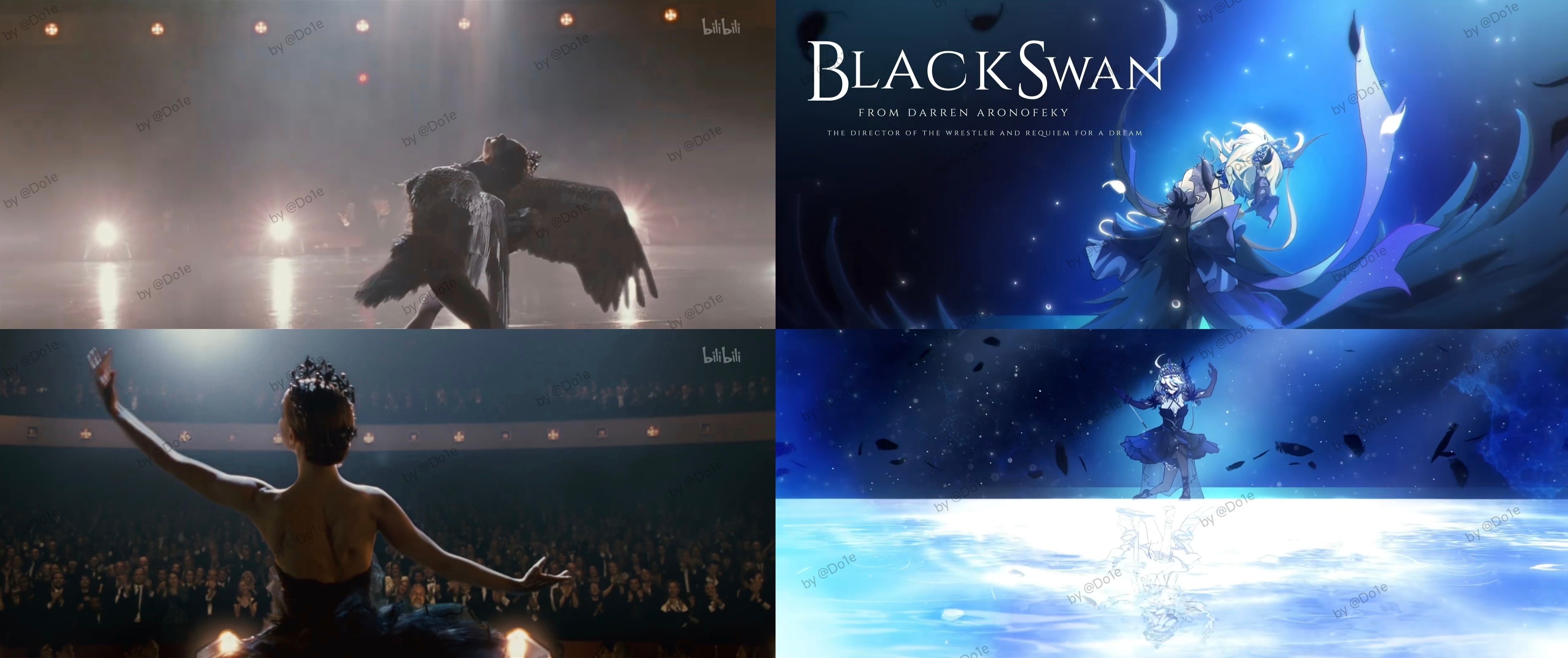
Black Swan

In the movie[30], the female lead Nina is a technically superb but introverted, extremely disciplined ballet dancer, desperate to play the dual role of the White Swan and Black Swan in the new production of Swan Lake. Nina can perfectly perform the White Swan but cannot display the passion and dark side required for the Black Swan. Another dancer, Lily, free-spirited and wild, becomes her strong competitor. Under her mother's high-pressure control and her obsession with "perfection," Nina's mind gradually unravels. She begins to hallucinate: seeing her skin fester, nails tear, feathers sprout. Finally, on opening night, Nina perfectly performs the Black Swan on stage, but in a hallucination, stabs herself with a shard of glass. After the performance, she collapses in a pool of blood, saying, "I felt perfect. I was perfect," completing her sacrifice to artistic perfection through death.
Using this movie to correspond to Furina's background and Fontaine's plot is also very fitting. A detail in the image is that the reflection of the black Furina is the white Furina.
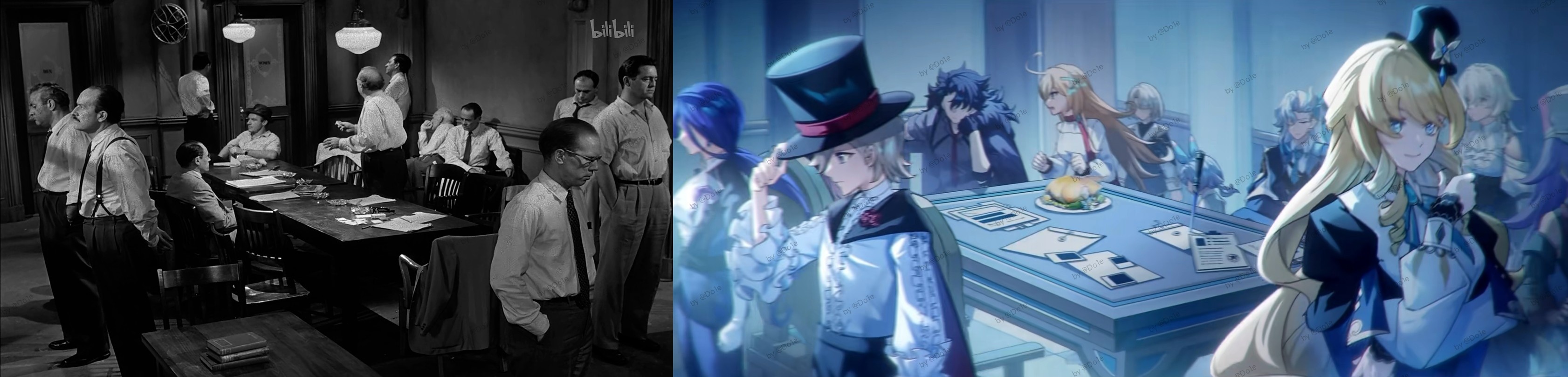
12 Angry Men
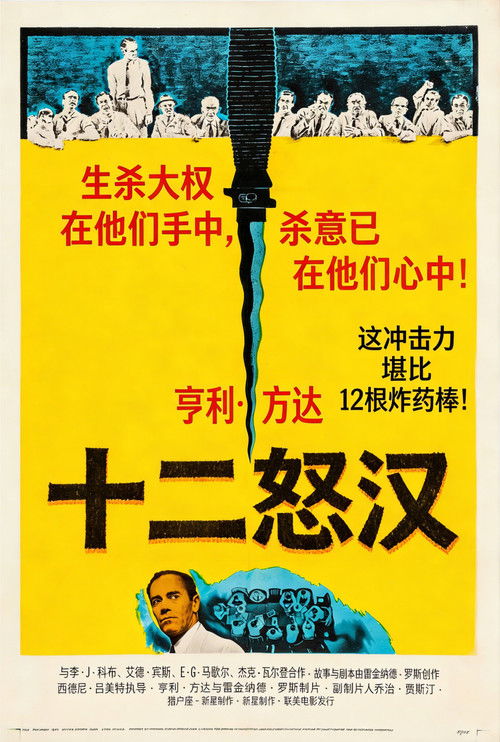
The movie[31] tells the story of a young man who has just come of age, sent to court for killing his father. The witnesses are convincing, and all evidence is against him. The final verdict also requires the opinion of a 12-person jury, but except for the architect played by Henry Fonda, everyone else dismisses the case, quickly concluding the boy is the murderer. The first vote is 11 to 1 in favor of guilty. According to legal procedure, a unanimous decision—12 to 0—must be reached for the court to accept it. The first to stand up for not guilty is Juror #8. Due to #8's persistence, and as scientific reasoning about the three key pieces of evidence unfolds, the atmosphere of favoring not guilty begins to spread among the other eleven jurors. The vote on the boy's guilt starts to change dramatically: 11 to 1, 9 to 3, 8 to 4, 6 to 6, 3 to 9, 1 to 11. Finally, through the clash of various life perspectives and the contest of different ways of thinking, all 12 jurors reach a unanimous decision: Not Guilty![32]
In this image, there are indeed 12 people drawn, but Charlotte and Lynette are blocked by Lyney.
Weathering with You
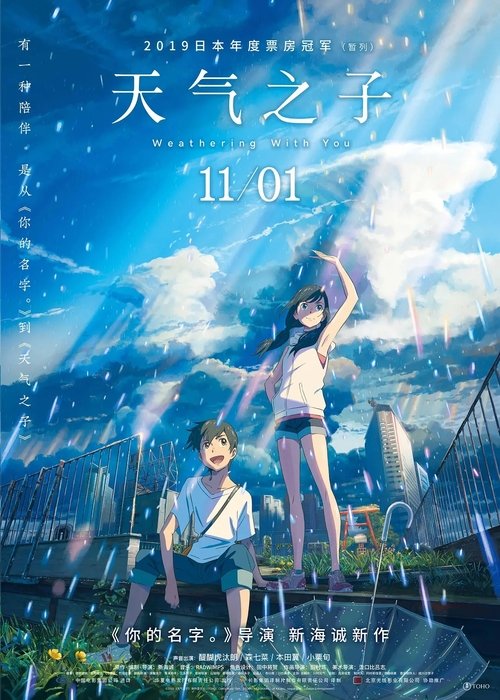
This transition is very reminiscent of Weathering with You[37].[38]
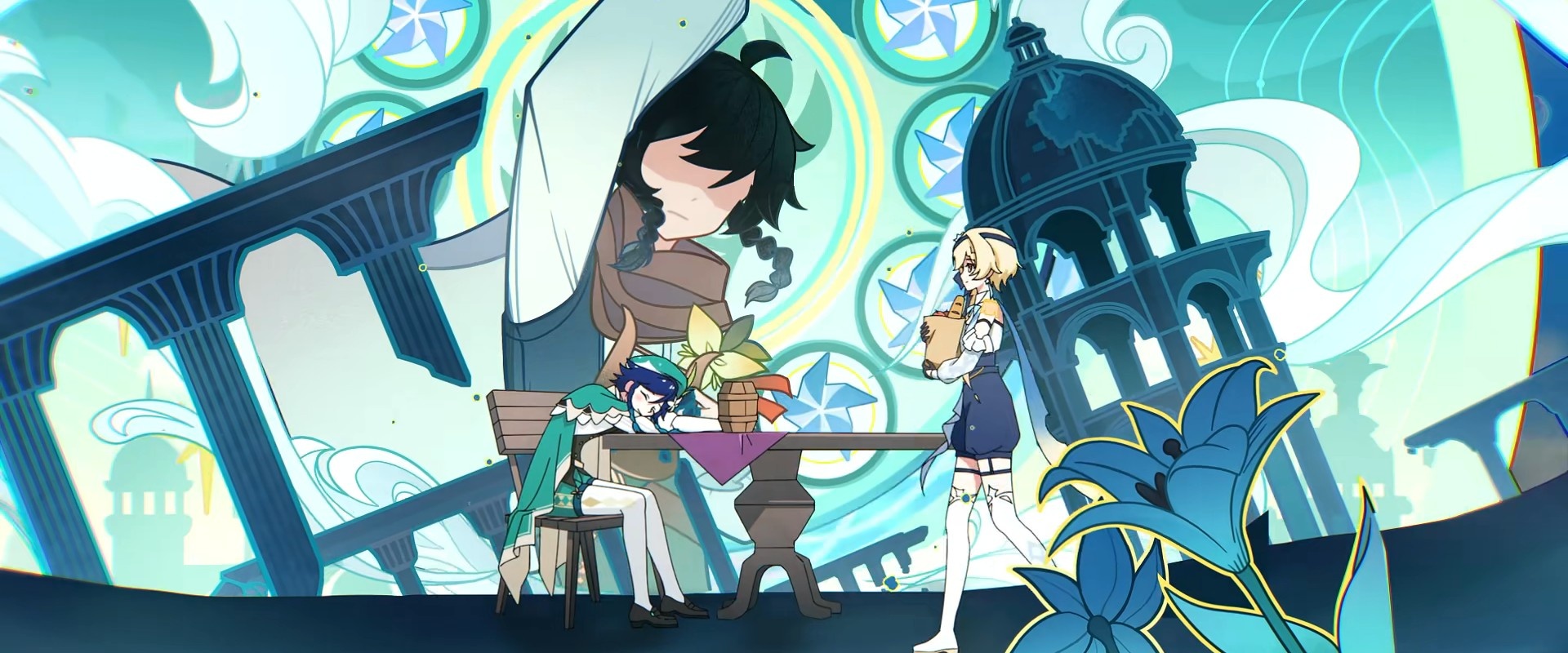
Journey Through the Seven Nations
Here, Lumine has corresponding outfits for each nation she visits, very beautiful!
Mondstadt
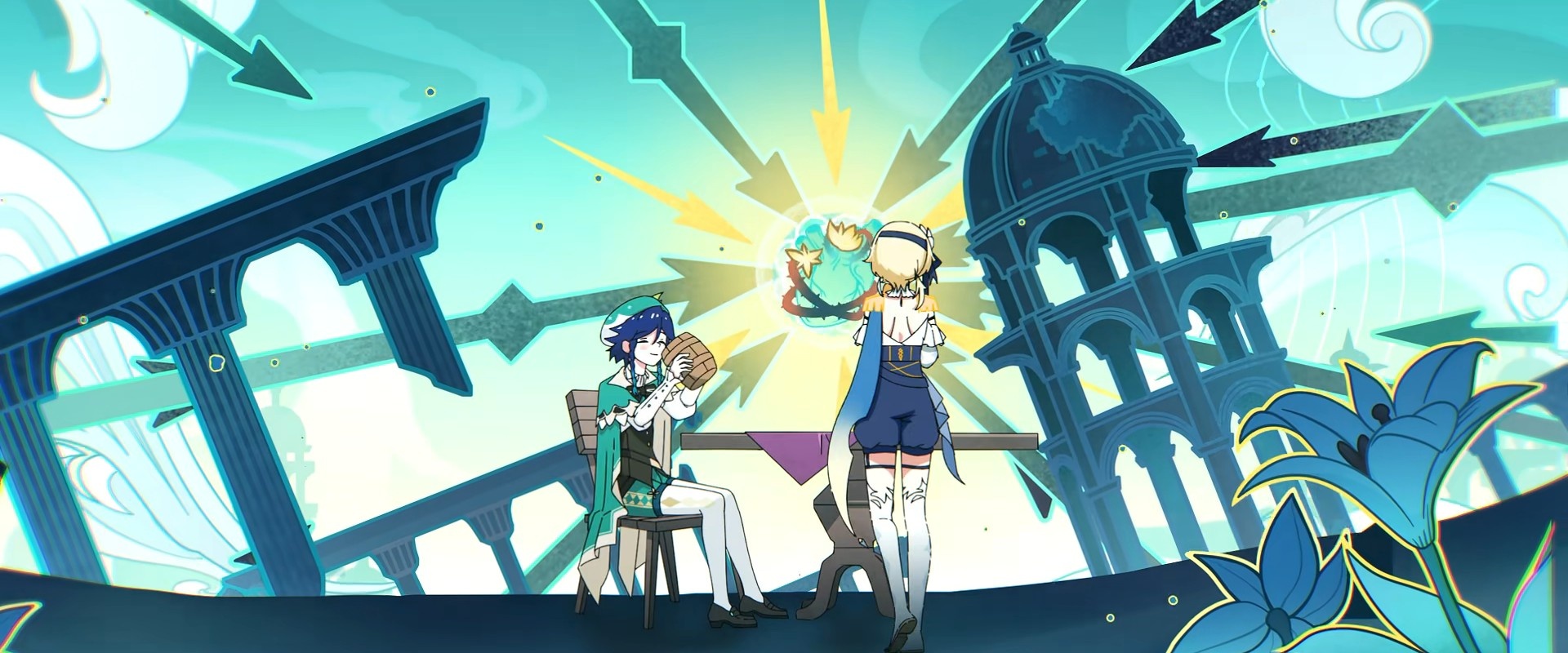
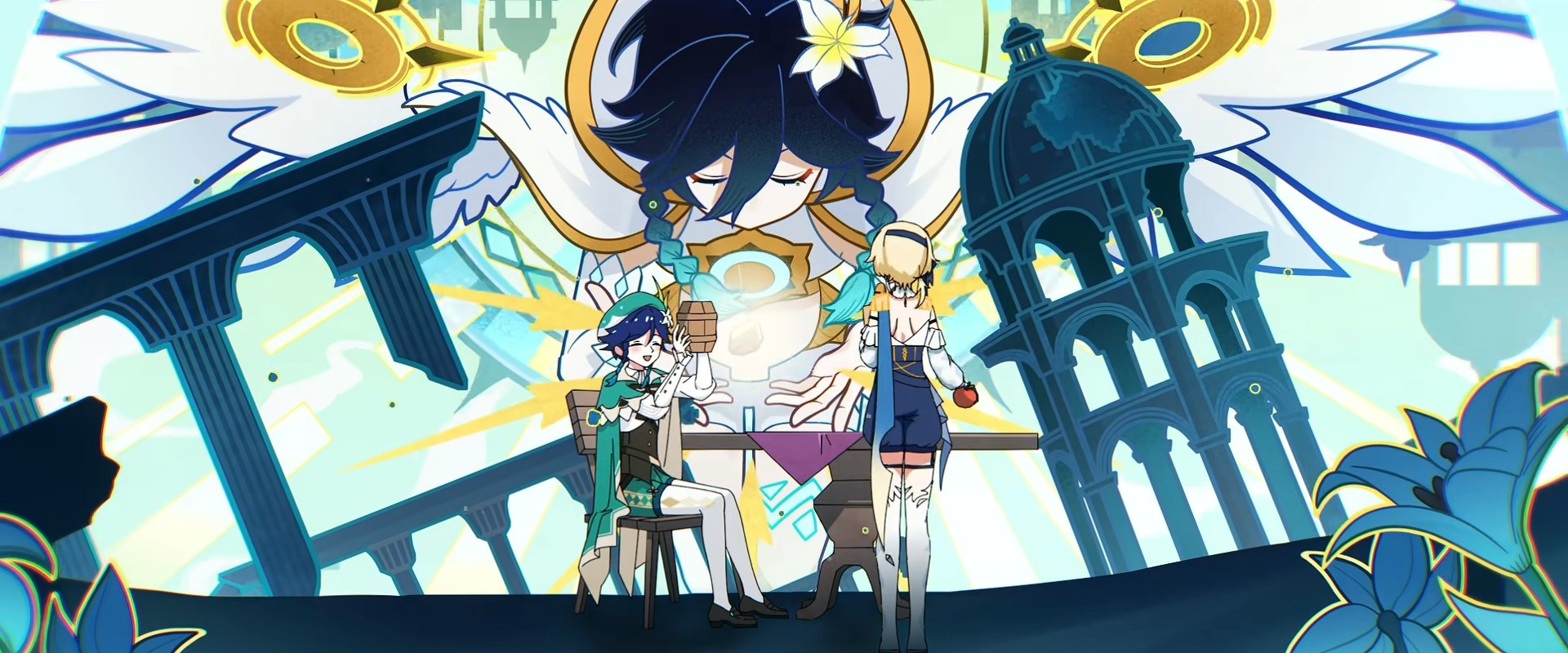
The background here probably tells the story of the youth Venti befriended in Old Mondstadt, who fought bravely for "freedom," for poetry, blue skies, birds, and the people born within the wind walls like himself.
This heart might be Durin's from Dragonspine, not sure.
The birth of the Anemo Archon Barbatos, probably.
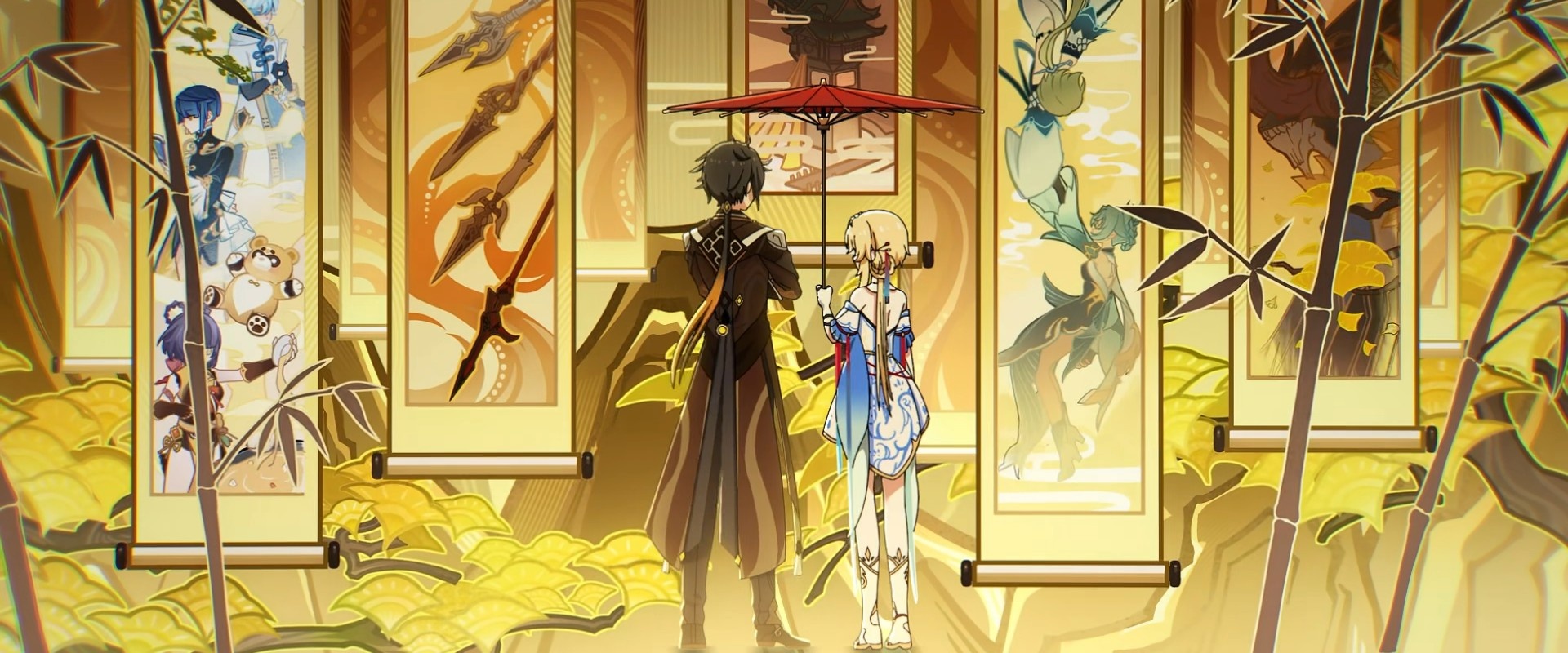
Liyue
There are five scrolls in the background, but I'm not sure what they specifically refer to; I can only guess:
- Probably the Moonchase Festival[43].
- The Millelith.
- The Lantern Rite.
- Story PV - "Echoes of the Heart".
- Zhongli's Story Quest Act II, related to Azhdaha and erosion.
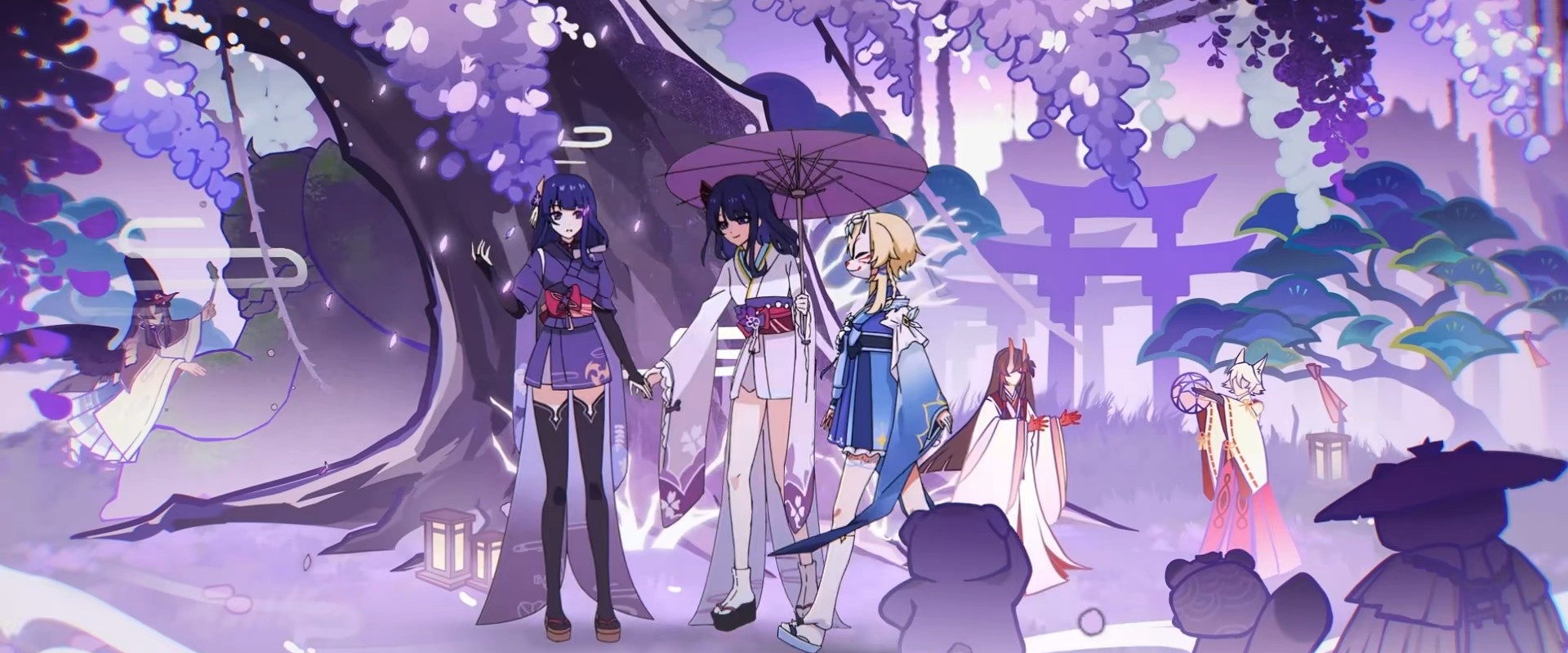
Inazuma
In the background, on the left are Sasayuri and Ioroi; on the right are Chiyo and Kitsune Saiguu. In the foreground, there are also bake-danuki.
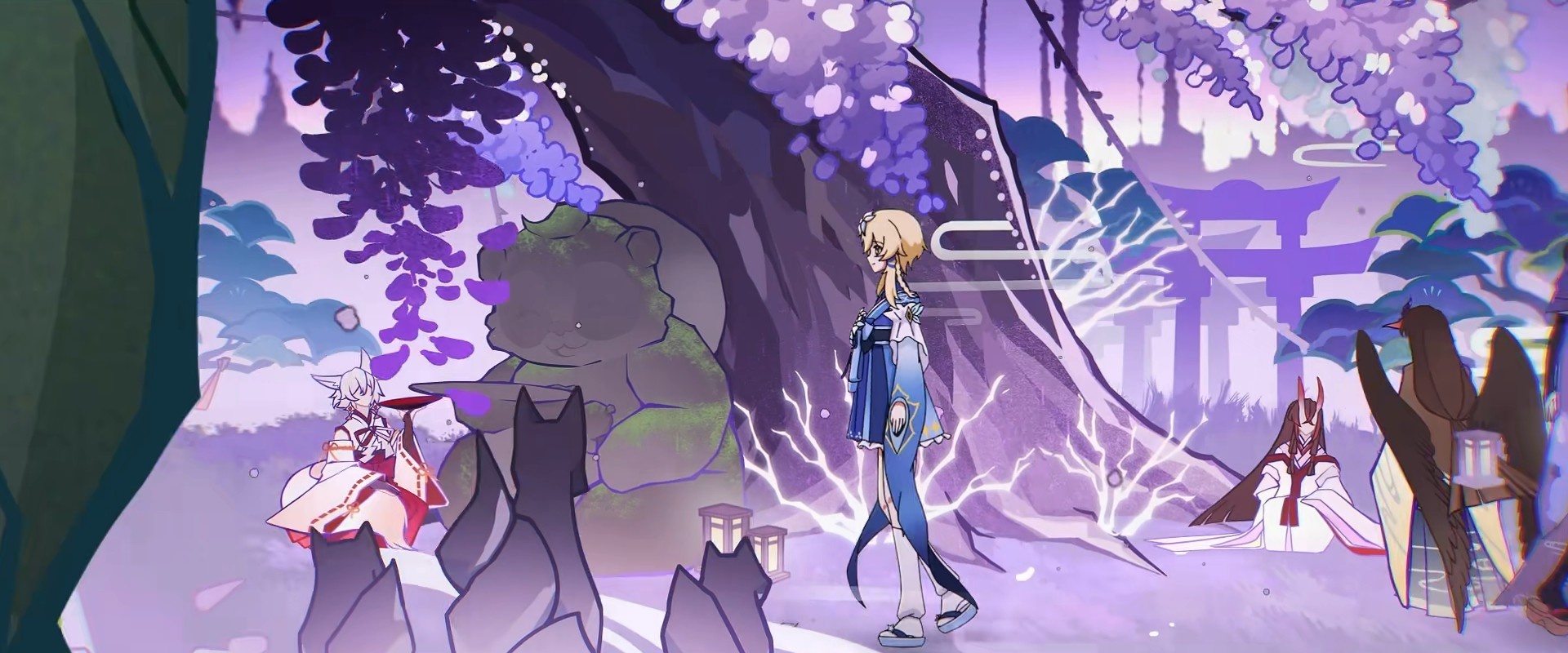
The characters in the background haven't changed, just shifted positions. In the foreground is a Kitsune statue.
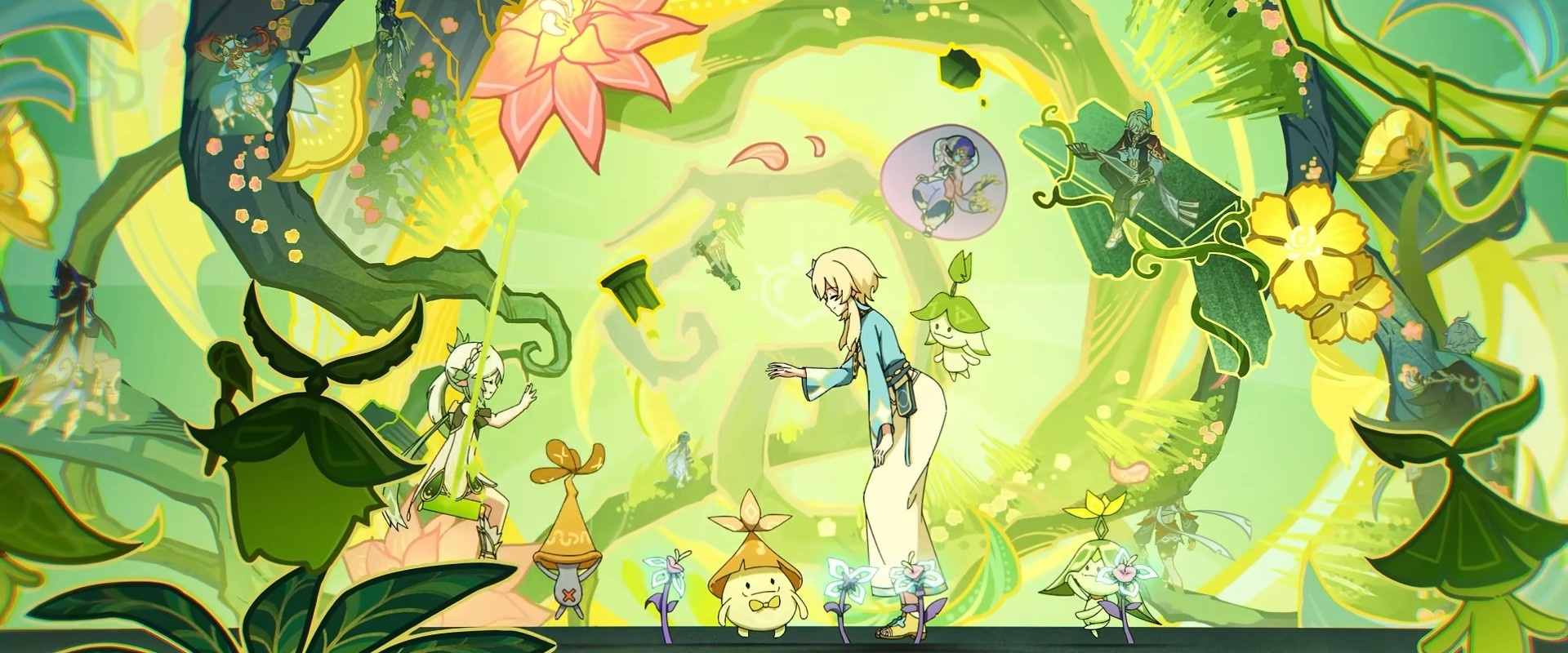
Sumeru
In the background are some Sumeru characters. The harder-to-recognize ones are probably Jeht to the right of Aranara, and Tighnari at the very top with only his feet visible.
The Aranara facing the camera, from left to right: Aranakula, Arakunti, Aranara. The ones facing away are harder to identify; the middle one should be Arabalika.
Fontaine
The background shows the twins, originally together, forced apart, and the Sword of Narzissenkreuz also appears.
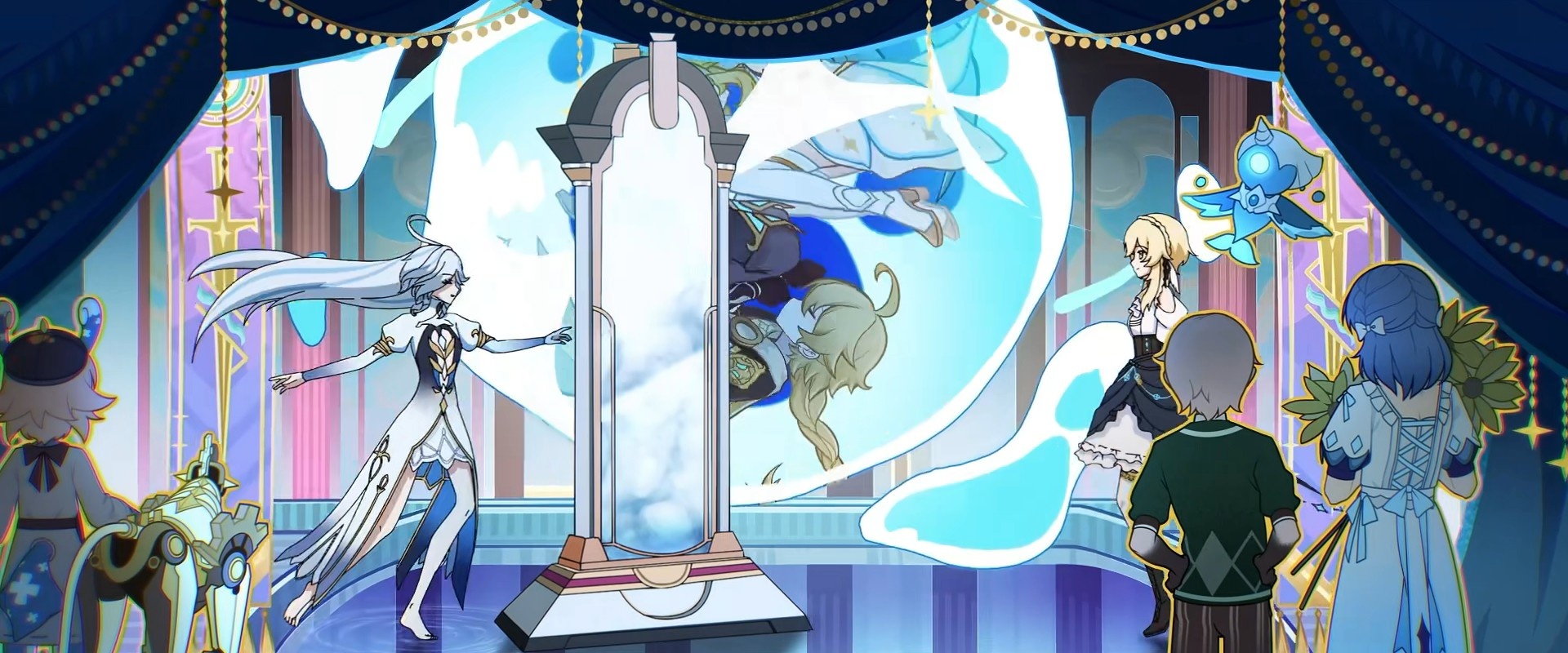
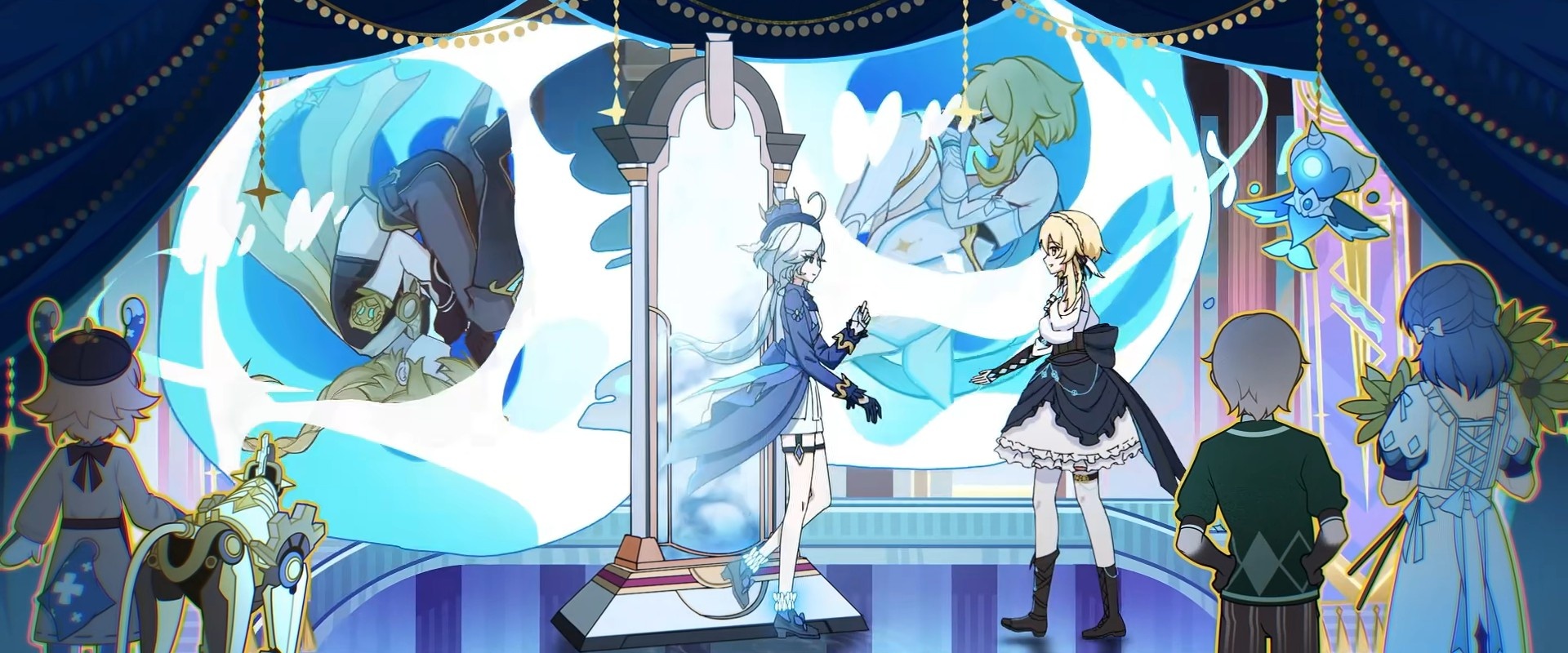
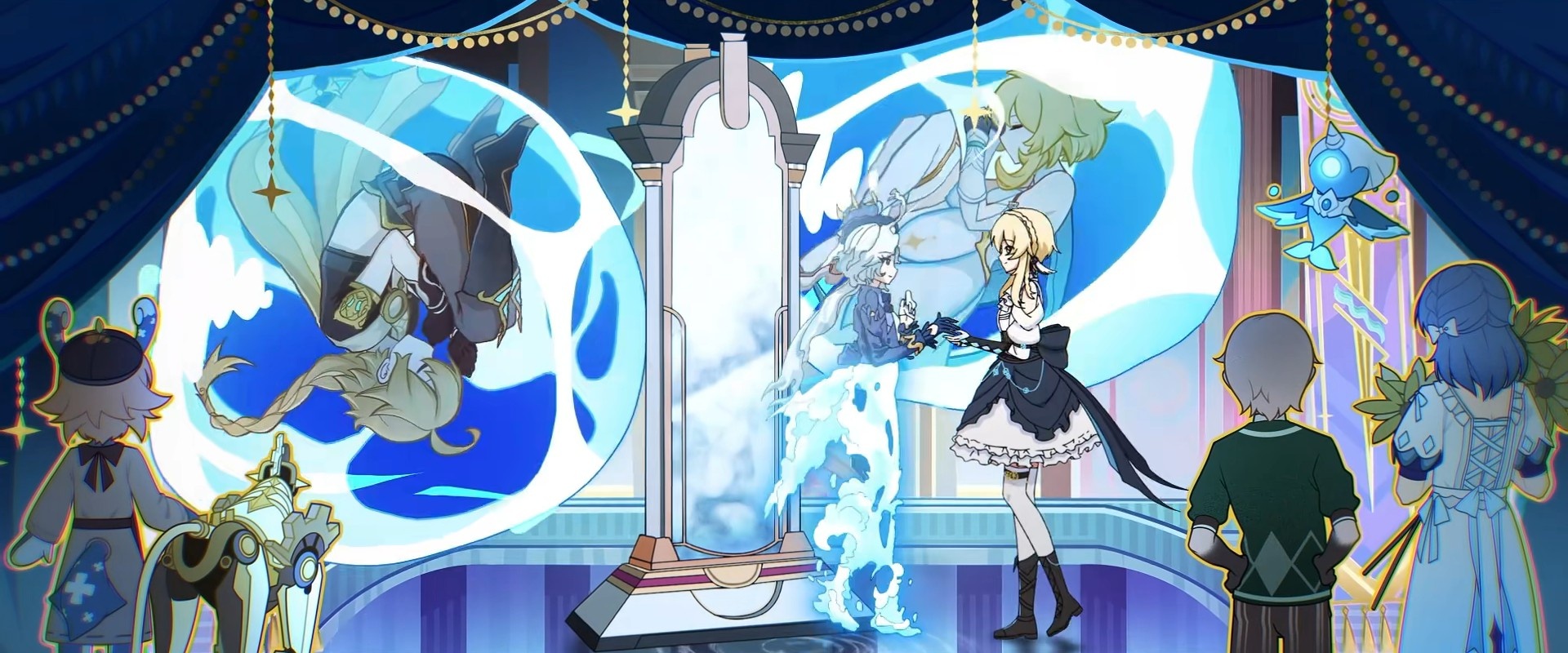
In the scene, Focalors steps out of the mirror and transforms into Furina, and Focalors' outfit also changes to Furina's, then she dissolves here comes the pain again.
The figures facing away from the camera are clearly from the Narzissenkreuz Ordo quests: on the left are Mamere and Seymour (quest "Ancient Colors"), on the right are Caterpillar, Mary-Ann, and Ann.
Natlan
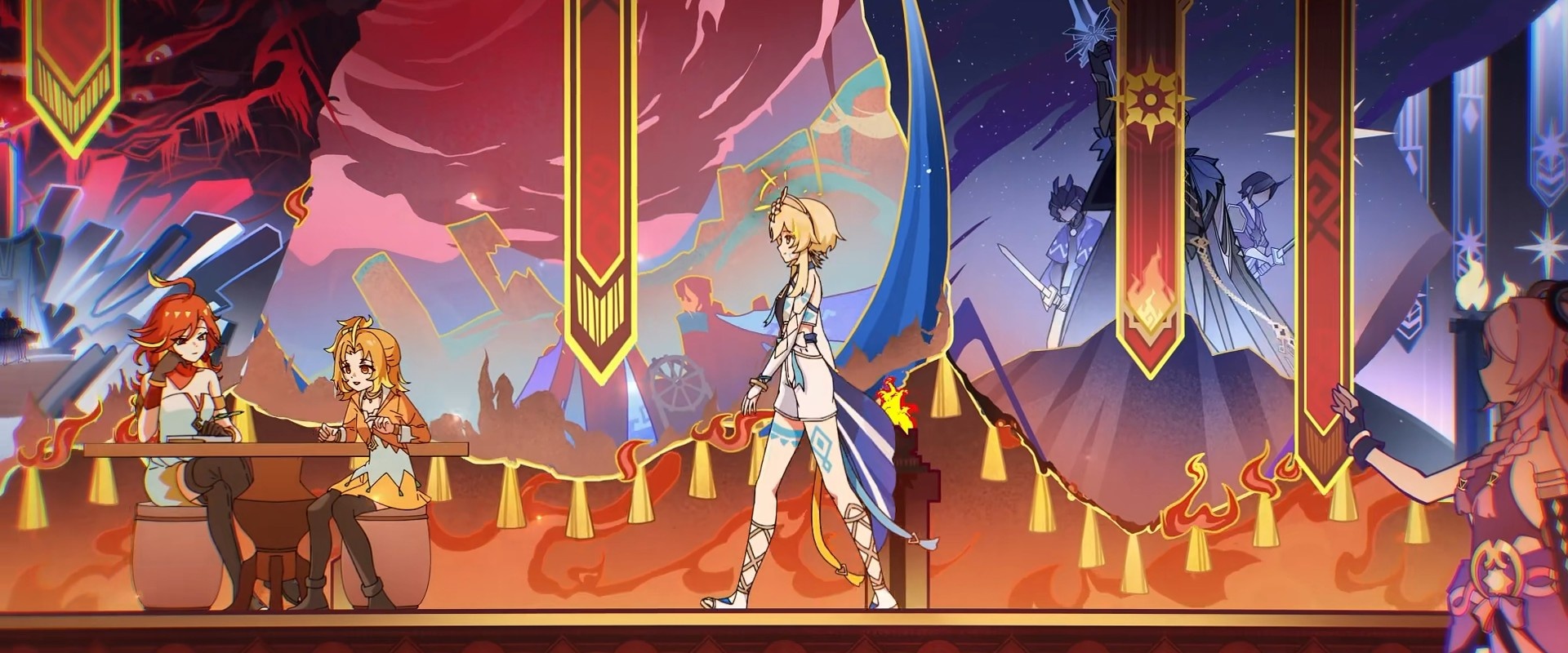
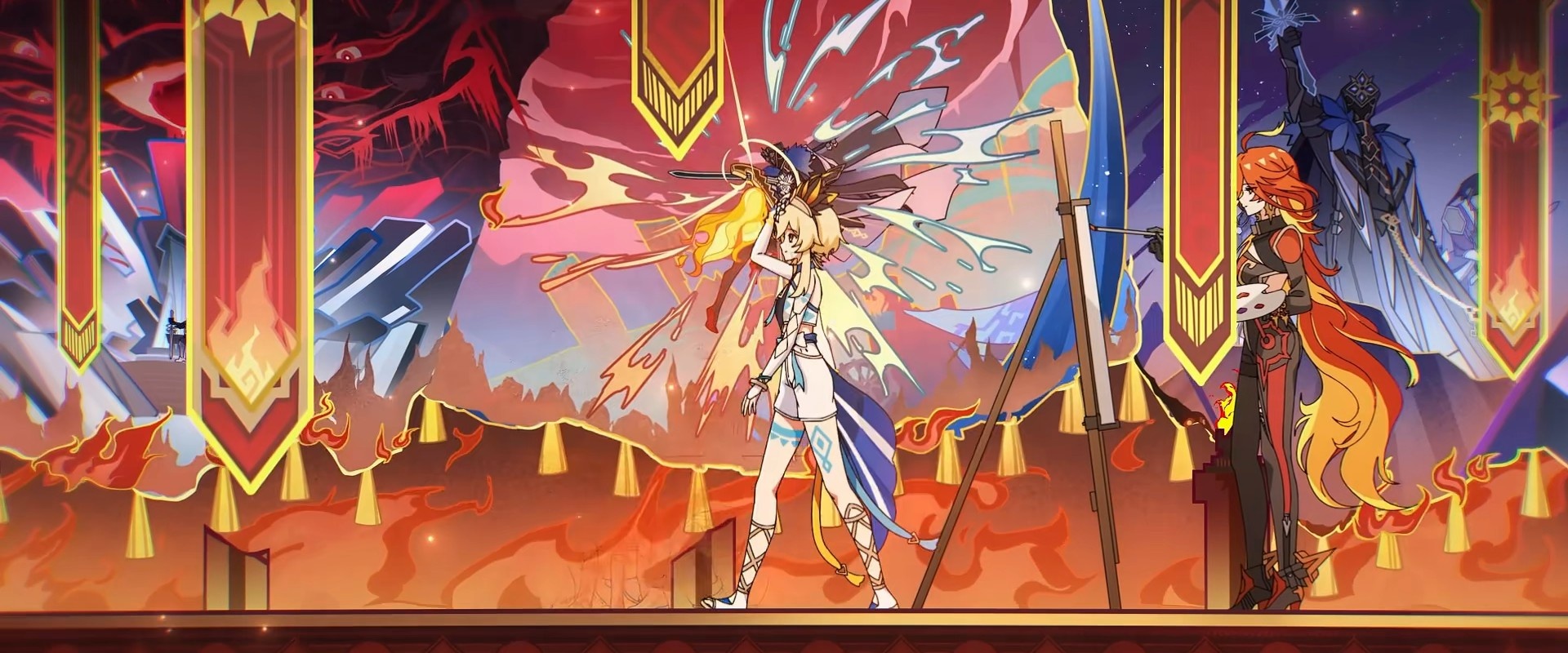
In the background, from right to left: Capitano leading his troops to protect Natlan, the confrontation between Capitano and Mavuika in the main story, and the plot where Capitano pays the price demanded by the Ruler of Death.
In the foreground, two scenes appear: Mavuika's interaction with her sister 500 years ago, and the present scene of Mavuika drawing a family portrait.
Snezhnaya
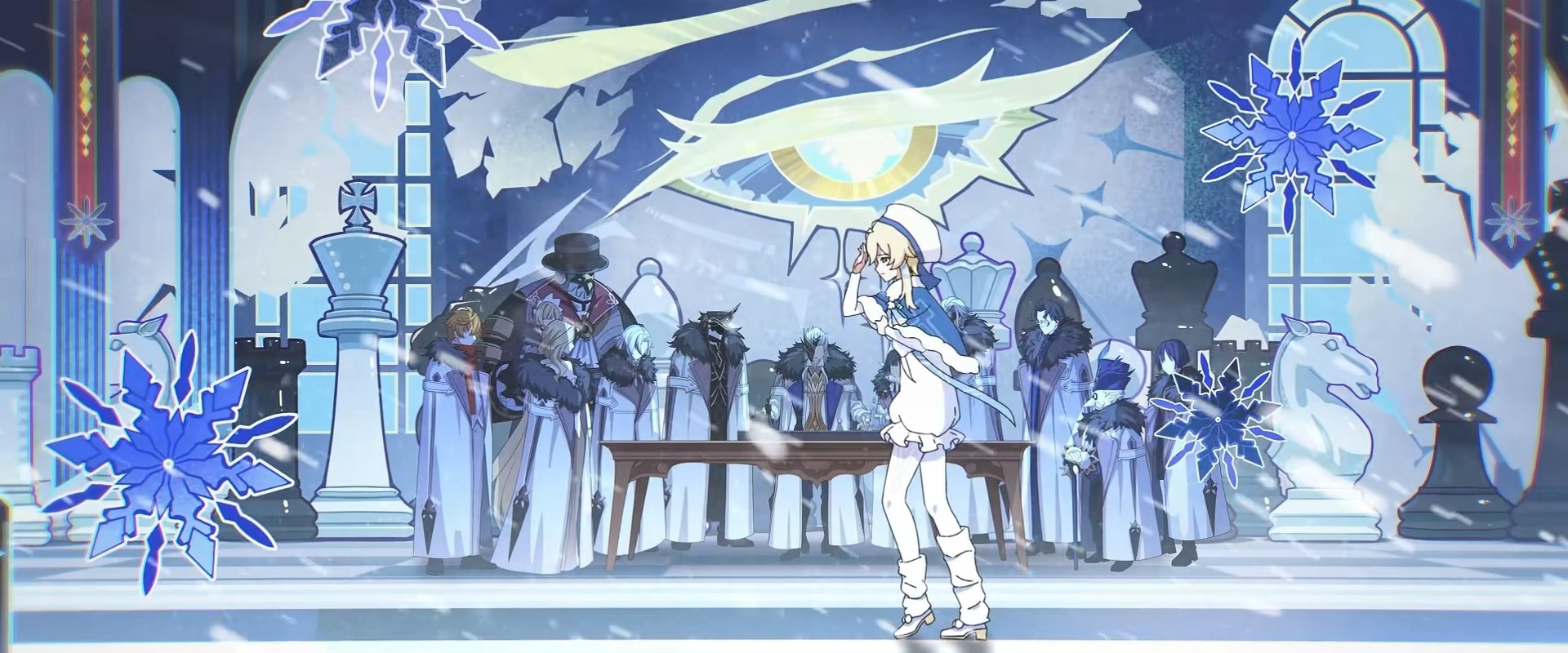
The 11 Fatui Harbingers. The composition likely references the famous painting "The Last Supper"[40]. It's a rare sight of La Signora alive. The surrounding chess elements might stem from the Interlude PV - "A Winter Night's Lazzo".
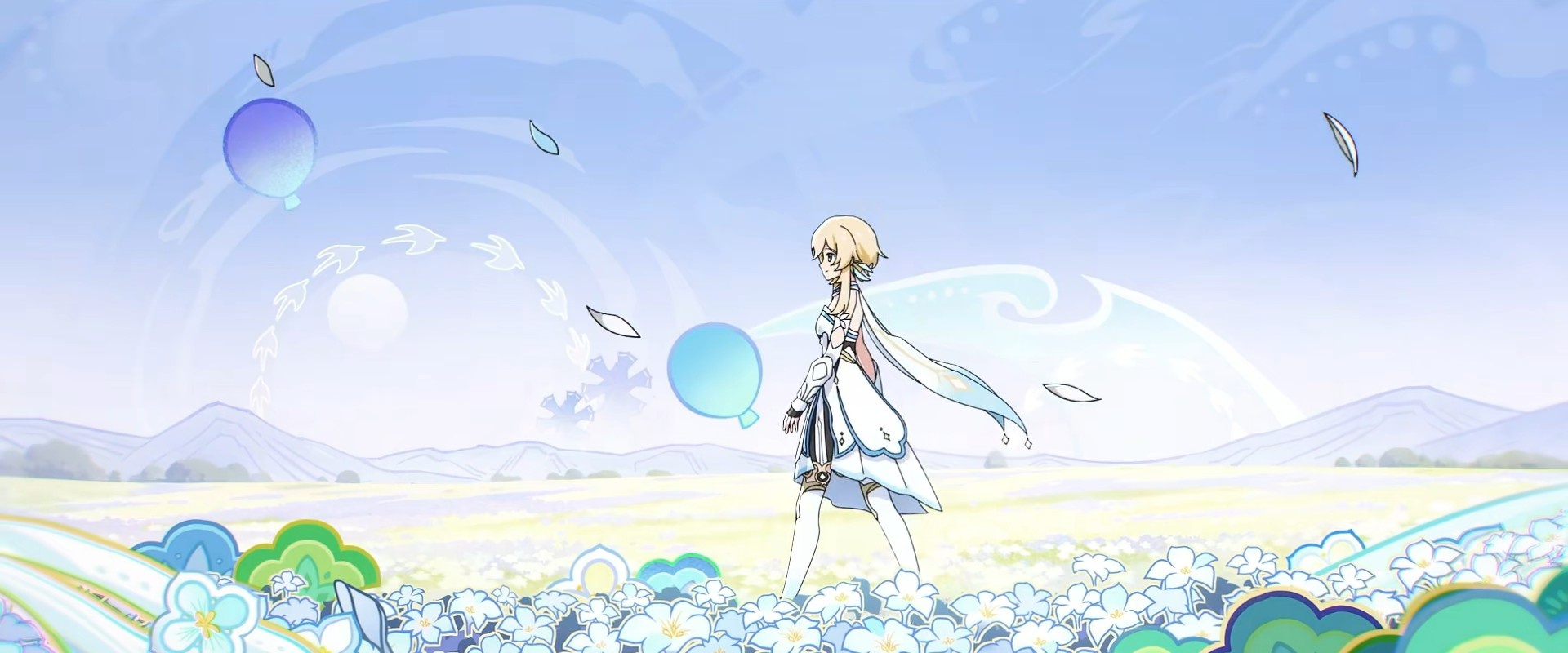
The Journey's End
Chapter 8: Suffering of the Five Skandhas - The Twins
Lumine meets her brother and recalls various moments from her journey. The images that flash by when she reaches out are as follows:
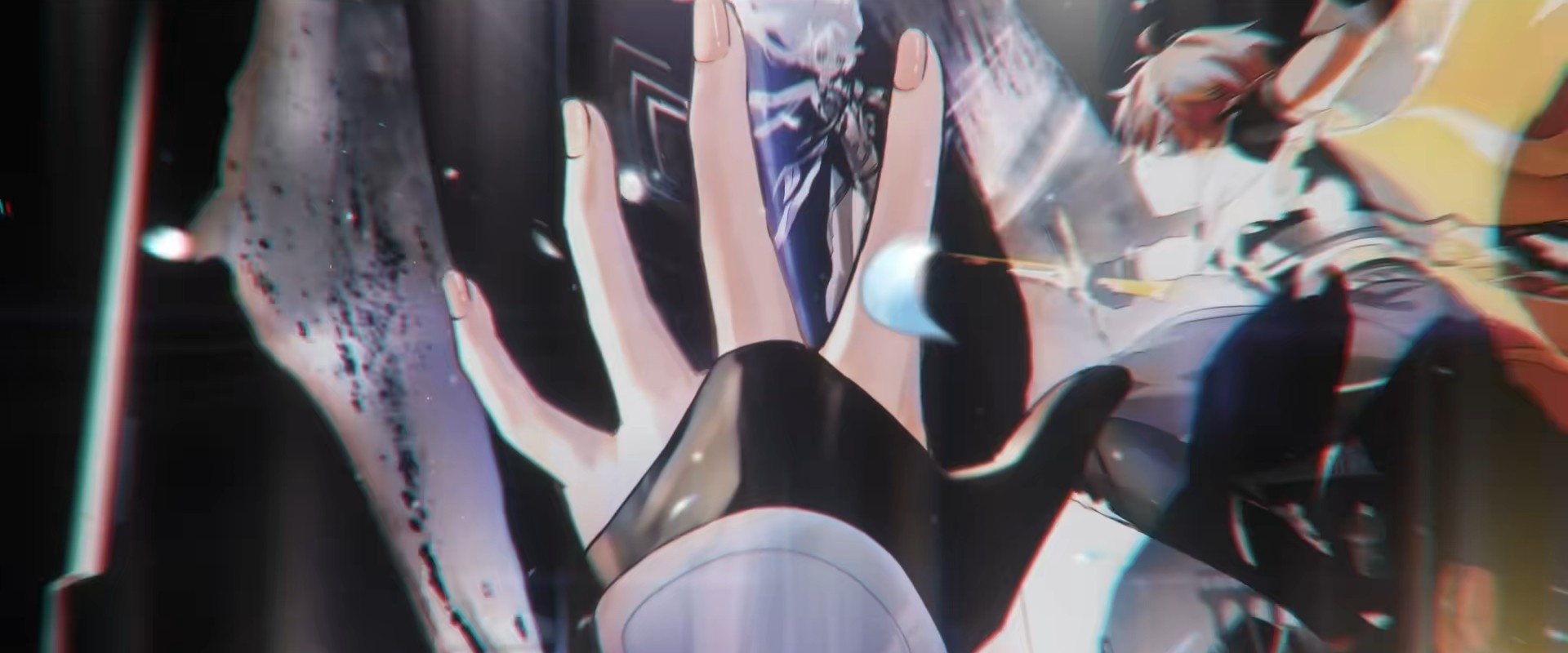
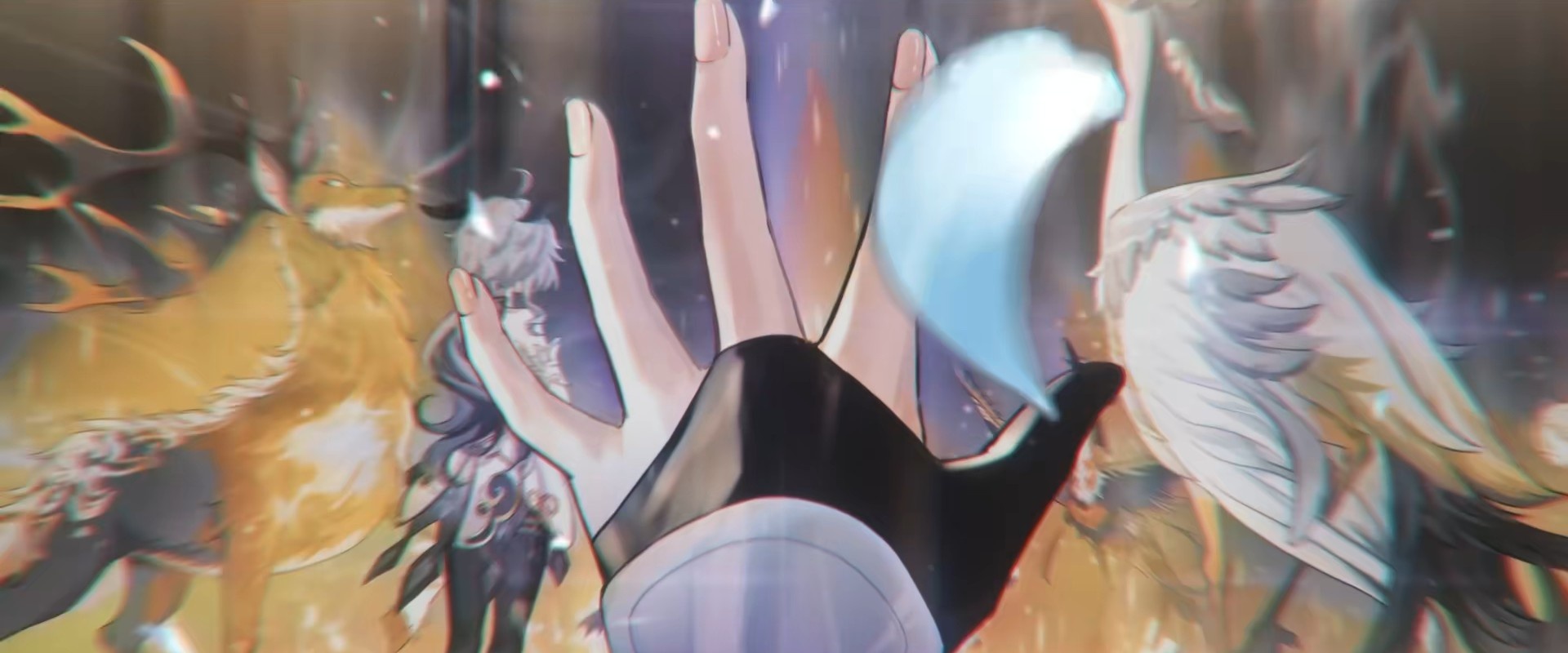
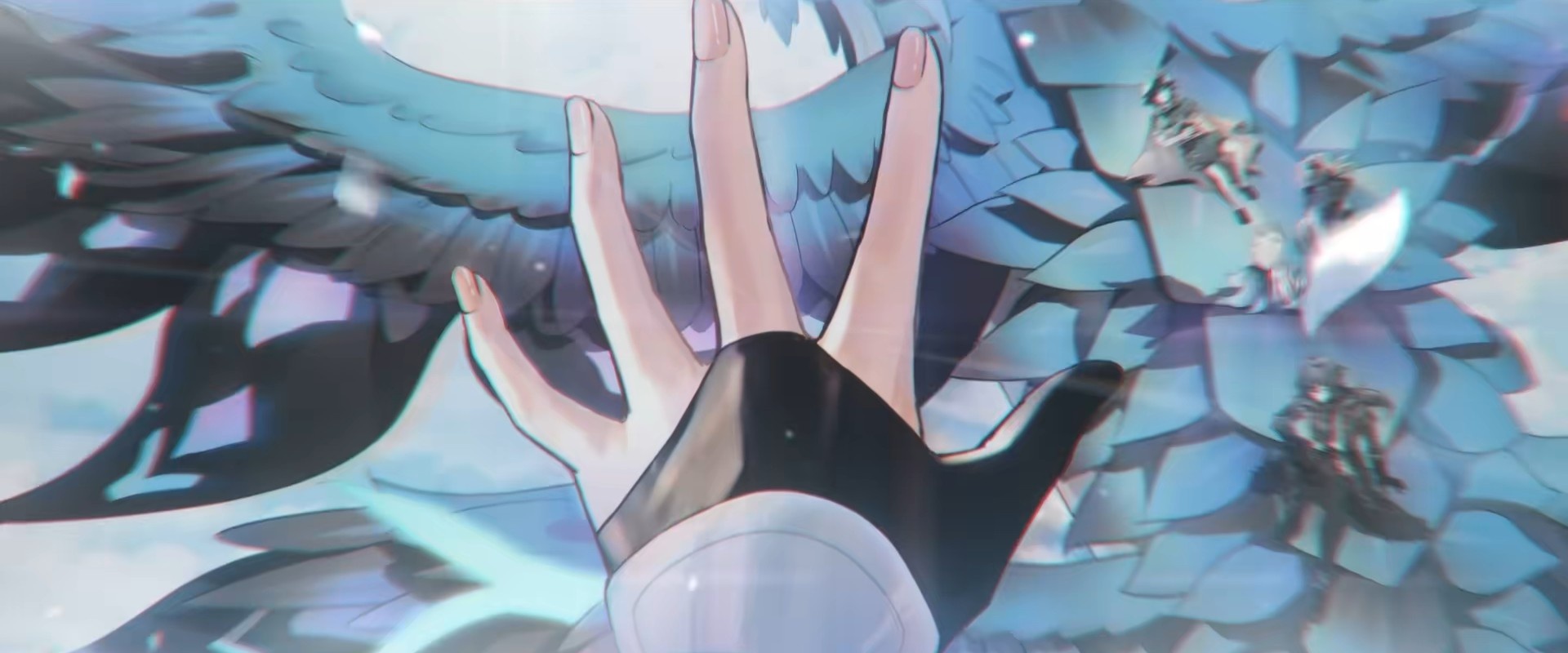
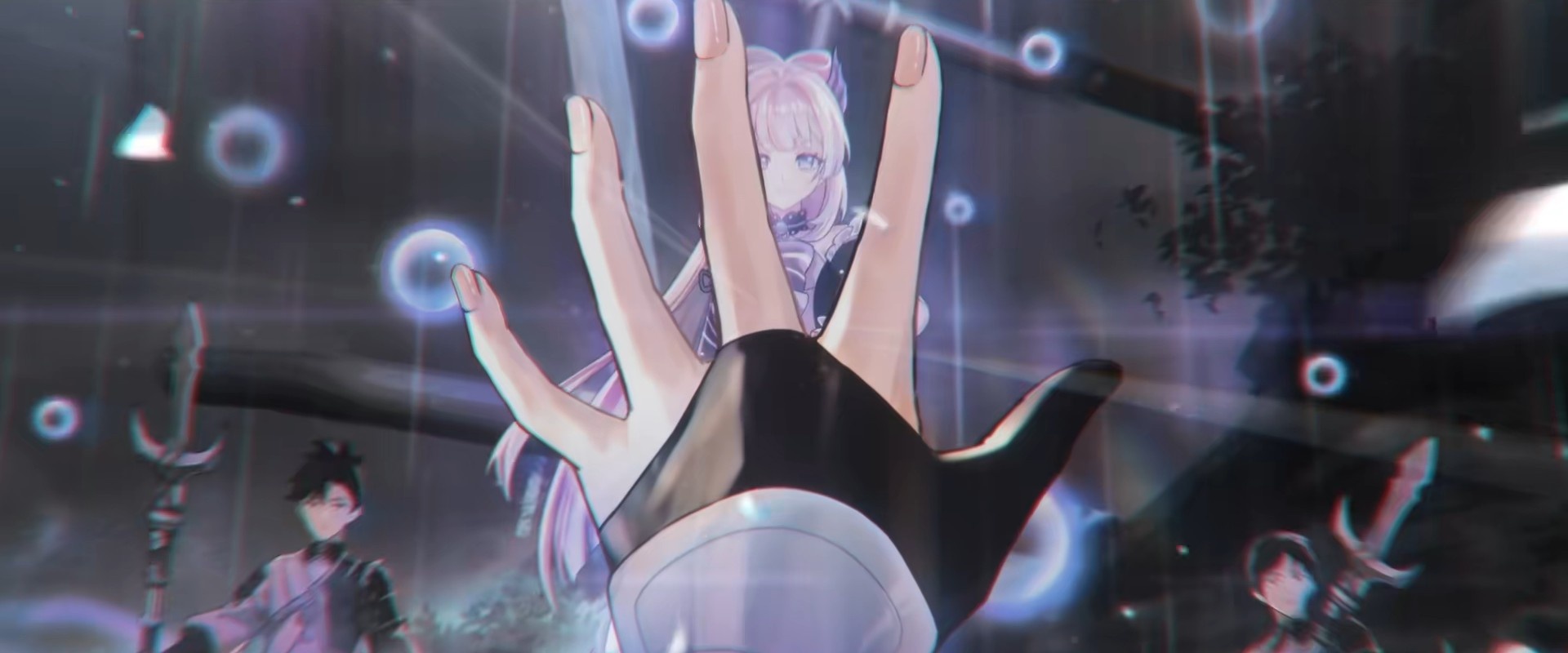
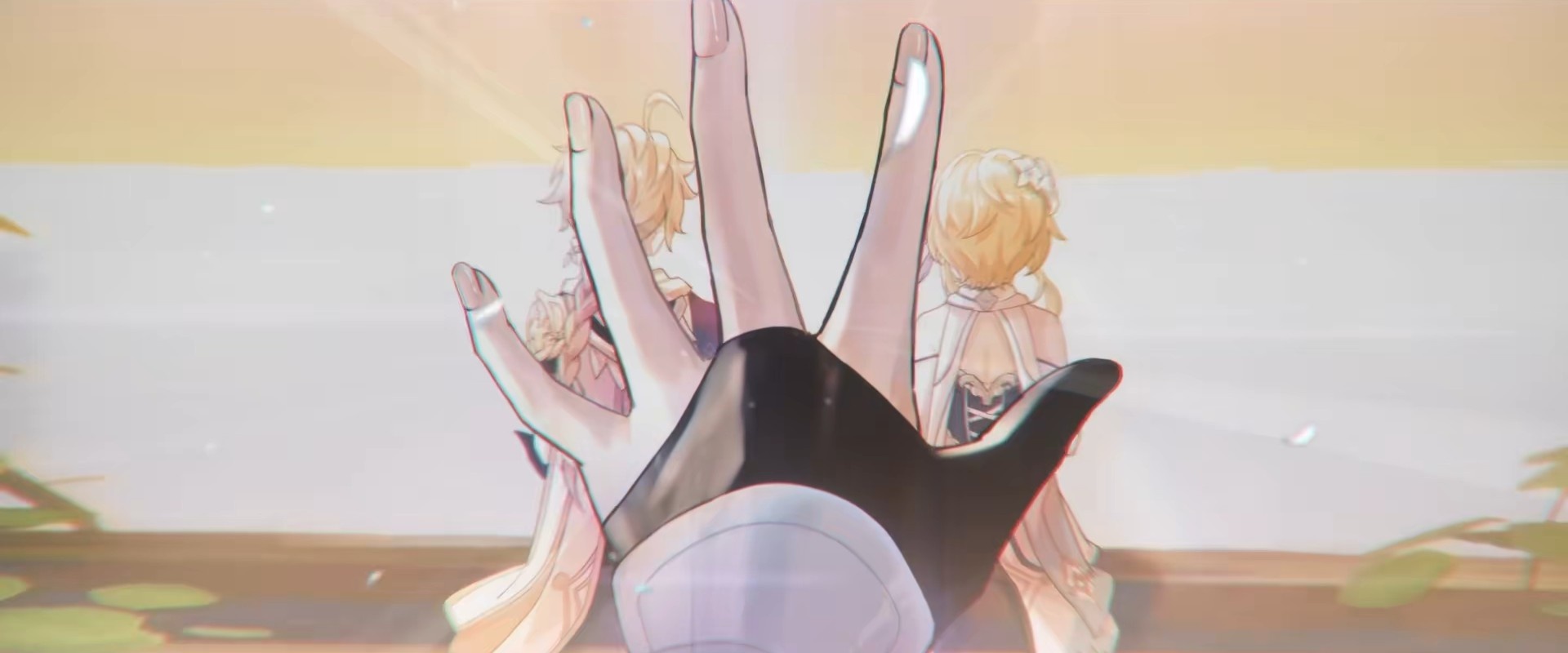
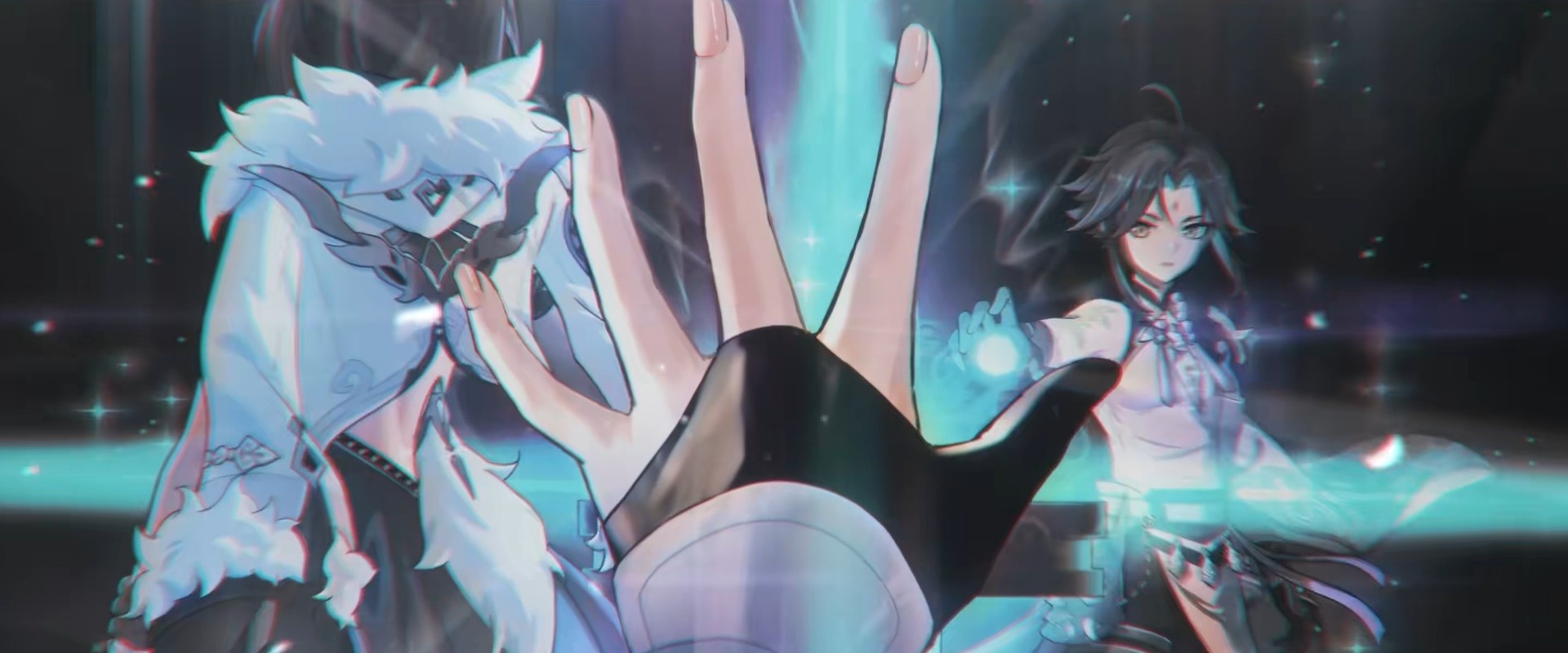
Then interspersed are perhaps scenes from another timeline where the twins travel with Paimon:
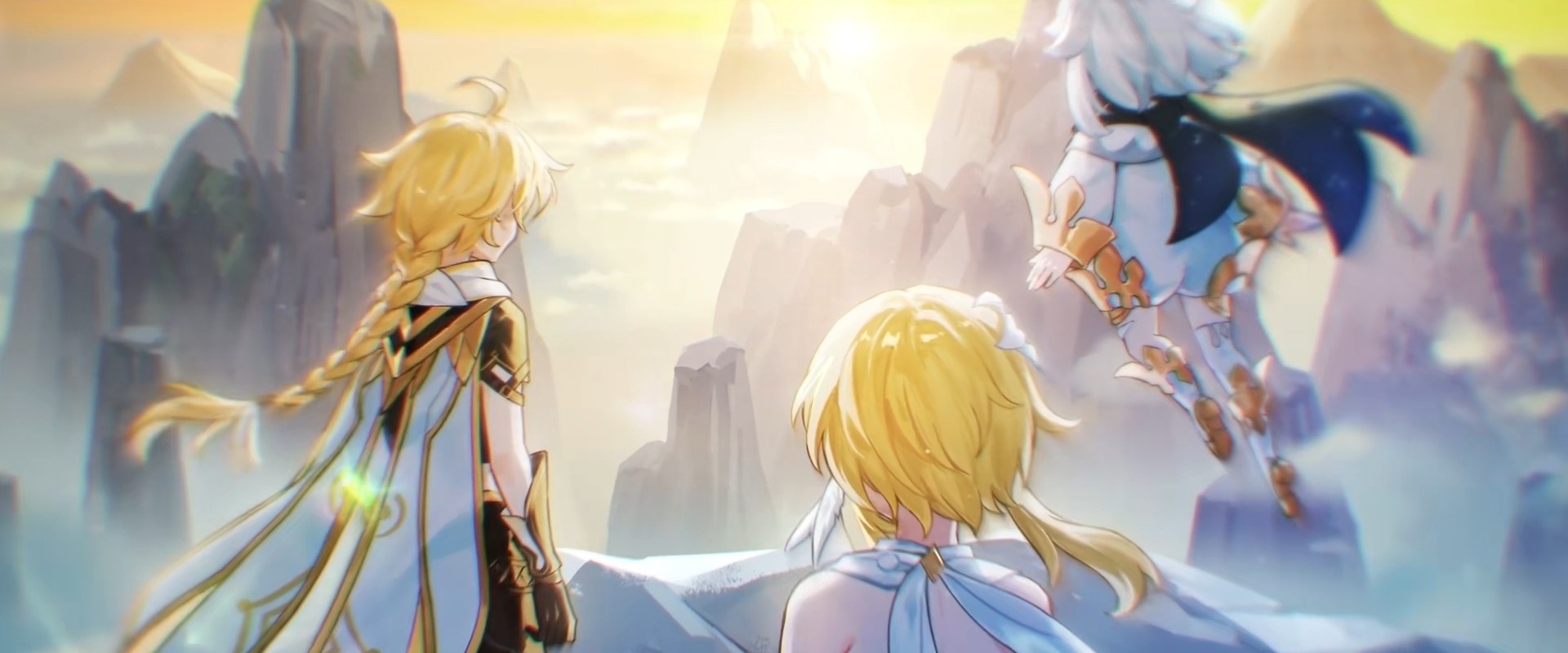
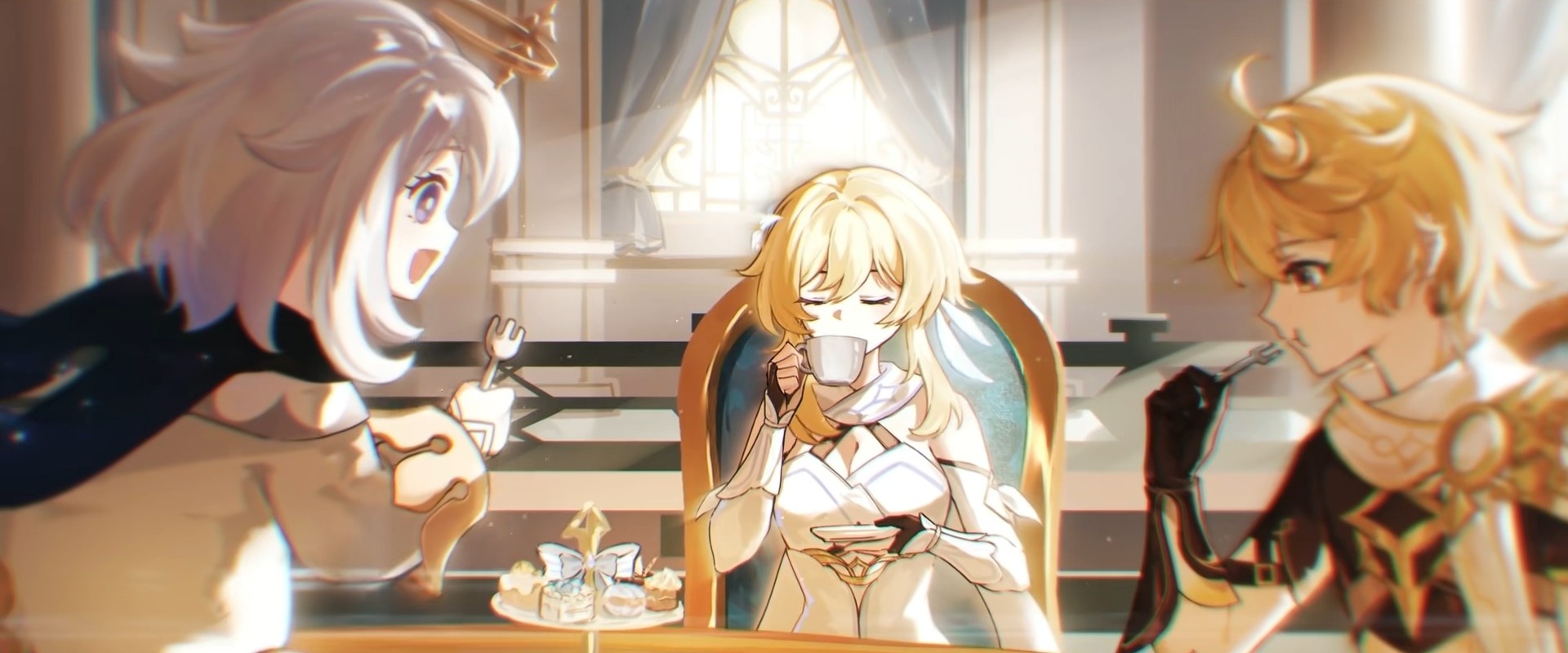
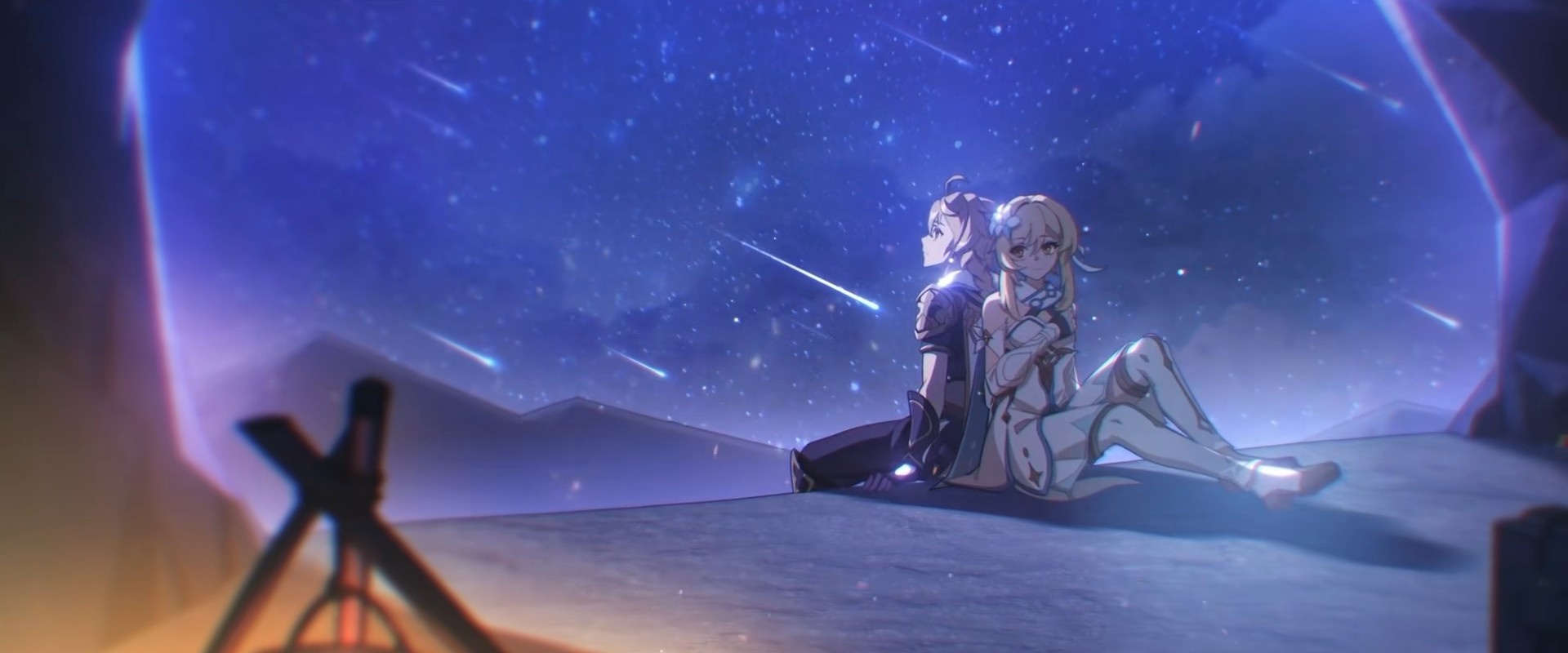
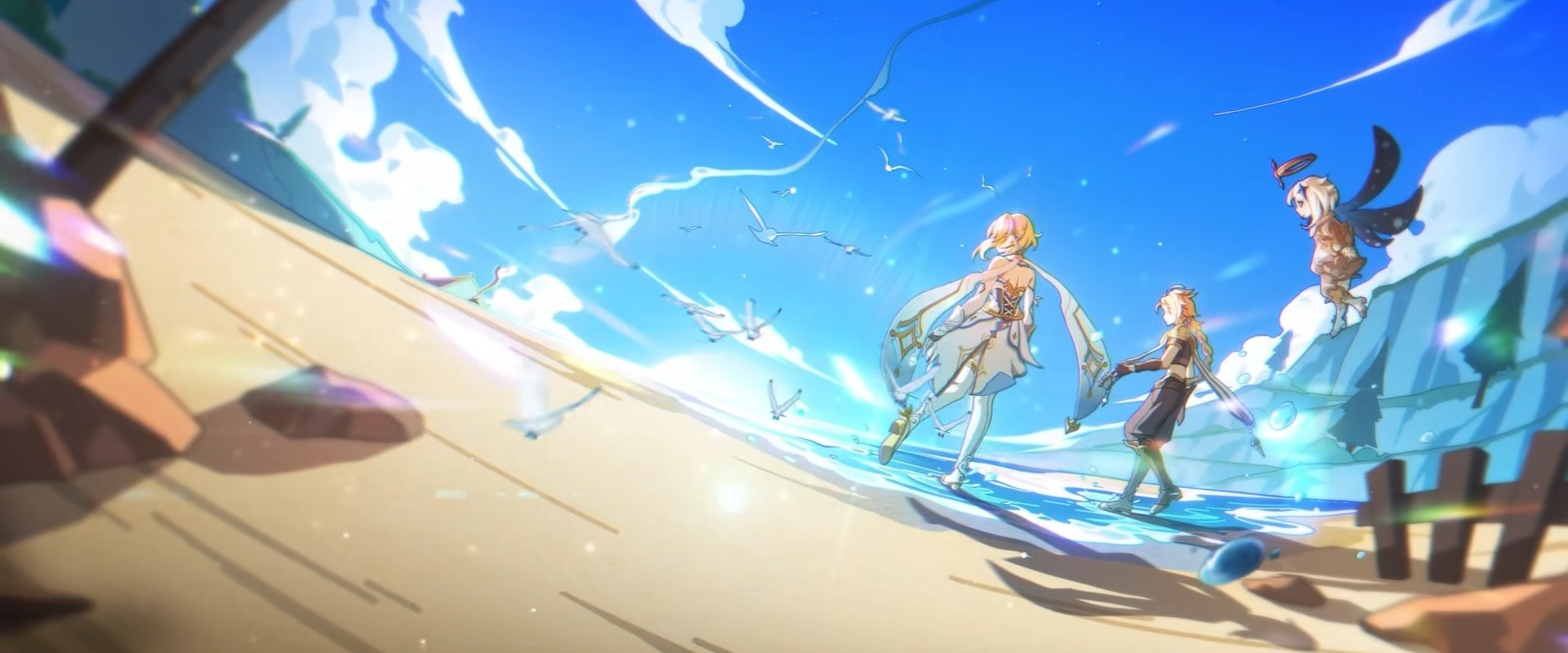
The segment where the twins tightly embrace—the camera work is so cool! The outfits that appear here, besides those in the game, are from the author's current and previous fan creations:
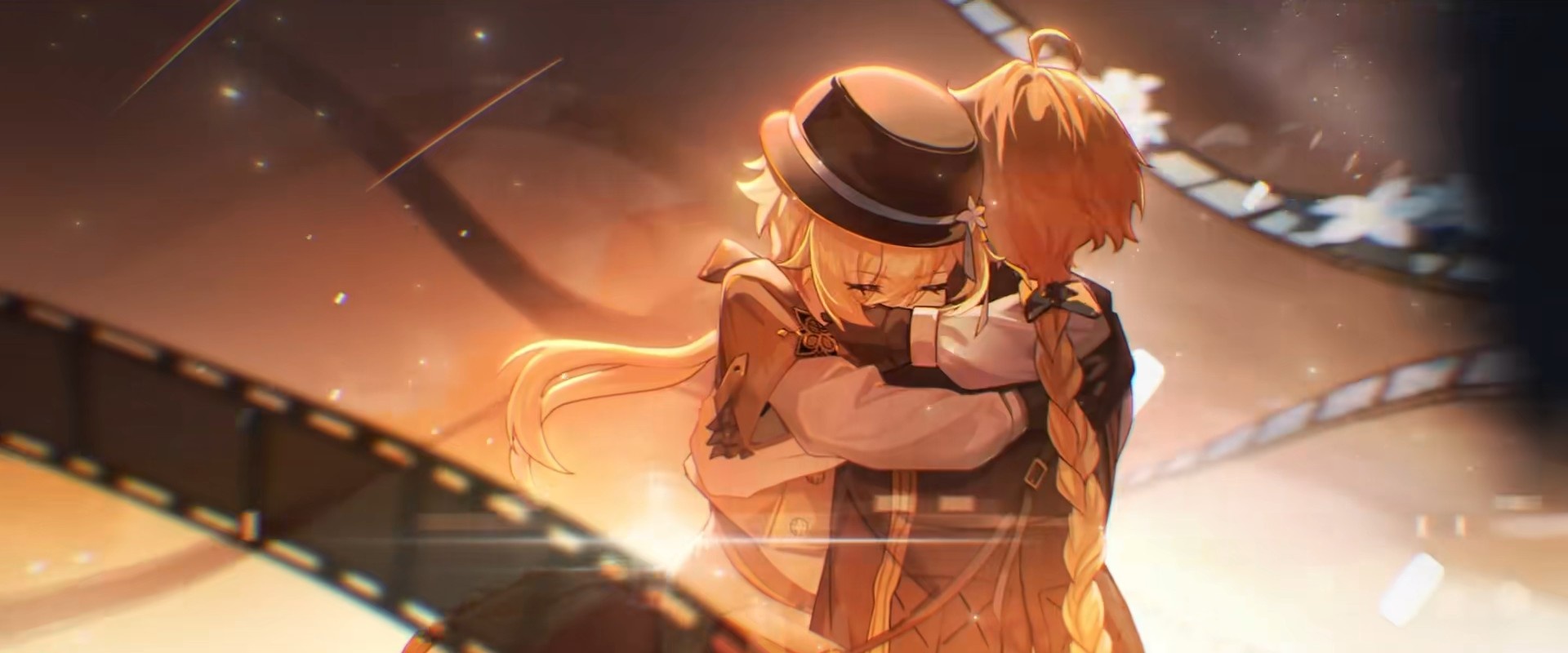
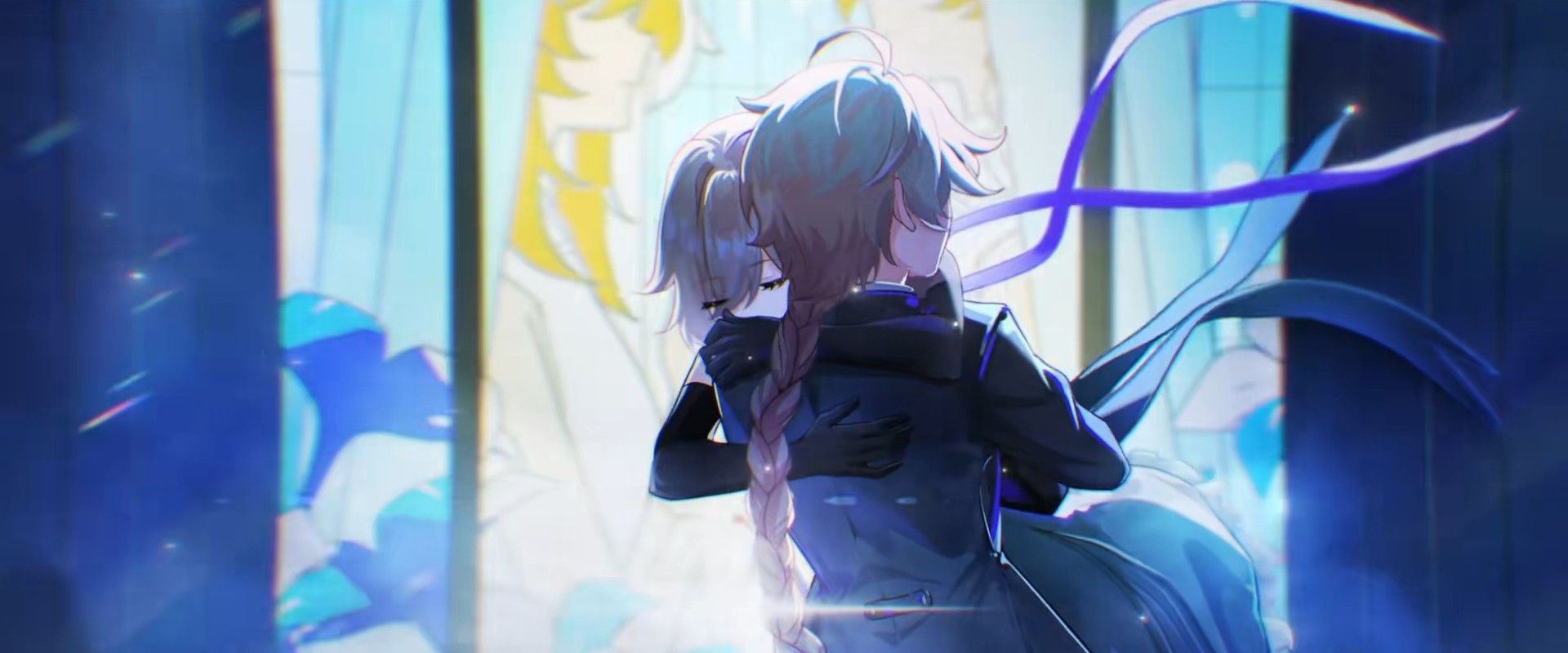
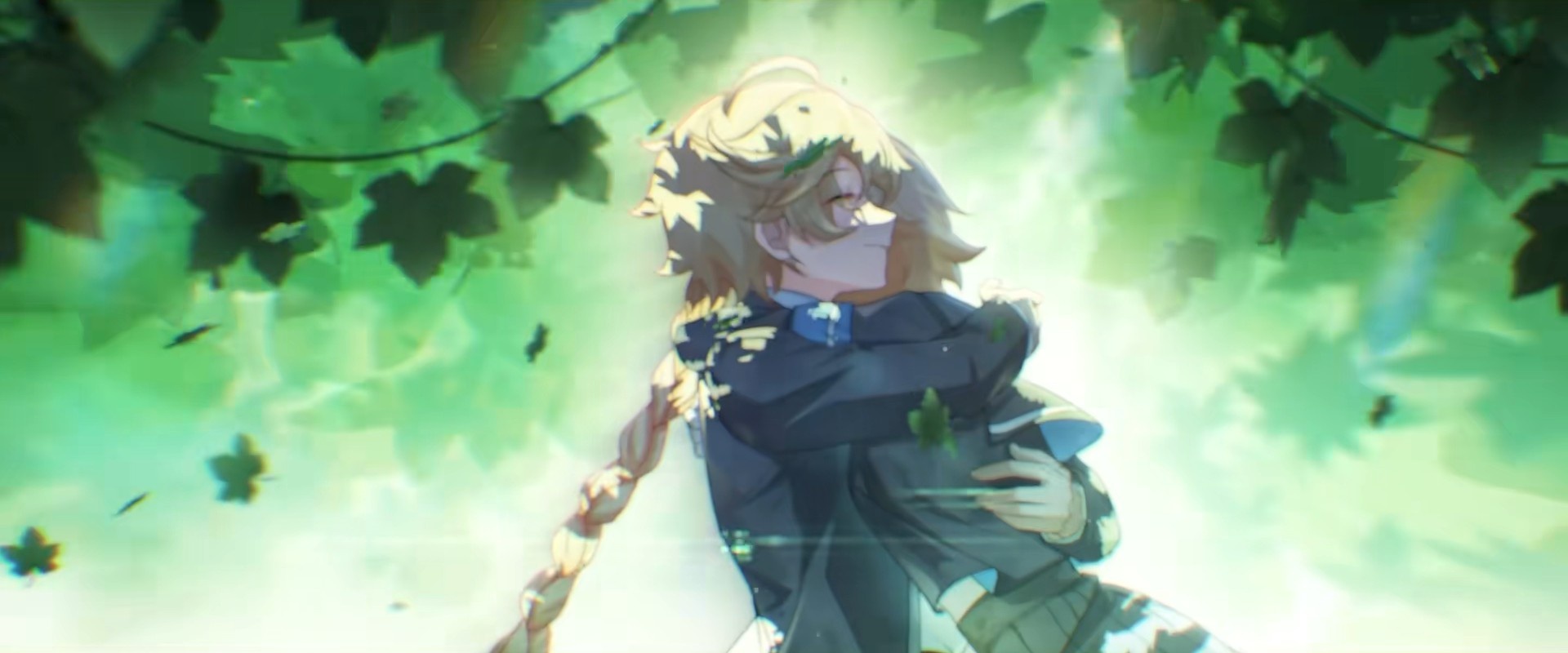
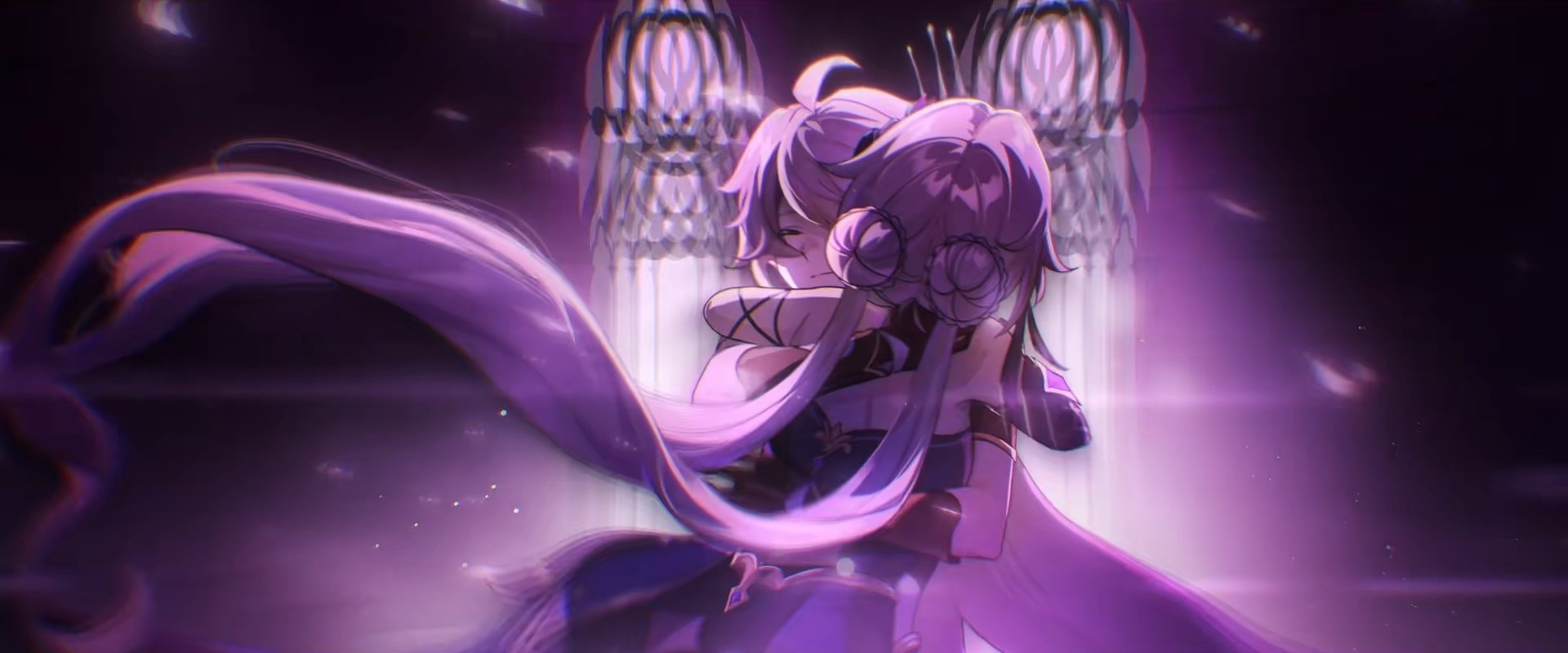
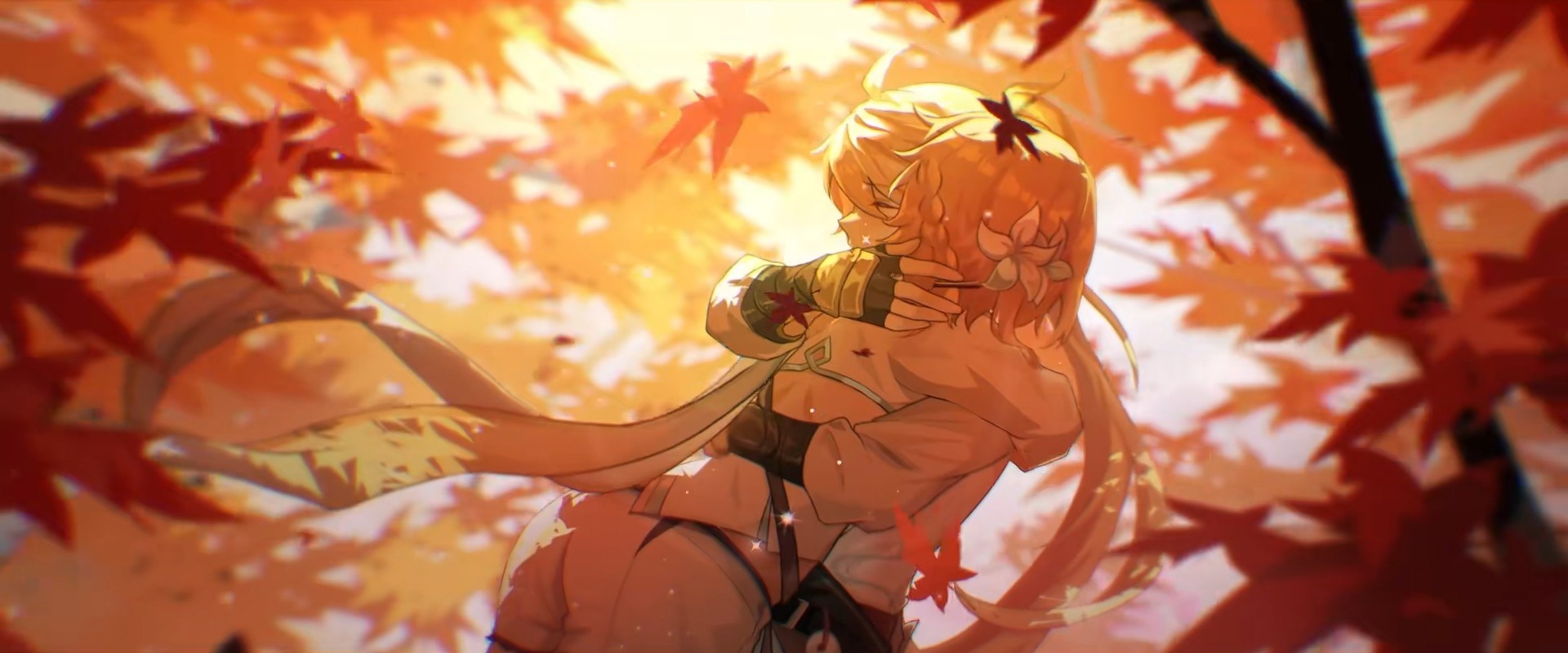
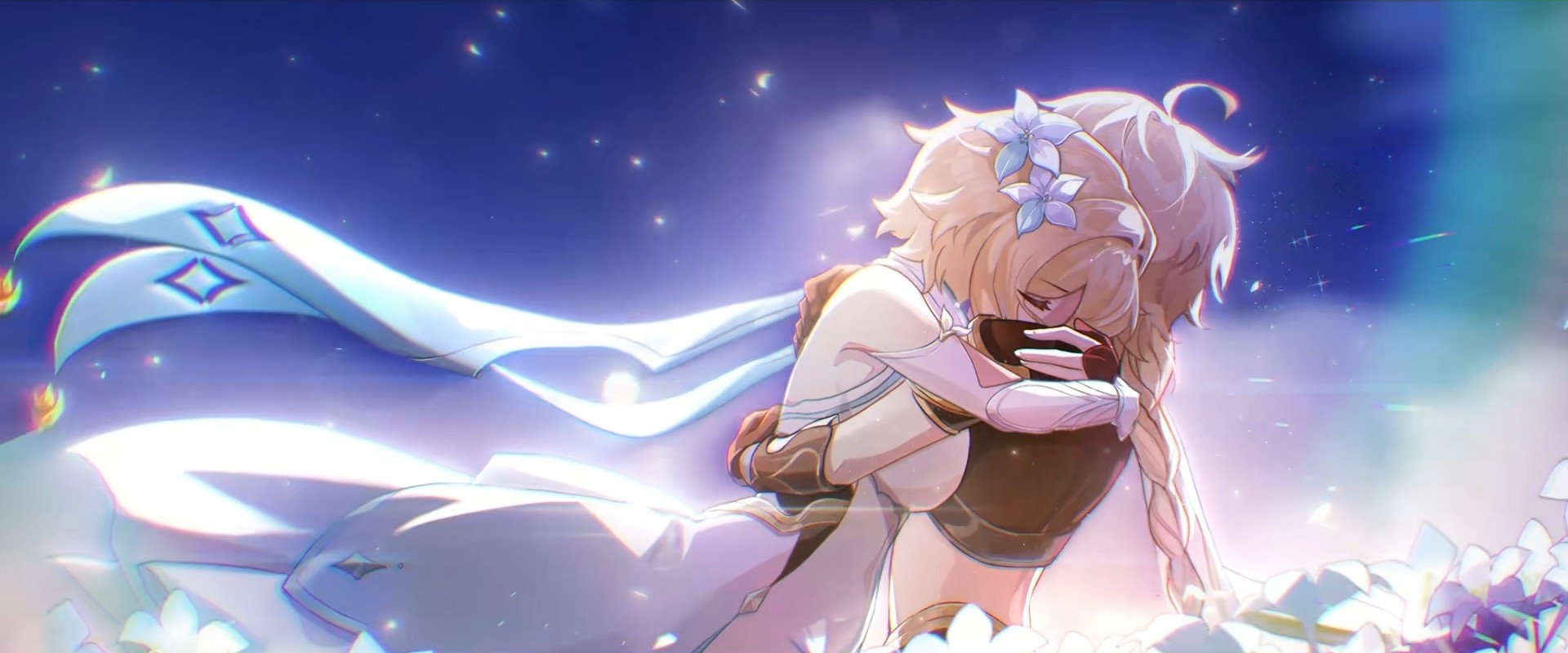
No matter which world, we will eventually reunite.
Then come the posters for each chapter title. I'm not sure if they reference real movie posters. The order here is: Parting from Loved Ones, Suffering of Aging, Meeting the Hated, Suffering of Death, Unfulfilled Desires, Suffering of Birth, Suffering of Illness, Suffering of the Five Skandhas.
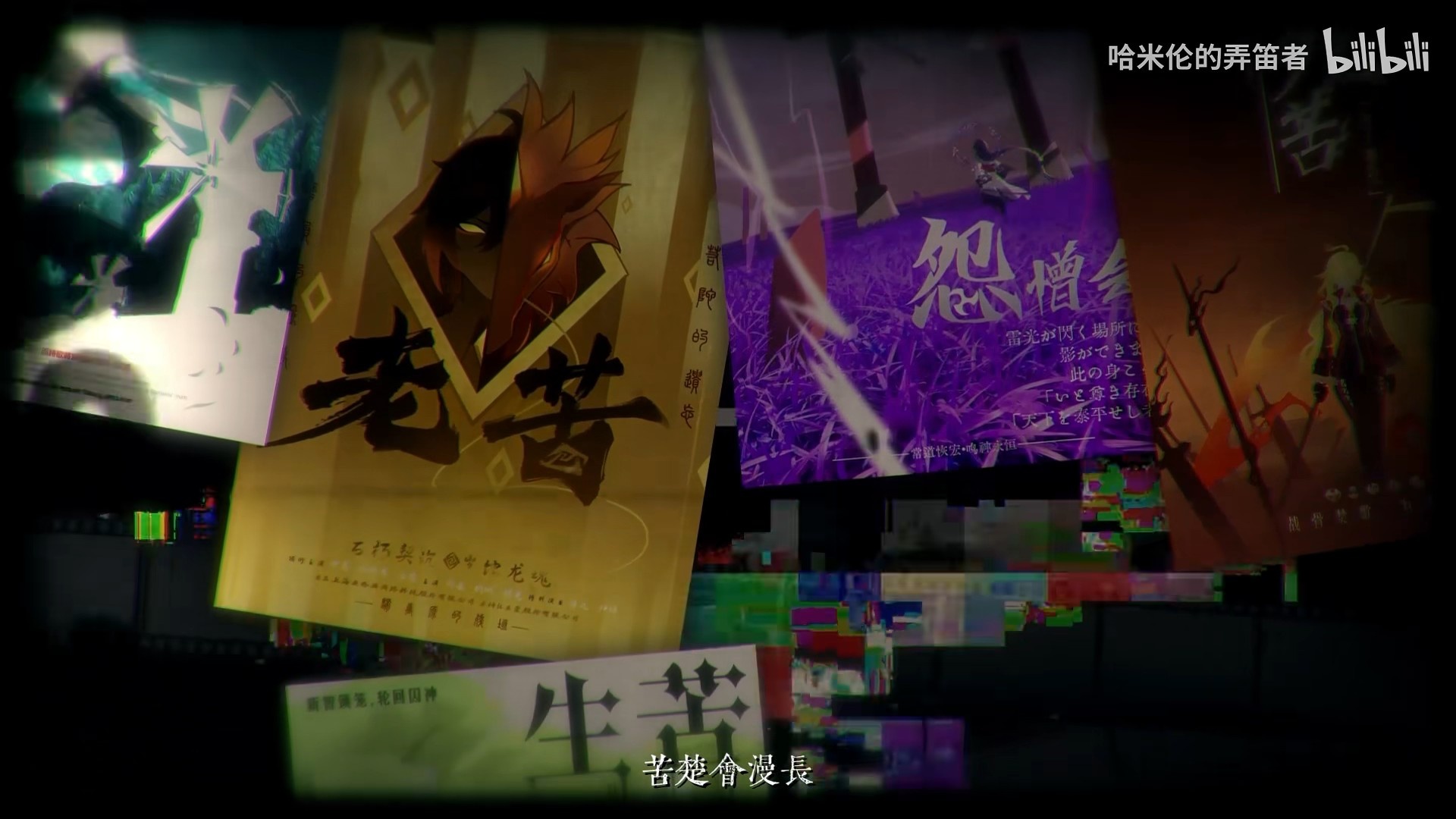
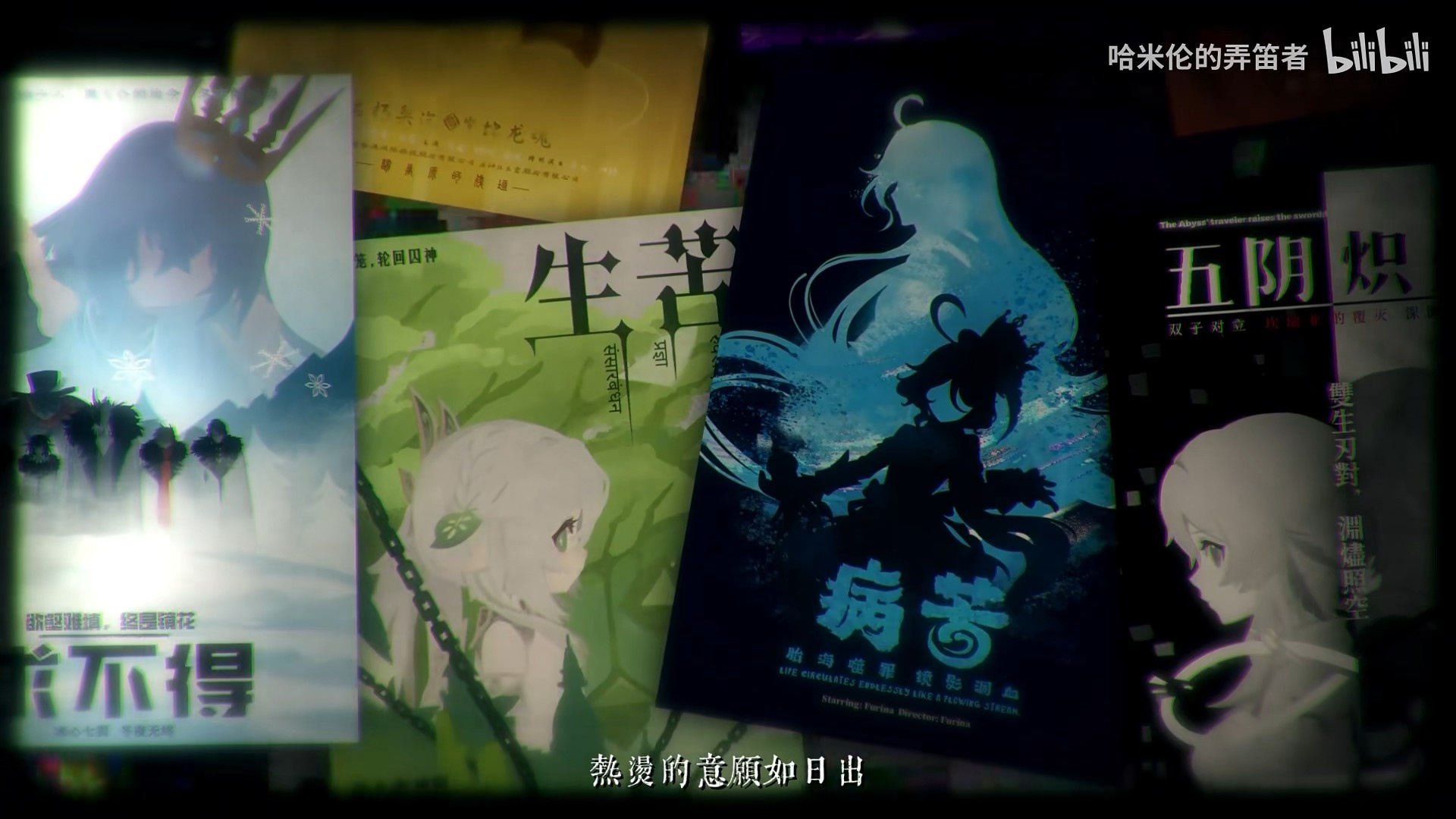
Text on the posters that hasn't appeared before and is recognizable:
- Top of "Suffering of Aging": The boulder crumbles in time, and the weight of the contract crushes memory.
- Bottom right of "Meeting the Hated": Where lightning flashes, shadows form. This body is the "most noble and supreme existence," the "one who brings peace to the world."
- Bottom of "Meeting the Hated": The eternal way is grand, the Narukami eternal.
- Top of "Unfulfilled Desires": ...Gnosis, the Fatui's obsession, the despair of a winter night.
- Above the title of "Unfulfilled Desires": Desires are insatiable, ultimately illusions.
- Bottom left of "Suffering of Birth": The newborn god, imprisoned in the cage of samsara. Wisdom, whose umbilical chain is it?
- Below the title of "Suffering of Illness": Life circulates endlessly like a flowing stream. Starring: Furina. Director: Furina.
- Below the title of "Suffering of the Five Skandhas": The twins stand opposed...
- Bottom of "Suffering of the Five Skandhas": When the traveler of the abyss shoulders the sword, the blood relative in the mirror is embracing...
Finally, I dedicate this article to all the creators of "All the World's a Stage." This is a great fan creation. Thank you for your hard work!
References
[4] Comment: "The one next to Hanachirusato seems to be Teppei."@没啥好名字可取了
[5] Peter Pan (1953)
[12] Indian Summer (1995)
[13] The Imitation Game
[14] The Great Gatsby
[15] The Godfather
[16] 【Meme Encyclopedia】😨 What's the "Shocking Zhang Yimou" meme? Veteran actor (referring to himself)?!
[17] Rashomon
[18] Arrival
[20] The Forgotten Poems
[24] Gladiator
[25] The Truman Show
[26] Image from@-凪黎-'s comment
[28] Inception
[30] Black Swan
[31] 12 Angry Men
[32] @久雨不凝神's comment
[33] Orlando
[34] Original video author@FISHintheTEA's comment
[35] @临江仙yl's comment
[36] Millennium Actress
[37] @汐渐雪's comment
[38] Weathering with You
[39] @溯夜教授's comment
[40] @芾嘉's comment
[41] @Xray007's comment
[42] @荧婉星's comment
[43] @SwordSanit约书亚's comment